The vegetable asparagus comes from the plant Asparagus officinalis, which is a member of the family Asparagaceae. In botany, all family names end in -aceae, which is usually pronounced as if you were saying the letters A, C, E in quick succession. So, for example, grasses are in the family Poaceae; mustard plants are in the family Brassicaceae; and lilies are in Liliaceae. (For an introduction to the science of classification, see my previous post Taxonomy 101.)
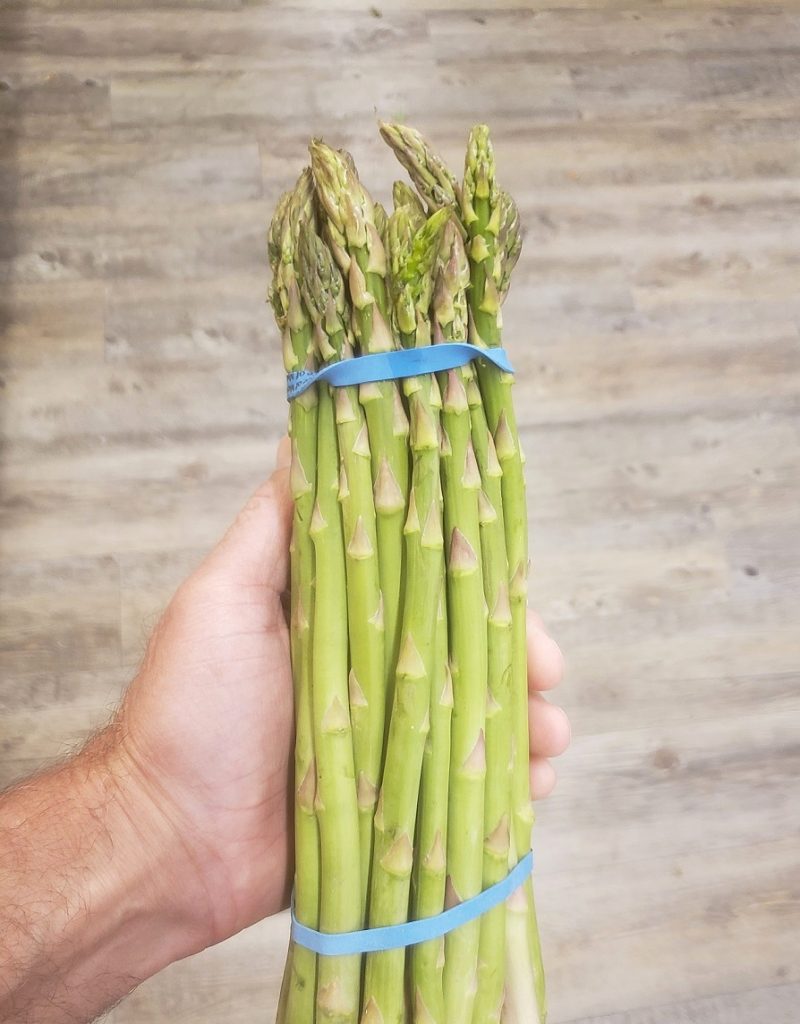
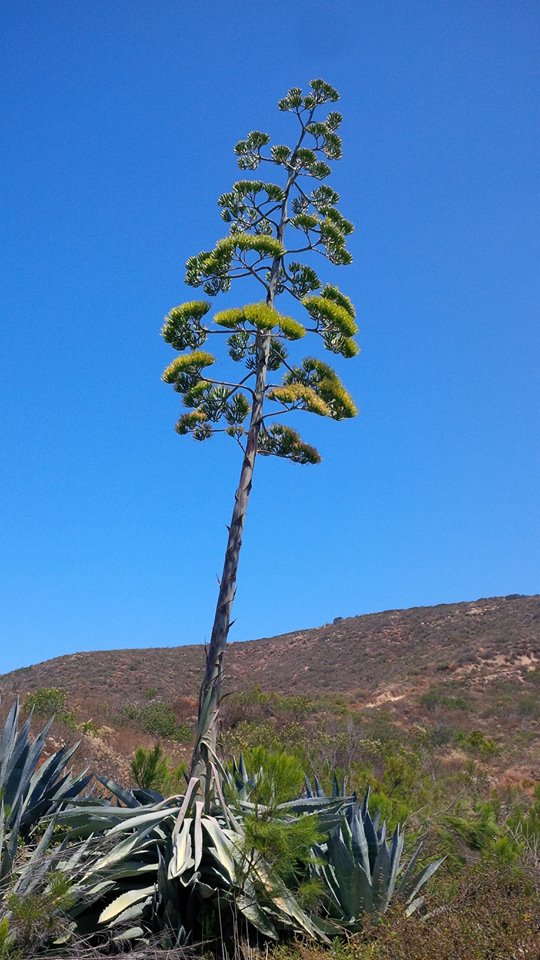
While hiking Cowles Mountain recently, I came across what for all the world looked like two giant stalks of asparagus twenty to thirty feet tall. They were actually Agave americana, a species of Agave that is native to Mexico, New Mexico, Arizona, and Texas. This plant lives for ten to thirty years. For most of its life, it consists of a rosette of sharply-spiked, succulent leaves. This rosette can reach a height of around six feet. Near the end of its life, Agave americana blooms for the first and last time. The plant shoots up a giant stalk, which eventually sprouts a huge inflorenscence of yellow flowers. The flowers are pollinated by bats and occasionally moths. Because of its long life, Agave americana is sometimes called a century plant; although, it never actually lives much past thirty years.
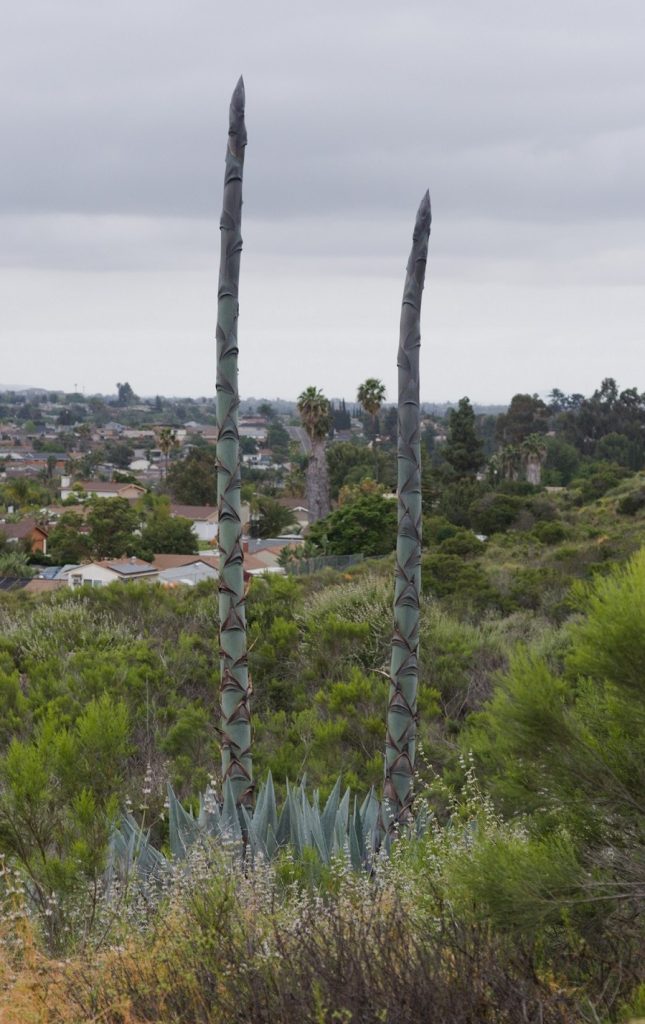
At the base of Cowles Mountain, Mission Trails Regional Park 4/30/19
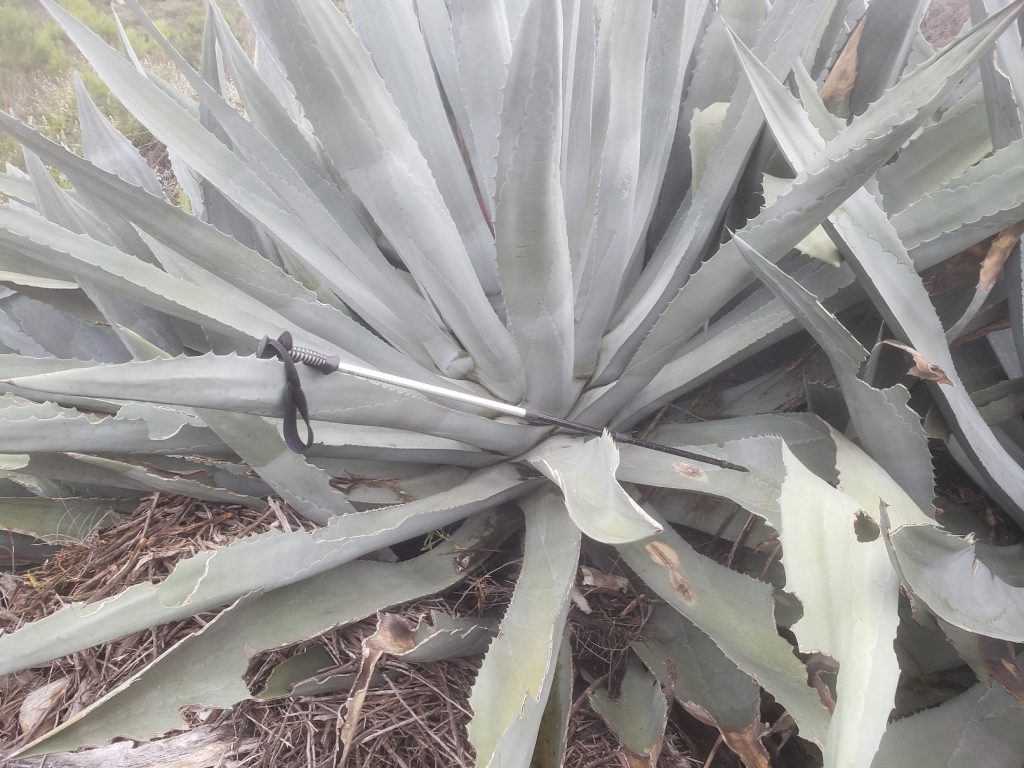
In addition to reproducing sexually through its flowers and seeds, Agave americana reproduces asexually by putting out suckers from its roots. These suckers are called puppies or pups. They form around the base of the rosette and are clones of the main plant. The main plant dies after flowering, but the puppies live on and eventually flower themselves.
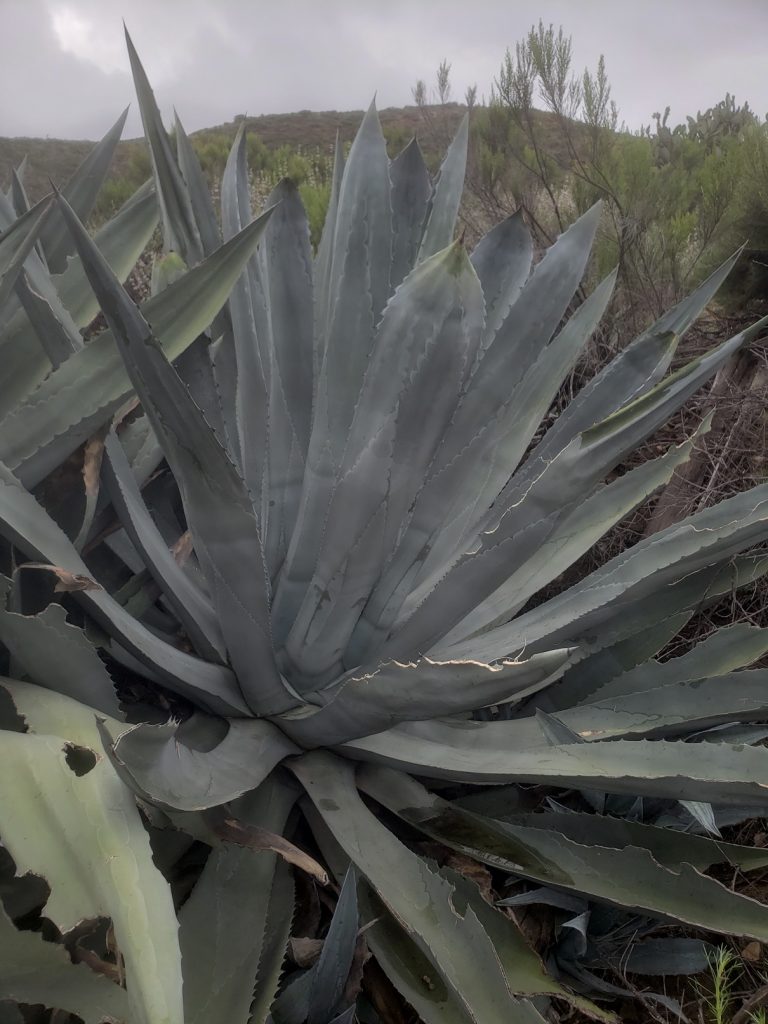
As you may have guessed, Agave americana and agaves in general (of which there are many) are in the asparagus family. Like asparagus, agave is edible. Agave murpheyi, in particular, was an important food source for Native Americans. Most parts of the plant were eaten at some stage of its development.
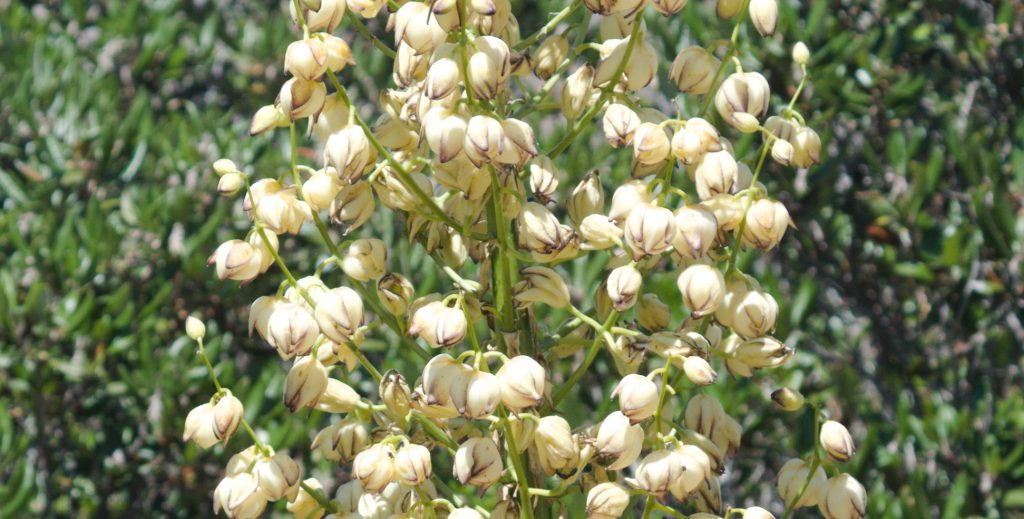
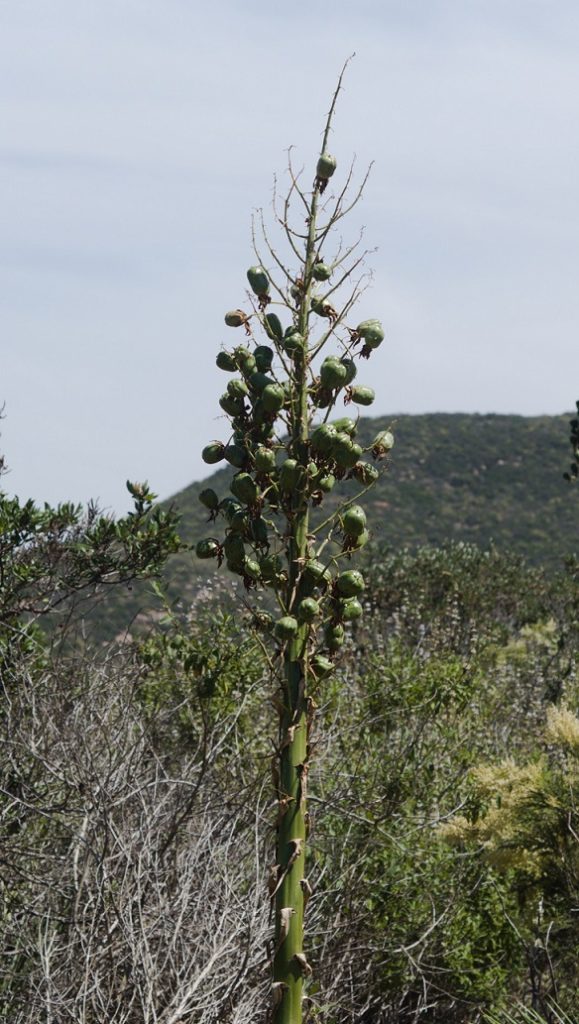
Another closely related member of Asparagaceae found in southern California is yucca. Yucca is the genus name. There are many individual species. They look very similar to the agaves, but the leaves tend to have smooth margins, instead of the spikes that are typically found on agave leaves. The most common yucca in my neighborhood (just east of San Diego) is Hesperoyucca whipplei 1, whose common names include chaparral yucca and Spanish bayonet. In form, it’s very similar to Agave americana, having a rosette of spiky leaves at the base and, when in bloom, a tall central stalk with a large inflorescence. The plant is much smaller than Agave americana, though, with the stalk rarely exceeding ten feet in height.
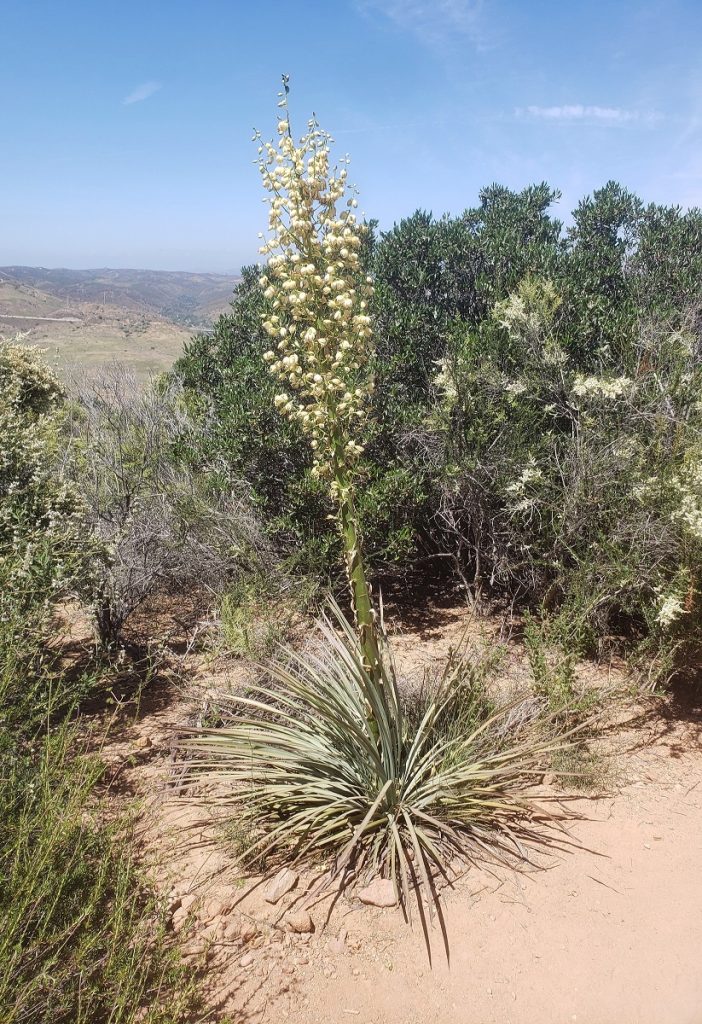
Mission Trails Regional Park 5/5/19
Probably the most striking of the yucca’s, at least in the United States, is the Joshua Tree (Yucca brevifolia). Joshua Trees are common in the Mohave Desert, especially in the part of the desert that extends into Joshua Tree National Park (roughly the northern half of the park). Joshua trees grow quite large — up to about 49 feet. Unlike Agave americana and Hesperoyucca whipplei, Yucca brevifolia has a weirdly branching central trunk and the leaves grow at the ends of the branches, instead of at the base of the plant.
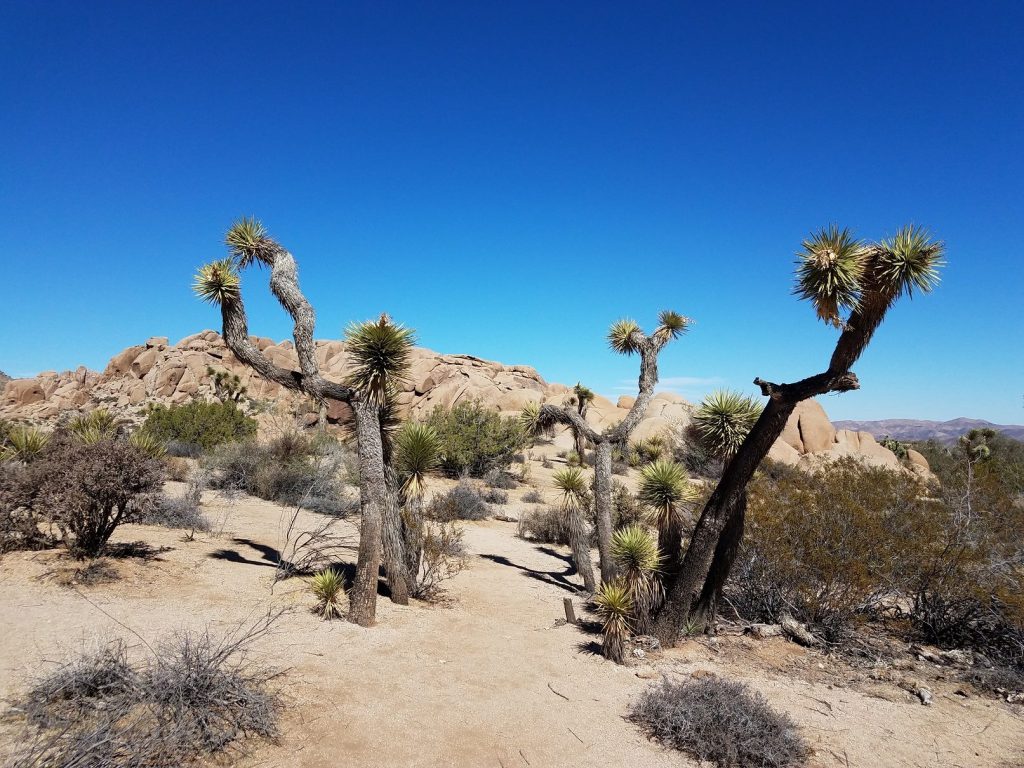
Joshua Tree National Park 10/18/16
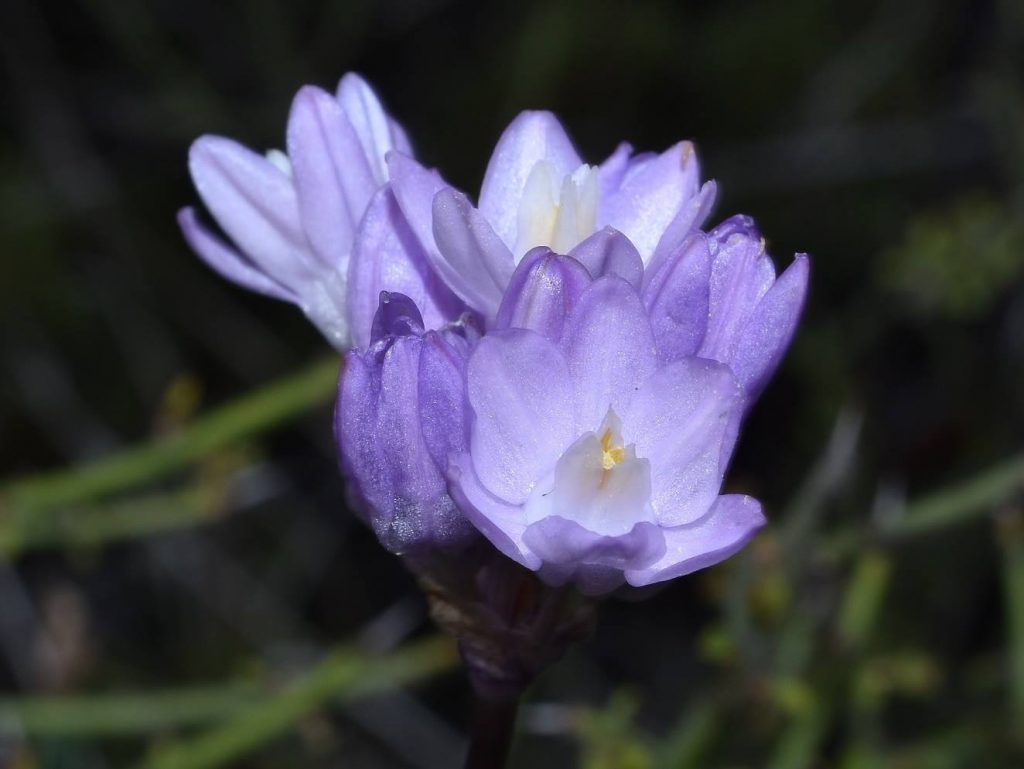
There is one other member of the Asparagaceae family that is very common here in southern California — blue dicks. (No, I’m not making up that up. The vulgar connotation associated with the word “dick” is of fairly recent origin, so the name was perfectly innocent when it was originally adopted.) The “blue” part of the name comes from the color of the flowers; although, they’re usually more purple than blue. “Dick” is probably just a shortening of the genus name, Dichelostemma, where the “ch” is pronounced as a “k”. The complete scientific name is Dichelostemma capitatum.
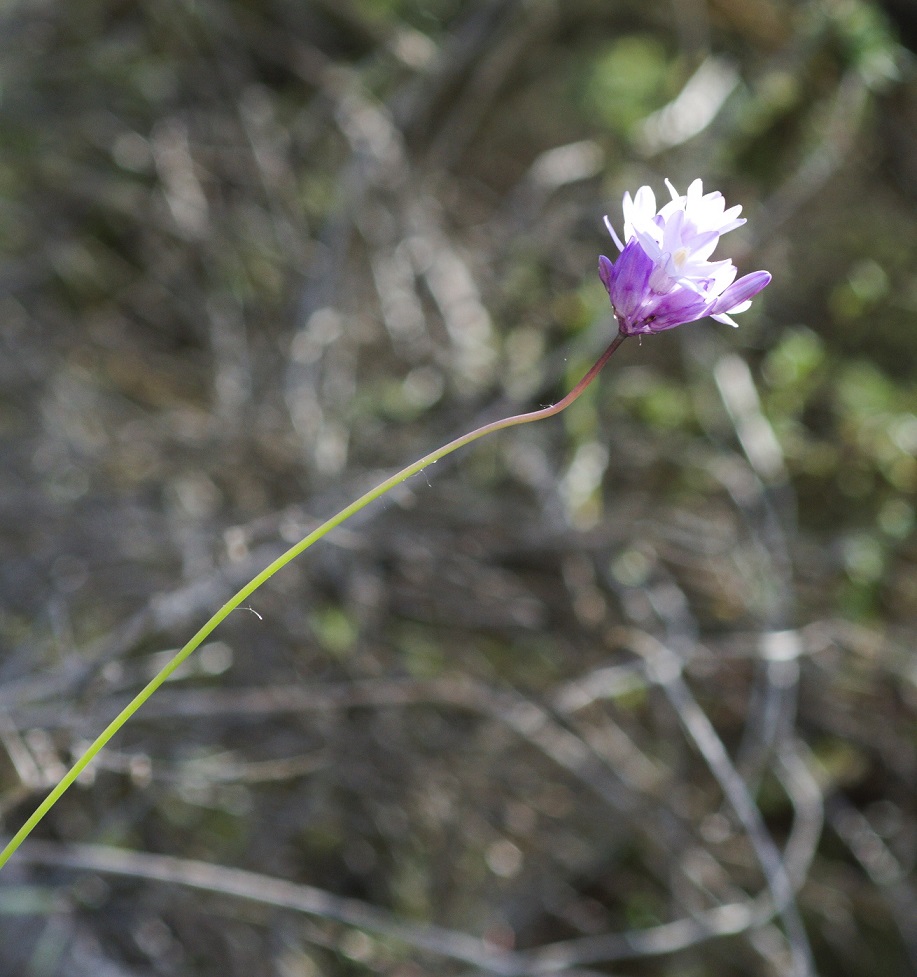
Mission Trails Regional Park, San Diego County 5/2/19
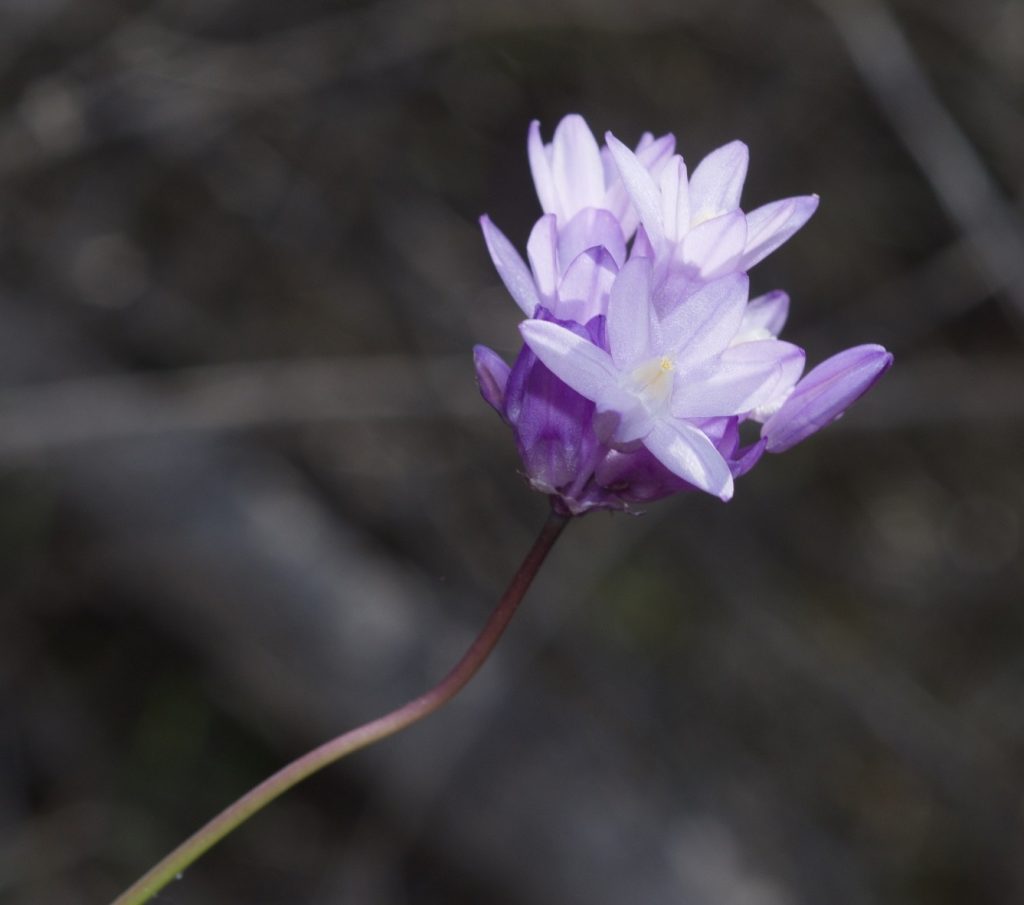
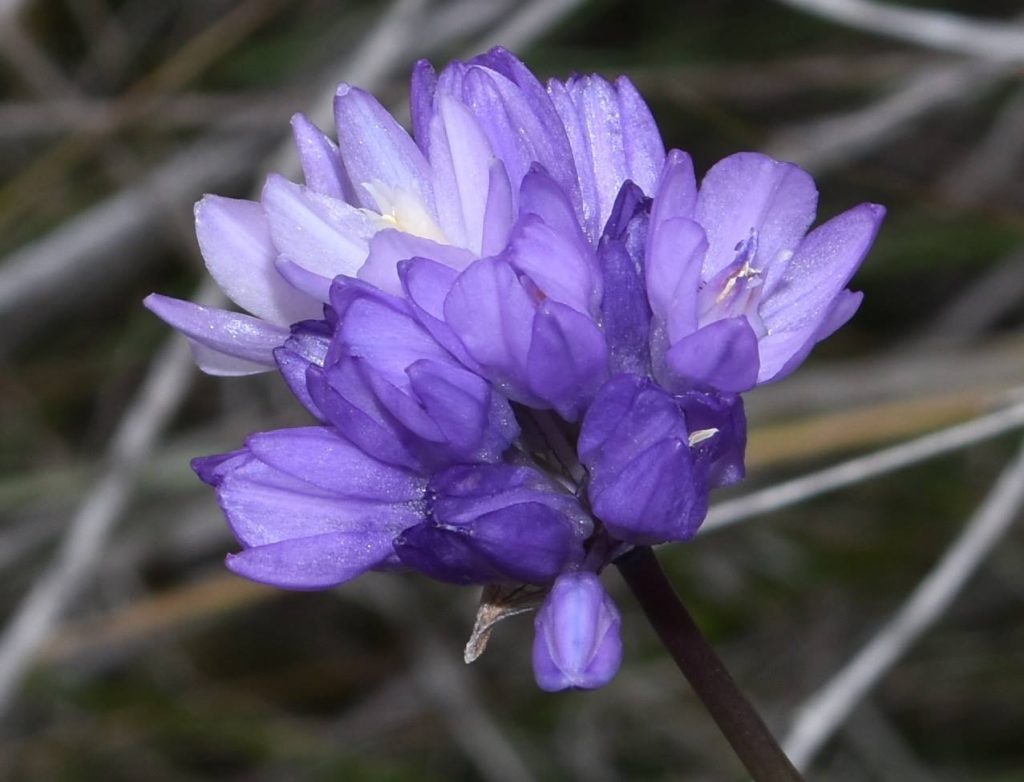
The blue dick does not look very much like asparagus, agave, or yucca. For one thing, it’s quite small — only growing a foot or so tall. It does, however, have a single thin stalk with a cluster of flowers at the top. It only has two or three leaves, but they grow from the base of the stalk like the basal rosettes of many agaves and yuccas.
Here are some more photos of this beautiful plant:
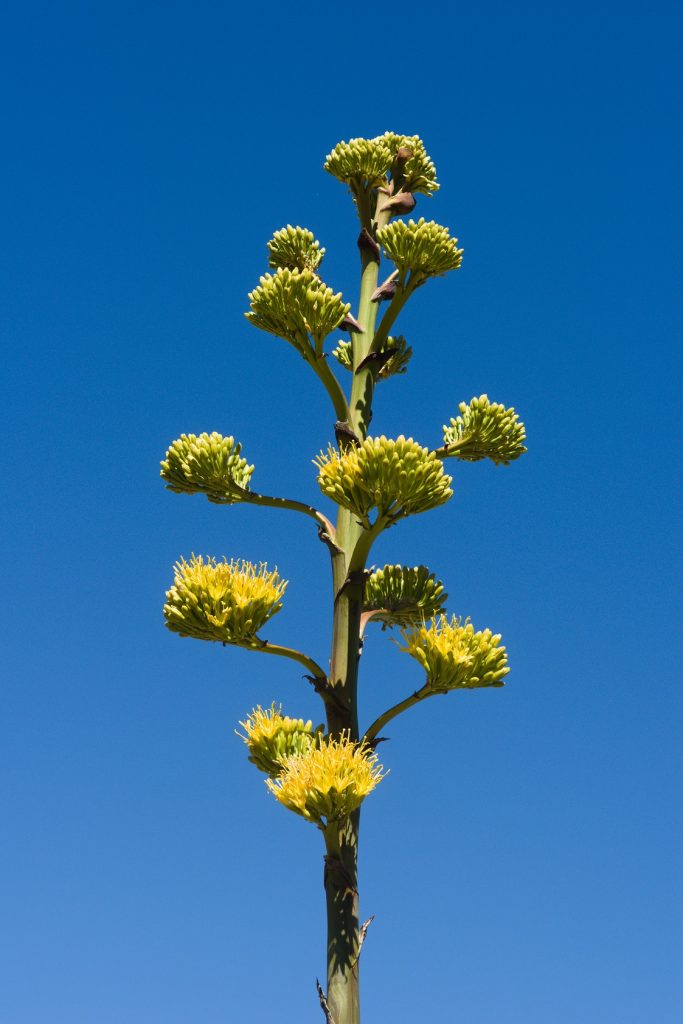
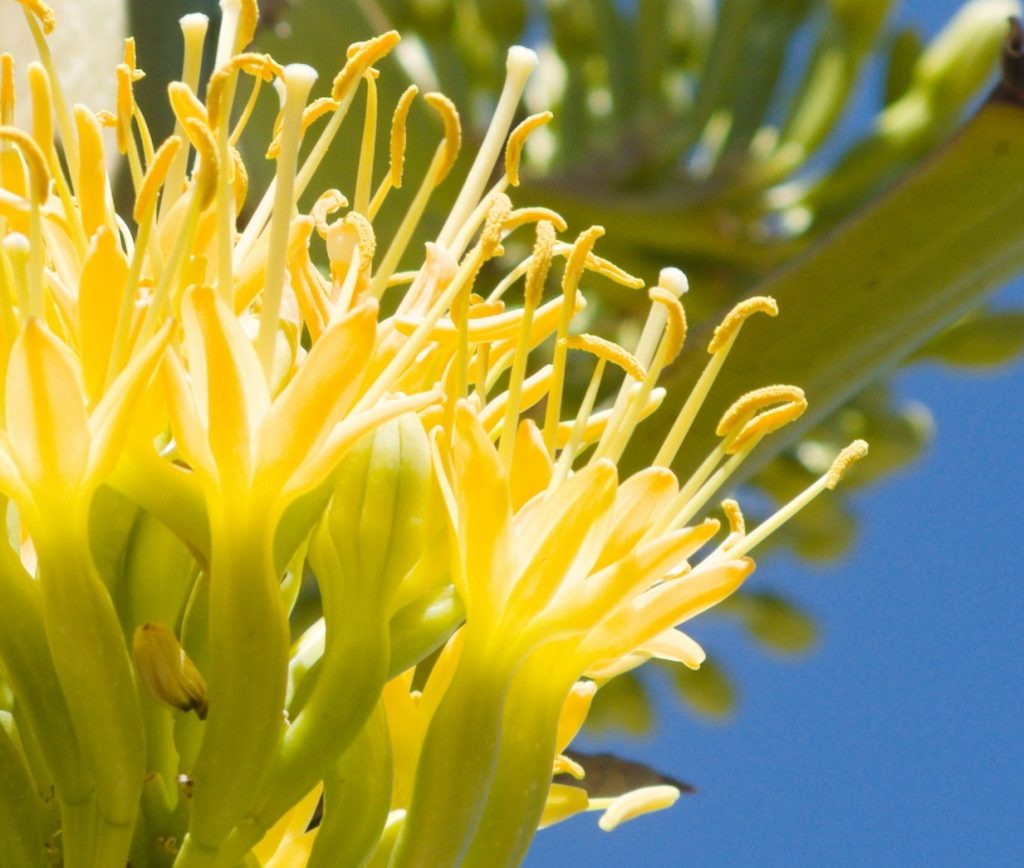
Here’s a couple more examples of plants in the asparagus family. First, here are some photos of the beautiful inflorescence of the desert agave (Agave deserti), which looks like a smaller version of Agave americana:
And here’s another of the smaller members of the family, Bloomeria crocea or goldenstar:
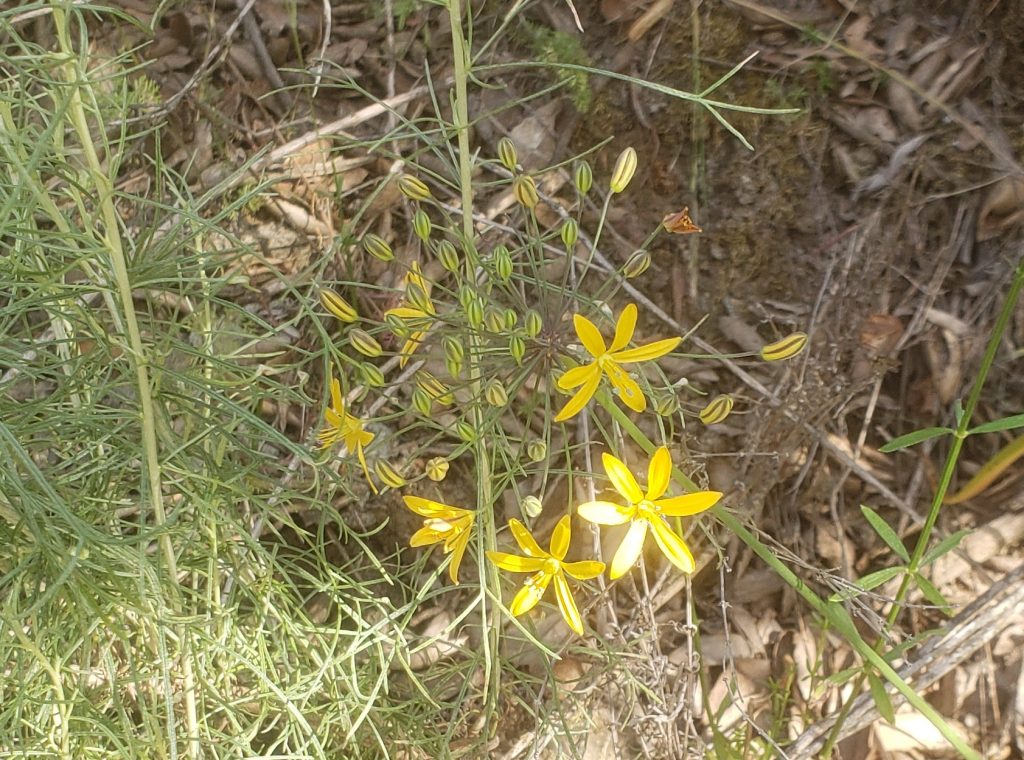
Mission Trails 5/2/19
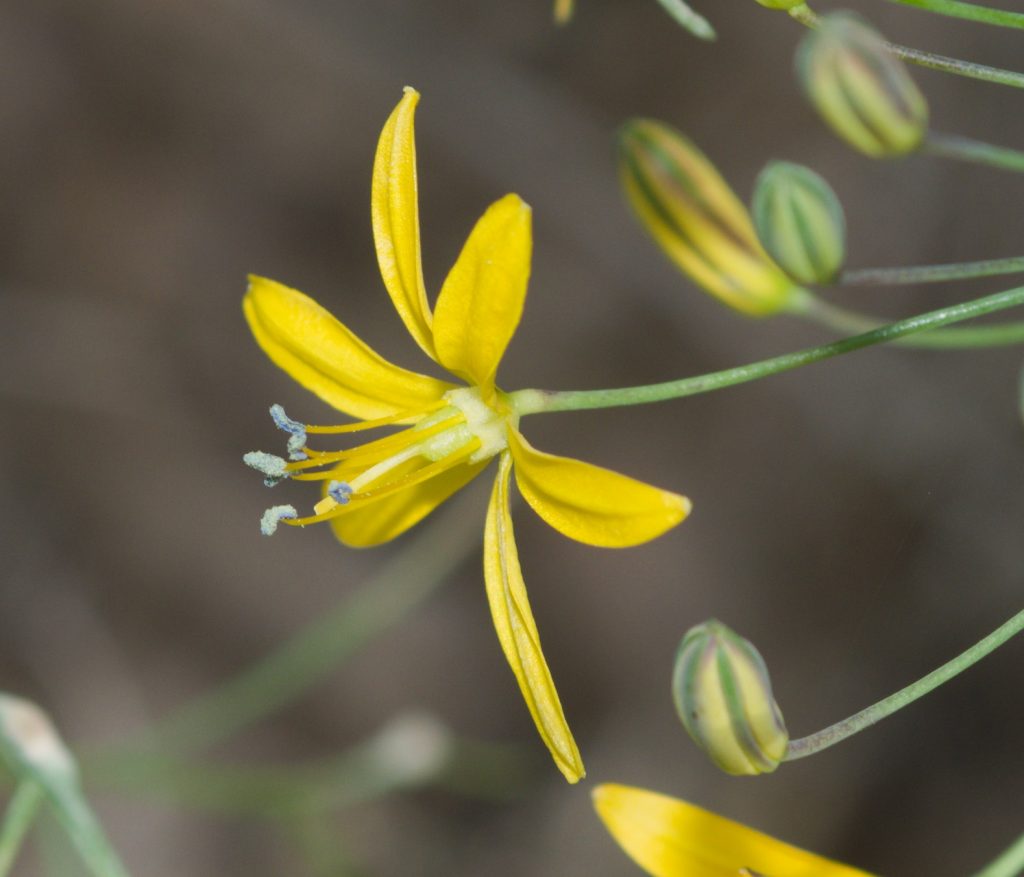
Looking at all these different members of the Asparagaceae, you might be wondering why on Earth botanists would group them all together under one family. As I already mentioned, many of the plants share a basic form — a long, thin stalk with flowers at the top and leaves at the bottom. Often, especially in the case of the agaves and yuccas, the leaves are thick, fleshy, and succulent, with sharp tips.
Many of the members have corms. A corm is an underground swelling of the stem of the plant that is used for food storage. In the case of perennials, such as the blue dicks and goldenstars, the above ground part of the plant will die at the end of the growing season, but the corm will survive, so that the plant can grow again the following year. Yuccas are not perennials, but they still have underground tubers similar to corms that also act as storage organs.
There are some similarities in the inflorescences, too. The most important thing though, beyond all the similarities and differences, is that all the members of Asparagaceae share a common evolutionary origin. At some point long ago, one species of plant branched into multiple species, some of which branched in their turn, until, millions of years later, we ended up with a family of several hundred species of all shapes and sizes.
Extraordinary Variety
My purpose in writing about all these different members of Asparagaceae, beyond just exploring a very interesting plant family, was to introduce a topic that I’ll be coming back to in many future posts — namely, how organisms that are very closely related can, nevertheless, vary remarkably. On the one hand, you have two species of plant — Asparagus officinalis and Agave americana that are in the same family and do look very similar, except that one grows only a foot or so tall, while the other can be up to thirty feet! On the other hand, you have the Joshua Tree (Agave brevifolia), which is similar in many ways to chaparral yucca (similar leaves, similar inflorescences), but has the leaves in the “wrong” place and, moreover, has a branching trunk in place of a single stalk. And then you have the blue dick, which at first glance seems completely unrelated, but, on closer examination, has many features in common with other members of the family.
This observation is not limited to plants. Closely related animals, too, can vary to a remarkable degree. Perhaps there is no better example than the dog. Dogs evolved from wolves. In fact, wolves and dogs are in the same species, Canis lupus. If a dog mates with a wolf, the offspring will be viable. That is, the offspring will be able to mate with each other and, in their turn, produce offspring. This is one of the definitions of a species. So every kind of dog from a miniature chihuahua to a great dane is just a variation on the same basic model.
How is this possible? I like to look at it like this… suppose you want to build a robot dog and you want that robot dog to have all the behaviors of a real dog. How hard would that be? Pretty hard, obviously, but let’s suppose that, being the amazing robotics genius that you are, you somehow manage to pull it off. Now suppose you decide that one incredibly advanced robot dog is a bit boring. You’d like to have lots of different of robot dogs — big ones, small ones, cute robot Pomeranians, ugly robot Pugs 2, annoying little robot chihuahuas, and so on and so forth. How hard would it be to accomplish that? Well, compared to building the original model, it would probably be a piece of cake.
I think it’s much the same with nature. It took billions of years for the first dog to evolve from the primordial soup. But now that we’ve got the basic model, spinning off variations on it is a cinch.