If you hike in southern California, there’s a good chance you’re familiar with monkeyflowers. These plants generally have very attractive flowers, which makes them a popular choice with gardeners. I read one article that even referred to them as “garden porn”. (I was tempted to use that as the title of this post, but I decided that I’d just as soon not have my blog popping up on porn searches.)


They’re called monkeyflowers because supposedly some the species have flowers that look like the face of a monkey. I guess I haven’t seen those species yet.
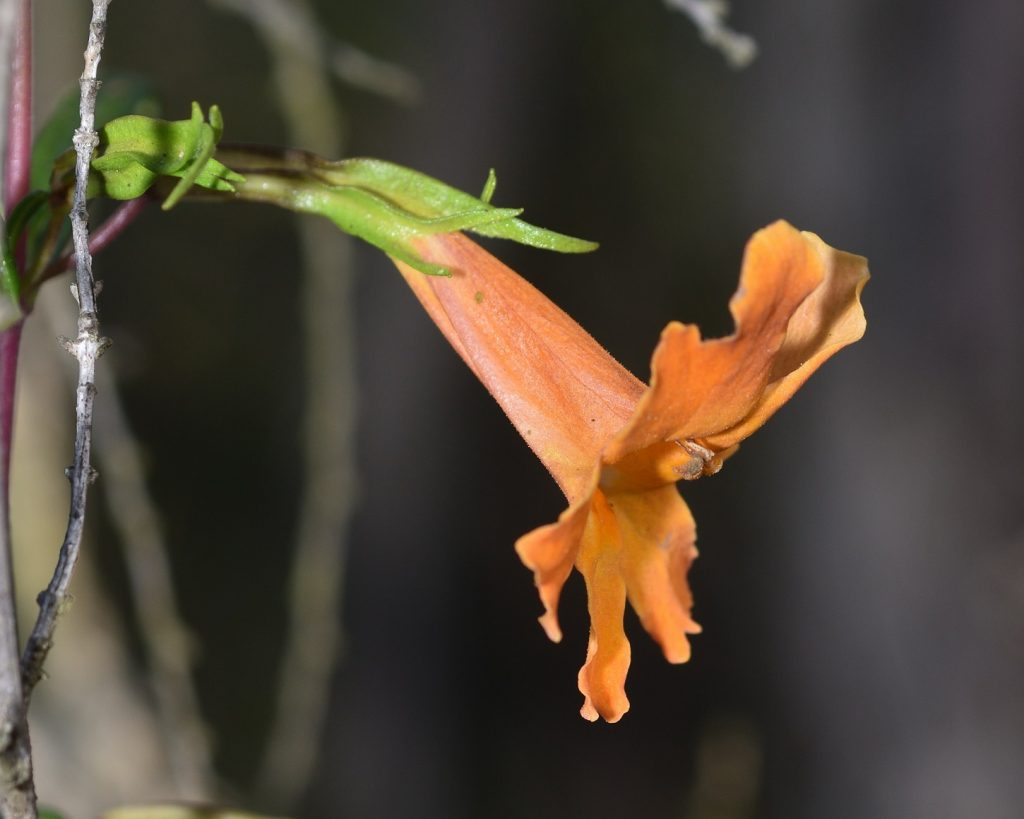
In chaparral, the most common species seems to be sticky monkeyflower (Diplacus aurantiacus). The flower has a long, tubular base, ending in five lobes. The color varies from white to orange or red. The most common color is said to be a light orange, but most of the ones I see in my neighborhood are red with an orange center. They are pollinated by bees and hummingbirds. The plant grows as a low bush.

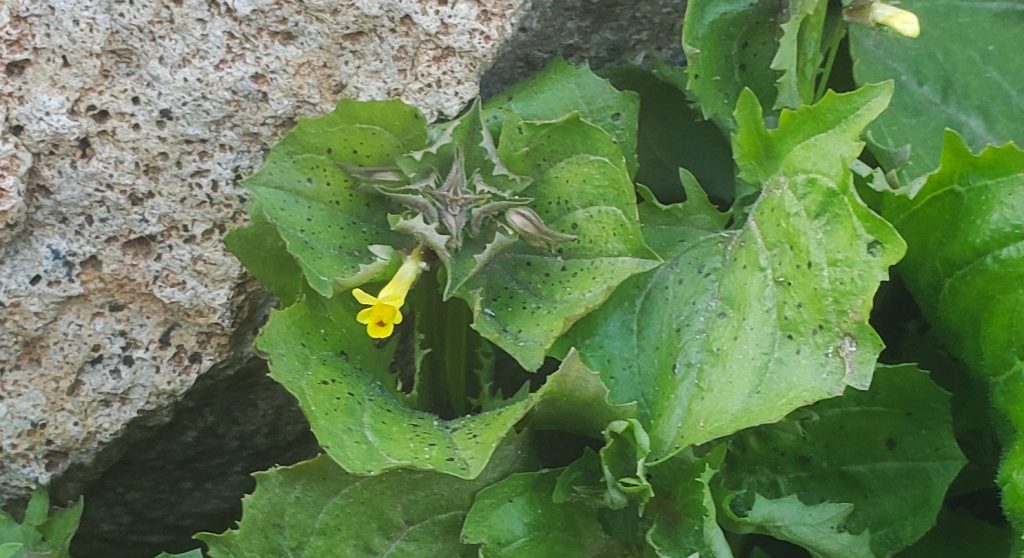
Another monkeyflower I’ve encountered in chaparral is seep monkeyflower (Erythranthe guttata). I first saw this one growing in the middle of a small stream on Cowles Mountain in Mission Trails Regional Park. Most streams in southern California are dry for much of the year. We’d been having a lot of rain for several weeks prior to this, though, so the stream was flowing pretty well. The monkeyflower had just started flowering. Its flowers were bright yellow with the tubular bases of the flowers somewhat shorter than on the sticky monkeyflower. The leaves were much larger and the plant was growing as a small shrub.

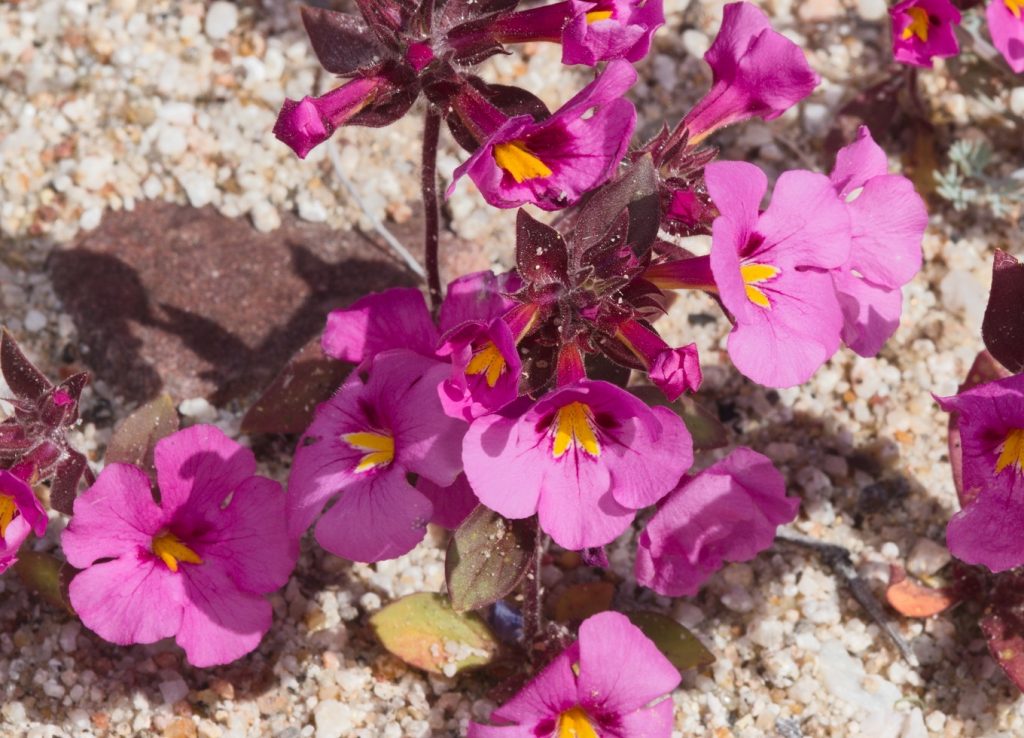
The last monkeyflower I want to mention is Bigelow’s monkeyflower (Diplacus bigelovii). This one grows in profusion in the Anza Borrego desert between February and June. It grows as an annual herb, rather than a bush, and its flowers are a beautiful magenta color. It’s definitely one of the most striking plants in Anza Borrego.
So, why the odd title for this post? All monkeyflowers used to belong to the genus Mimulus and this genus was included in the figwort family (Scrophulariaceae) — nice and simple. Beginning in the 1990’s, though, things started to get a bit more complicated…
For most of the history of biology, the classification of organisms was based almost entirely on shared characteristics. The more characteristics two organisms shared, the more closely related they were presumed to be. This approach has some obvious problems. One problem is simply that an organism can change greatly over the course of millions of years. If we don’t have many intermediate fossils, it may not be at all clear that the early organism is related to the later one.
Another problem is that sometimes organisms that are not at all closely related will evolve similar traits simply because they are experiencing the same environmental pressures. This is called convergent evolution. For example, during the age of dinosaurs, there was a group of reptiles called Ichthyosaurs that was adapted to living in marine environments. These creatures looked and probably behaved remarkably like porpoises. But porpoises are mammals and Ichthyosaurs were reptiles — not very closely related at all. Apparently, the porpoise form is just a really good form for a large, aquatic, air-breathing creature.
With the cracking of the genetic code, scientists have developed tools that can give us a much better idea of the relationships between living things. As a result, many organisms are being reclassified as molecular studies provide us with more accurate information. In the mid-1990’s, studies of the DNA found in chloroplasts (the cell components in plants that contain the chlorophyll) showed that monkeyflowers are more closely related to lopseeds than figworts. As a result, the genus Mimulus was moved from the figwort family to the lopseed family (Phrynaceae).
It 2012, Mimulus itself was split up, also as a result of DNA studies. It was decided that the original genus should be broken up into three genera — Mimulus, Diplacus, and Erythranthe. Most of the monkeyflowers, in fact, have been moved to Diplacus or Erythranthe. The taxonomy of the monkeyflowers is still in flux. After the 2012 breakup, the seep monkeyflower remained in Mimulus, but later got moved to Erythranthe.
It can be hard for a biologist to get used to such name changes, especially if they happen to a group that he/she has been studying for decades. Nevertheless, most biologists support such changes, because they understand how important it is to come up with terminology that reflects the true relationships between organisms. As our understanding of these relationships are refined, our system of taxonomy must be updated accordingly.
Update 07/12/2019
Since posting this article, I’ve encountered several more species of monkeyflower. The first one is Cleveland’s bush monkeyflower (Diplacus clevelandii), which I saw on Otay Mountain in southern San Diego County, near the border with Mexico. It’s a fairly rare species, which grows in chaparral and oak woodland. It also likes disturbed habitats.
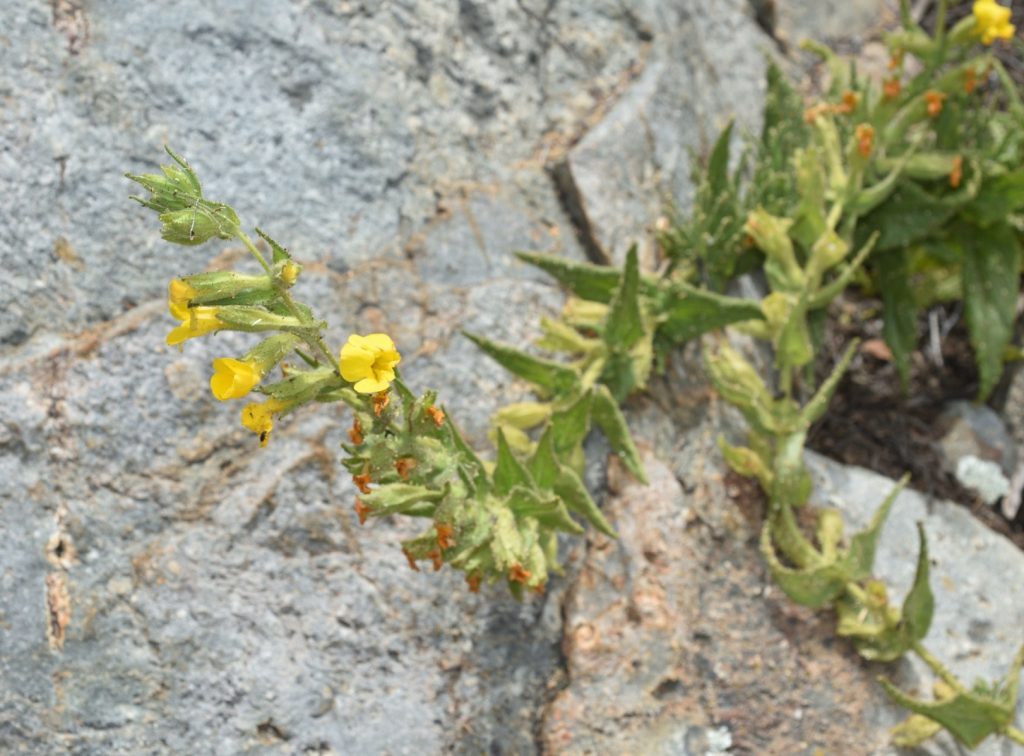
Otay Mountain, San Diego County. 06/22/19
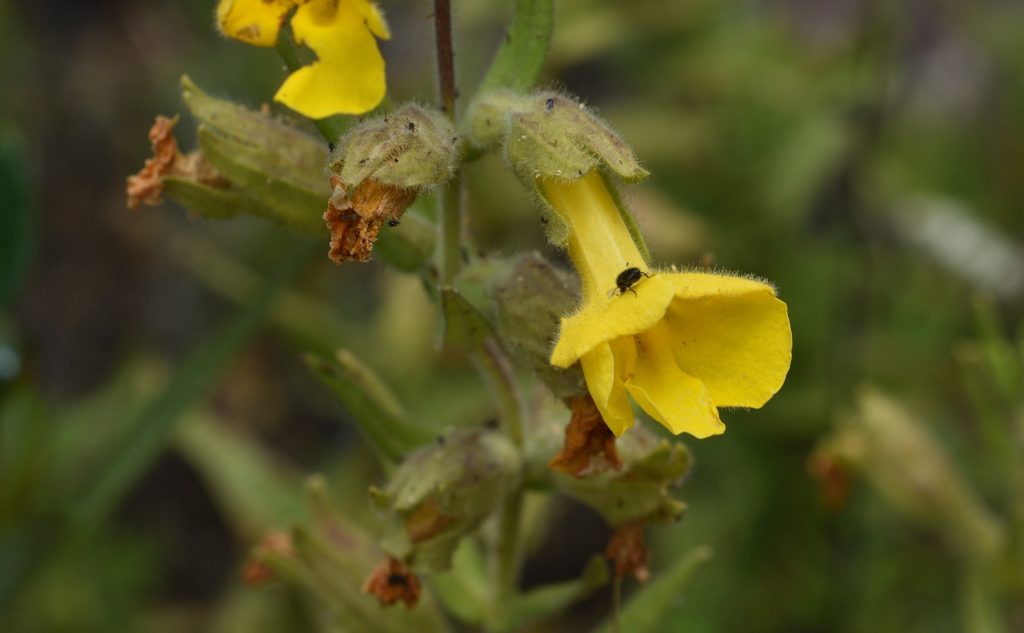
Otay Mountain, San Diego County. 06/22/19
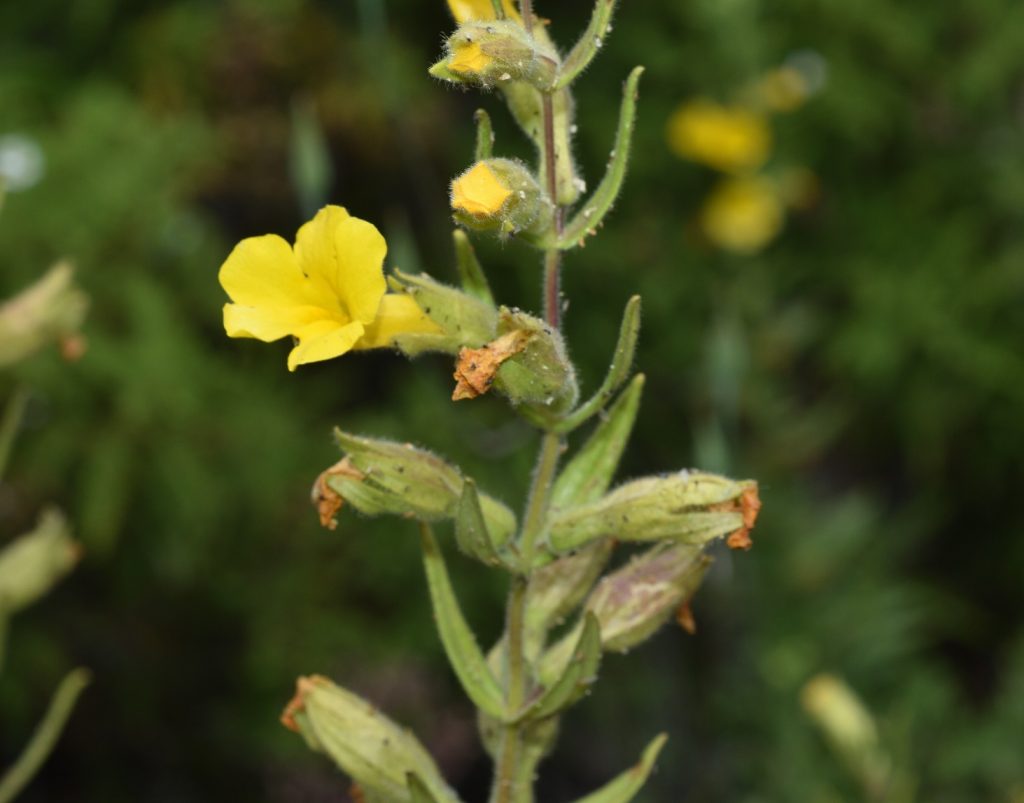
Otay Mountain, San Diego County. 06/22/19
While hiking in Noble Canyon in the Cleveland National Forest (San Diego County), I encountered a second new species called wide-throated yellow monkeyflower (Diplacus brevipes). At first sight, it could easily be confused with seep monkeyflower, but a closer examination will disclose some differences. Maybe the most obvious one is the pleat in the lower lip of the flower. The two plants also grow in very different environments. Seep monkey flower grows near water (sometimes even in water). D. brevipes grows in open chaparral.
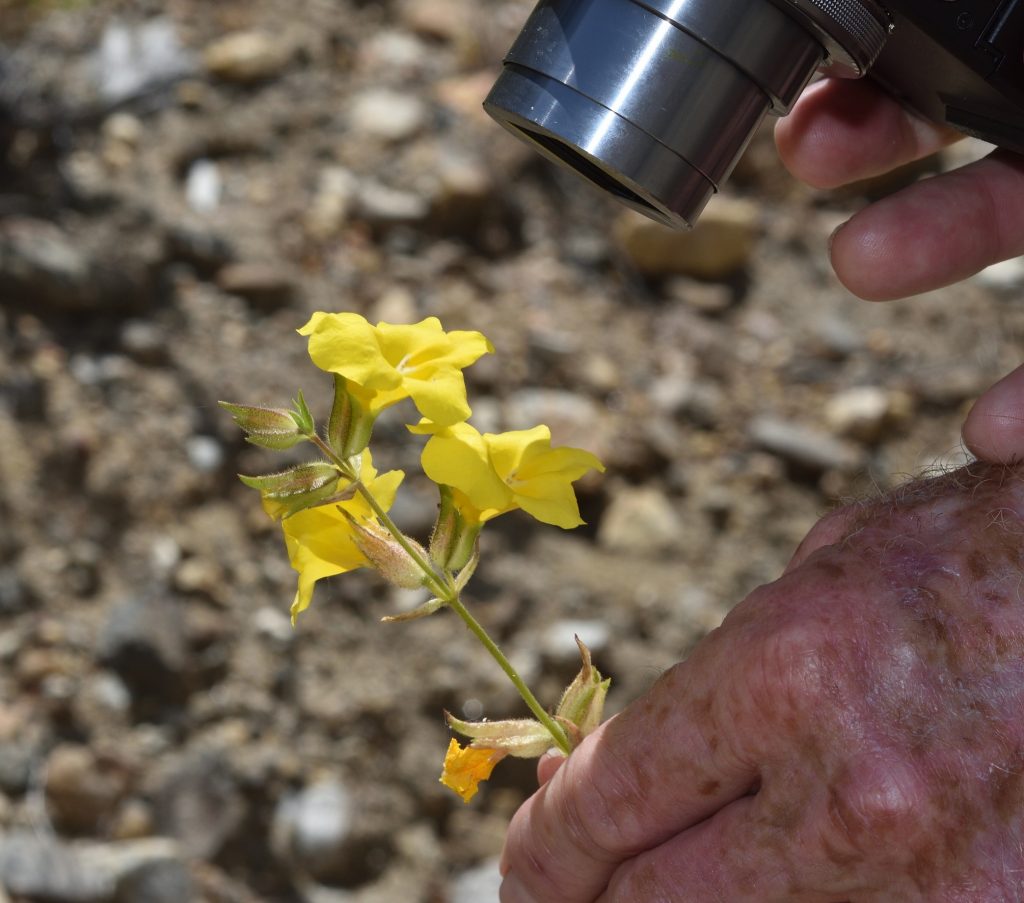
Noble Canyon, San Diego County. 07/07/19
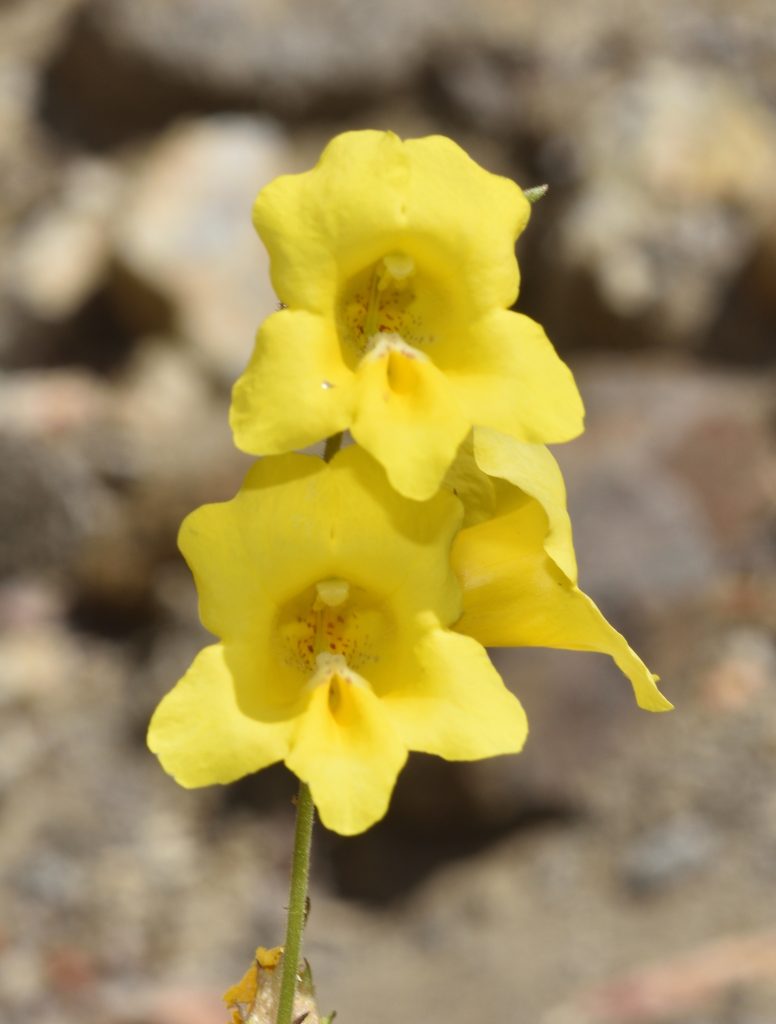
Noble Canyon, San Diego County. 07/07/19
The third new monkeyflower I saw is called false monkeyflower. If you find that last sentence a bit confusing, that makes two of us. As far as I can tell, false monkeyflower is regarded as a true monkeyflower, despite the name. Of course, “monkeyflower” is itself a common name, so, from a scientific point of view, I guess it’s kind of a moot point.
False monkeyflower is quite a bit different from the other monkeyflowers we’ve seen here. The most striking difference is that the flowers are much smaller. I would guess that they are only about an eight of an inch across. (I should have included a coin in one of the photos for reference, but I didn’t think of it.)
False monkeyflower is sometimes classified in the genus Erythranthe, in which case, it’s called Erythranthe pilosus, but because it’s so different from other monkeyflowers, many botanists place it in its own genus, Mimitanthe. In that case, it’s called Mimitanthe pilosa.
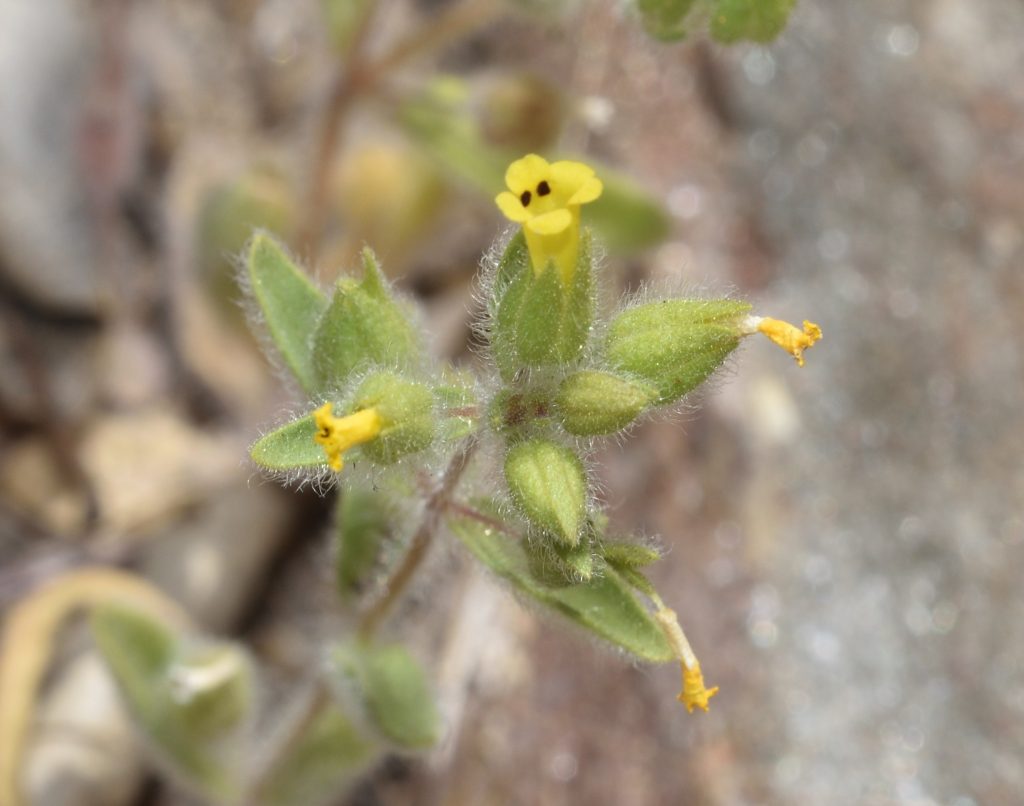
Noble Canyon, San Diego County. 07/07/19
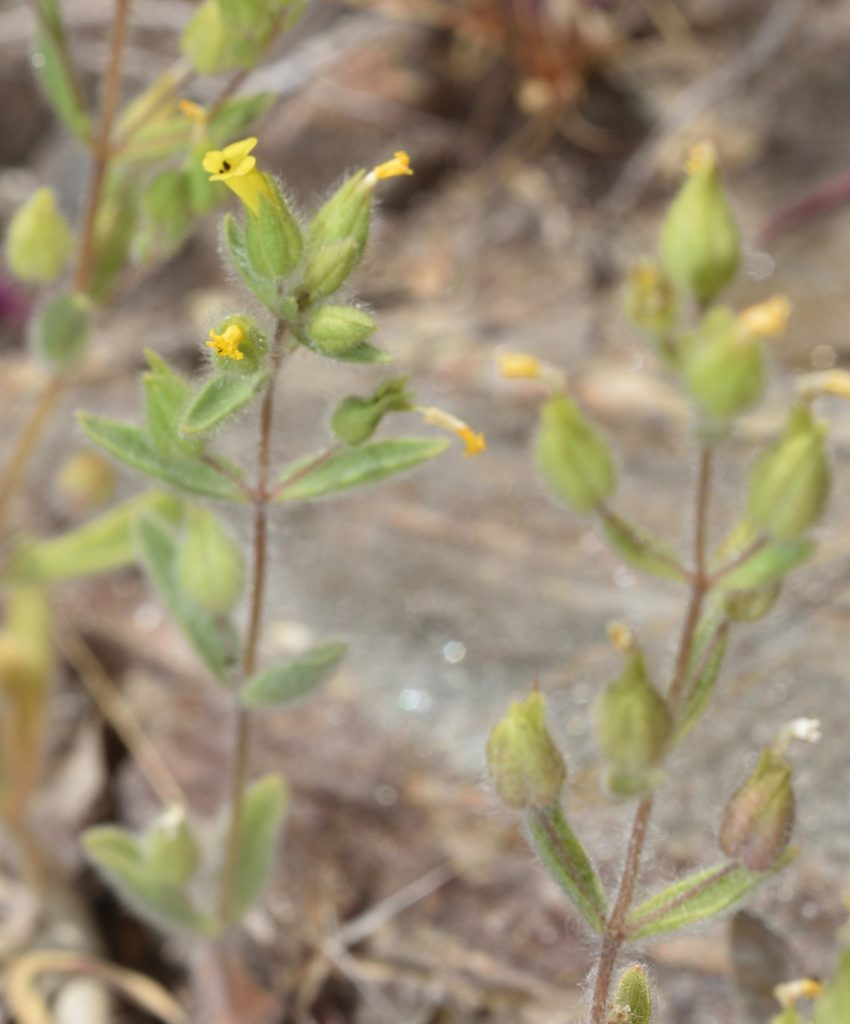
Noble Canyon, San Diego County. 07/07/19