One of my favorite plants in southern California is fringed spineflower (Chorizanthe fimbriata). It’s a wonderfully strange-looking plant. The leaves form a tiny rosette around the base of the stem and are usually not visible unless you push the inflorescence out of the way. Even then, they’re often dry and shriveled up. The flower petals are narrow and pointed and, as the name suggests, fringed. At the base of each flower is a number of tiny spines. Closeup, the flowers are really spectacular, as you can see from the following photos. Fringed spineflower is found in a variety of habitats from chaparral to woodlands.
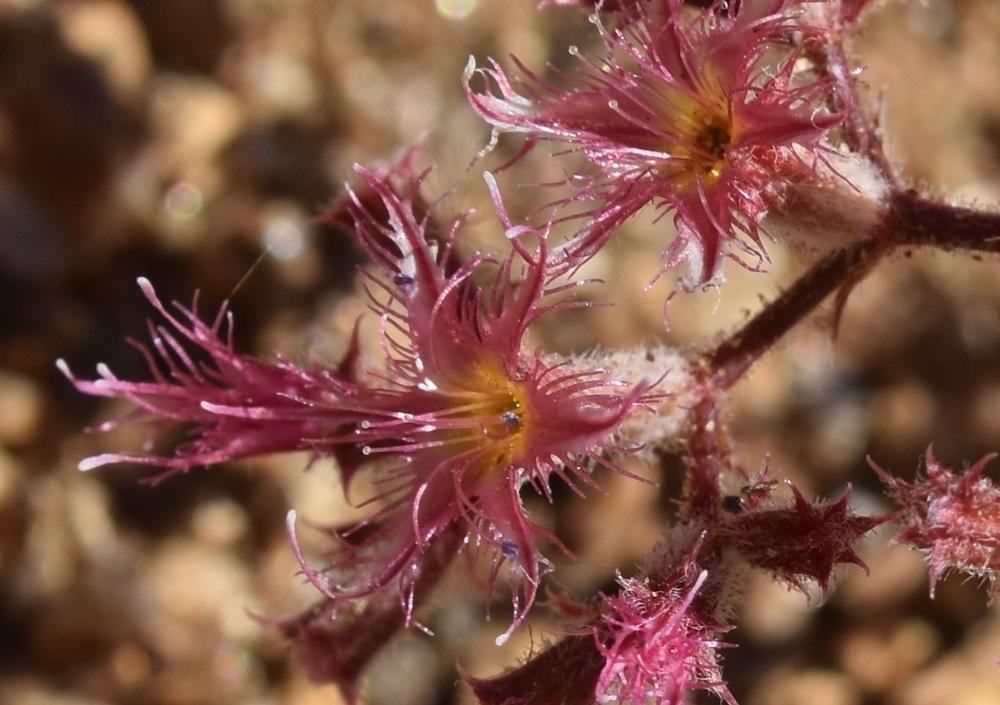
The spineflower in the photo above and the one in the next photo are different varieties of the same species. The first one is Chorizanthe fimbriata var. laciniata and the one below is Chorizanthe fimbriata var. fimbriata. When members of a species routinely exhibit different characteristics, but those characteristics don’t prevent them from interbreeding, they’re sometimes classified as different varieties.

Mission Trails Regional Park, San Diego County. 05/31/19
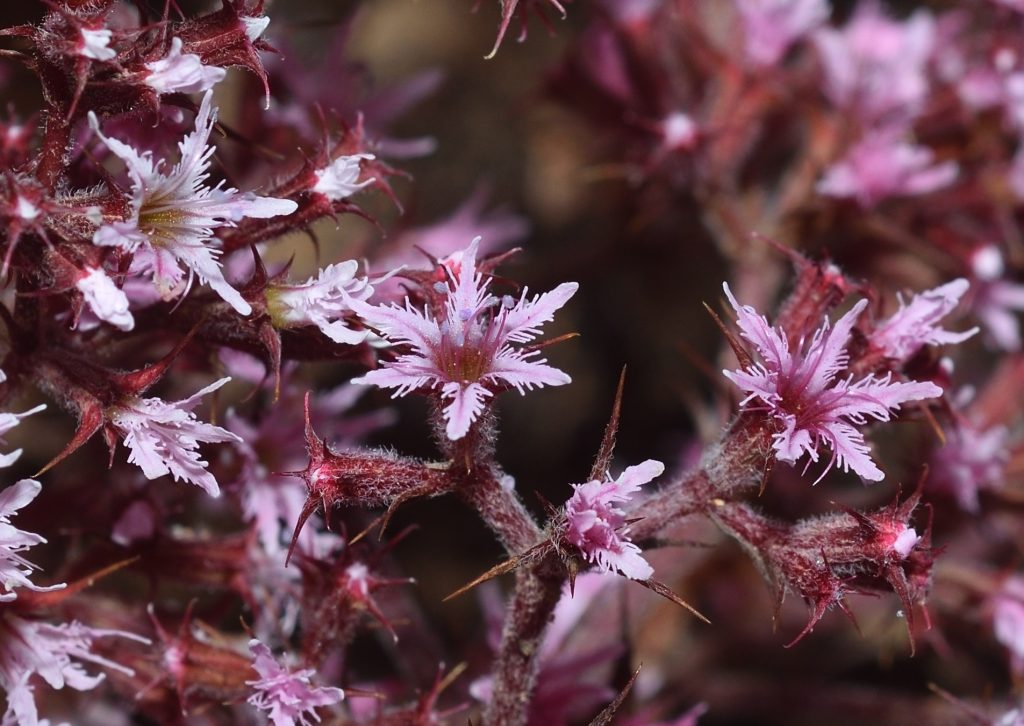
Just to give you an idea how small we’re talking here…
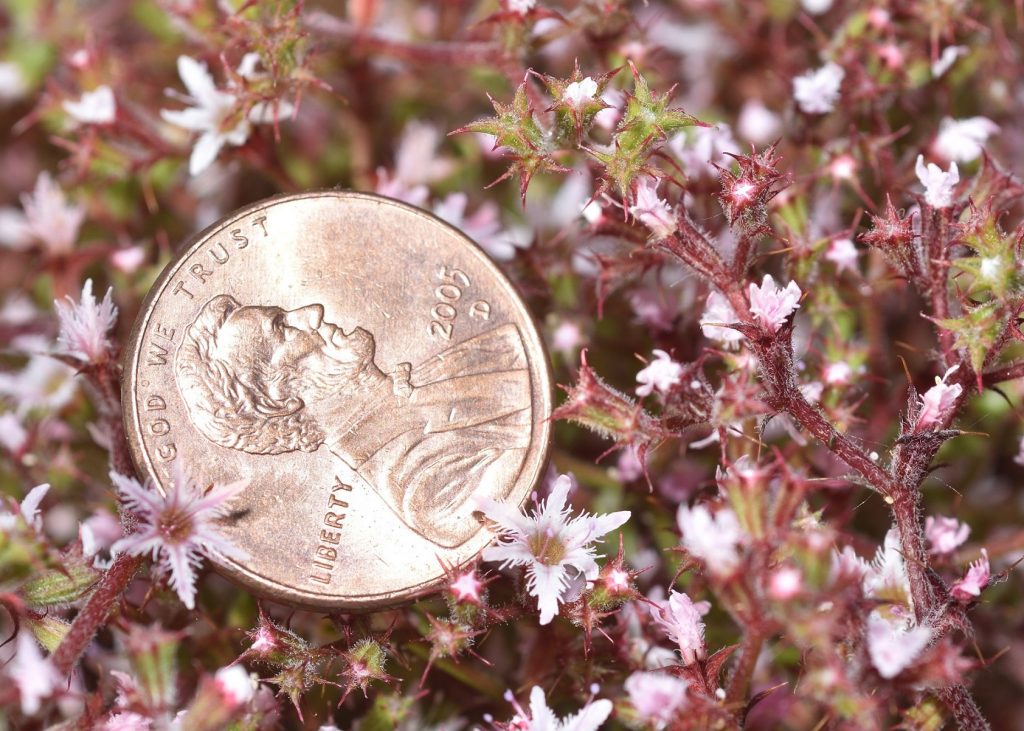
Fringed spineflower (Chorizanthe fimbriata)
Mission Trails Regional Park, San Diego County. 06/11/19
The plant shows a bit more green before it’s in full bloom.

Mission Trails Regional Park, San Diego County. 06/11/19
And here’s a photo of the rosette.
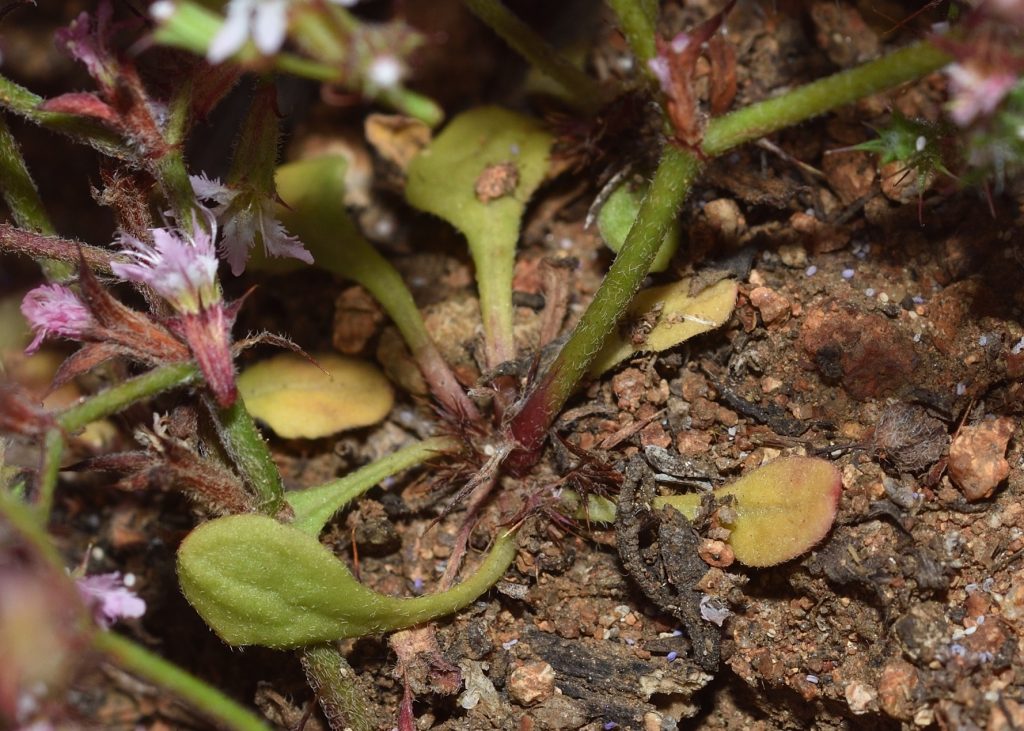
Mission Trails Regional Park, San Diego County. 06/11/19
There are many other species of spineflower in Chorizanthe. A common one in chaparral and scrub environments is Chorizanthe staticoides or Turkish rugging. (Is that a cool name or what?) It’s very similar to C. fimbriata, but the petals look more like regular petals, without the elaborate fringes.
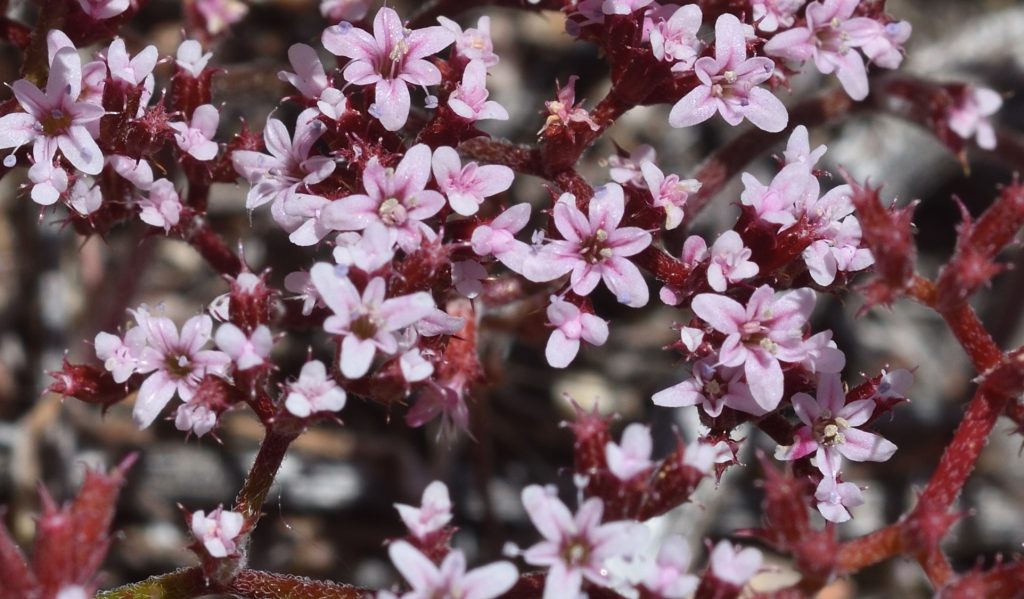
Sunshine Mountain, near Descanso, CA. 06/02/19
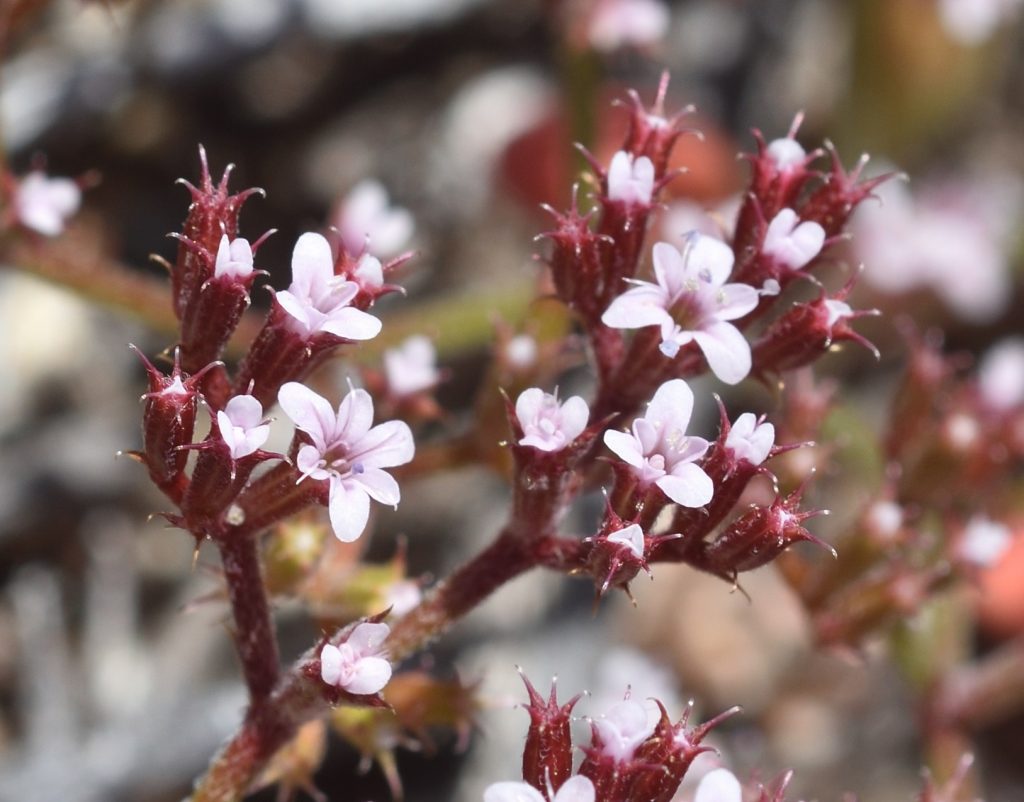
Sunshine Mountain, near Descanso, CA. 06/02/19
A common species of Chorizanthe in the Sonoran desert is devil’s spineflower (C. rigida). It looks quite a bit different from C. fimbriata and C. staticoides. It can be single-stalked or multi-stalked, but it doesn’t form mats and the spikes are much more pronounced. The leaves are also more visible. They form an interesting contrast to the spikiness of the stems and add to the overall strangeness of the plant. Devil’s spineflower grows to around 4 or 5 inches tall. Its flowers are yellow, but very tiny and hard to see. After flowering, the plant dies and the leaves and stems dry up, but the stiff skeleton retains its shape, turning grey, brown, or almost black.
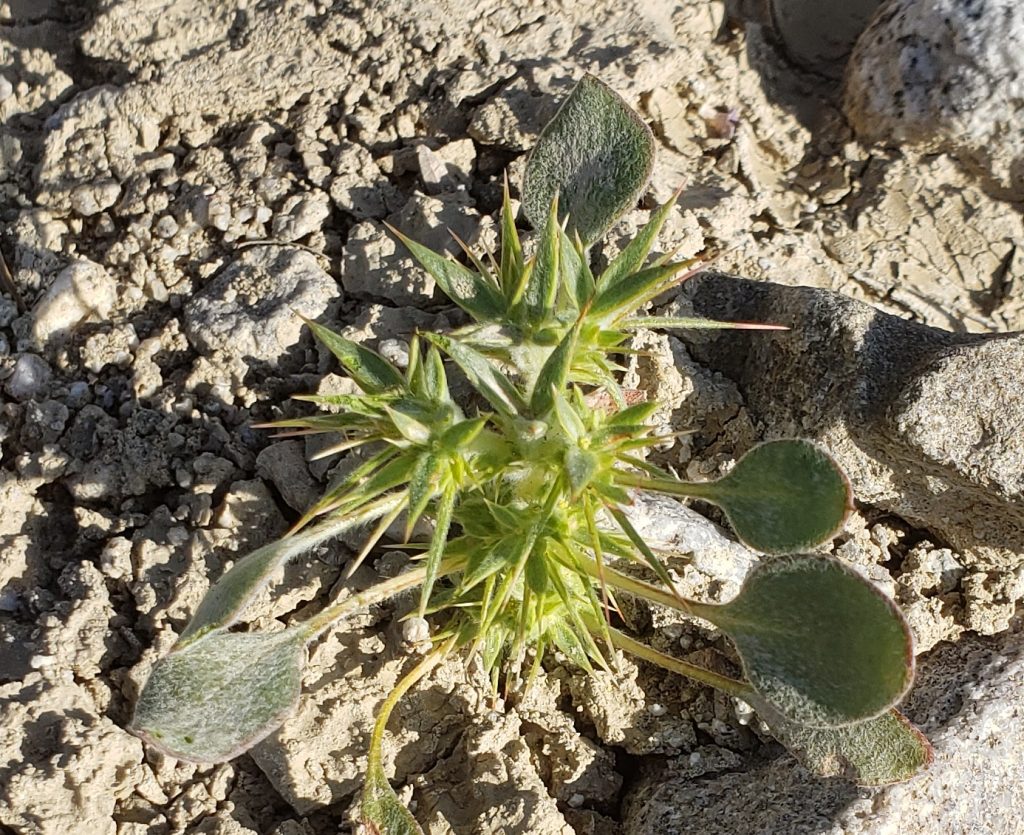
Anza Borrego State Park. 03/24/19
In desert flats, debris washed downstream often collects around the plant’s skeleton, forming a small hillock which can obscure the plant in the center. This debris may serve as fertilizer for the next generation. Although small and easy to overlook, the evil-looking spines of devil’s spineflower makes it easy to see how it got its common name.
Brittle spineflower (Chorizanthe brevicornu) is a widely distributed plant, but it’s most common in the desert. It has a similar form to C. fimbriata and C. staticoides, but, unlike them, the whole plant is usually bright green. It has very tiny white or greenish-yellow flowers.
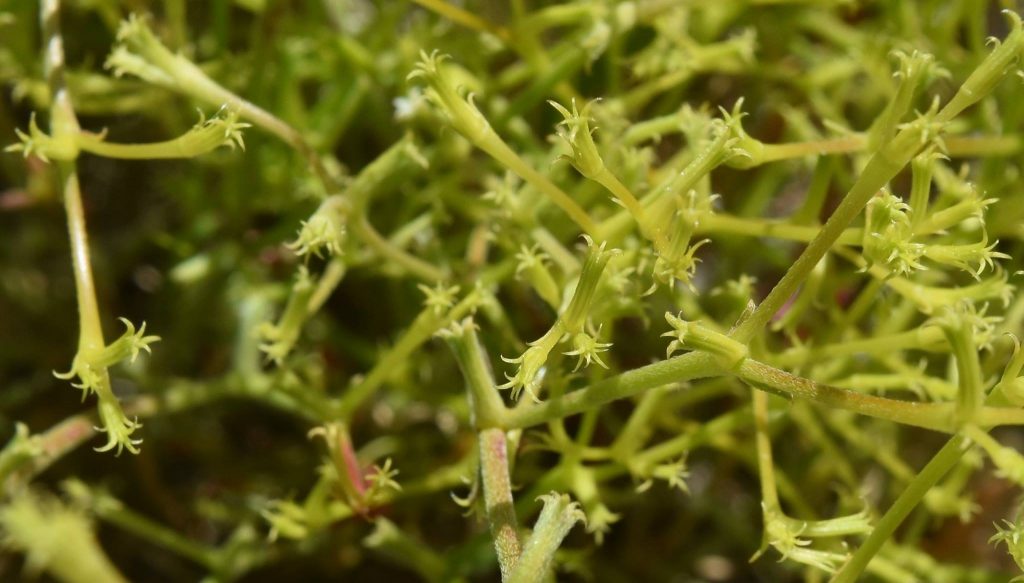
Anza Borrego State Park. Probably March, 2019
Last, but not least, we have prostrate spineflower (Chorizanthe procumbens). It’s often yellowish-green, as in these photos, but can be gray or reddish. The tiny flowers are white or yellow. You can see a white one near the center of the following photo.
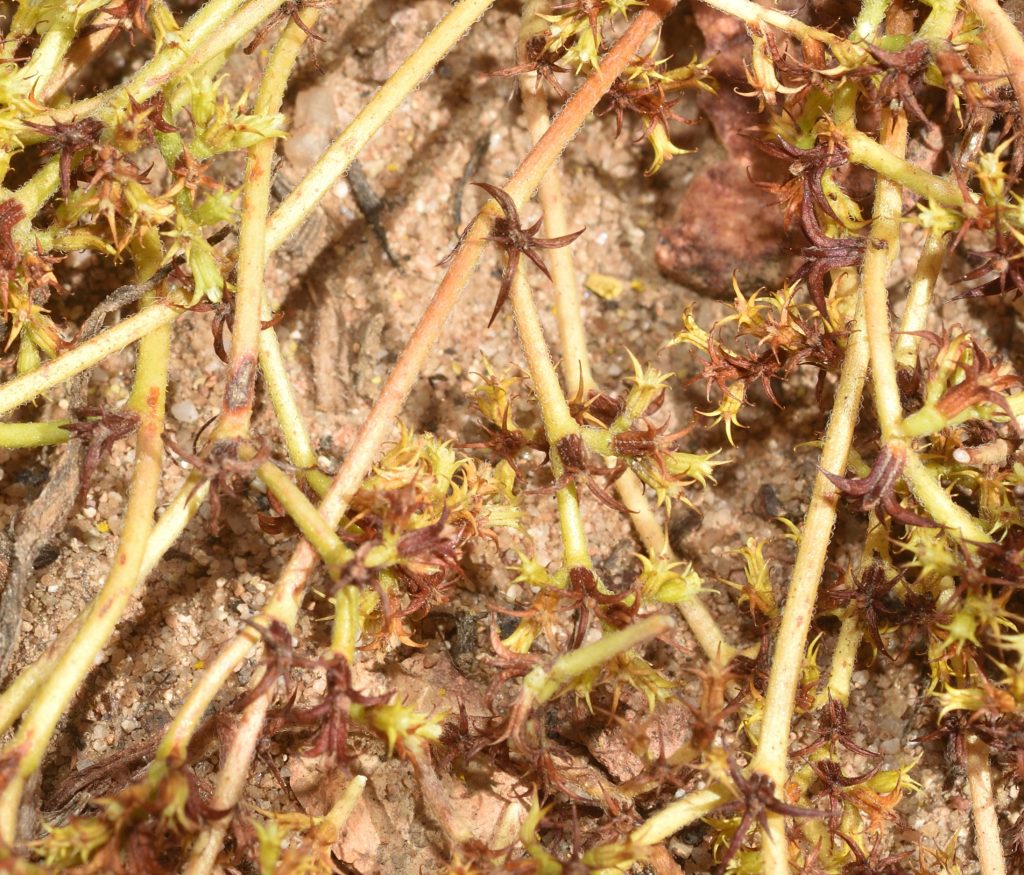
Los Penasquitos Canyon, San Diego County. 06/09/19

Los Penasquitos Canyon, San Diego County. 06/09/19
All the spineflowers mentioned above are annuals. To find perennial species, you’ll have to go down to Chile or Argentina, which I haven’t gotten around to doing yet. Maybe someday.
Chorizanthe and Eriogonum
Spineflowers are in the buckwheat family, Polygonaceae. In particular, they’re very closely related to plants in the genus Eriogonum. If you do any hiking at all in southern California, you’ve seen lots of California buckwheat (Eriogonum fasciculatum). The following photos show E. fasciculatum in various stages of development. Can you see similarities to any of the spineflowers?
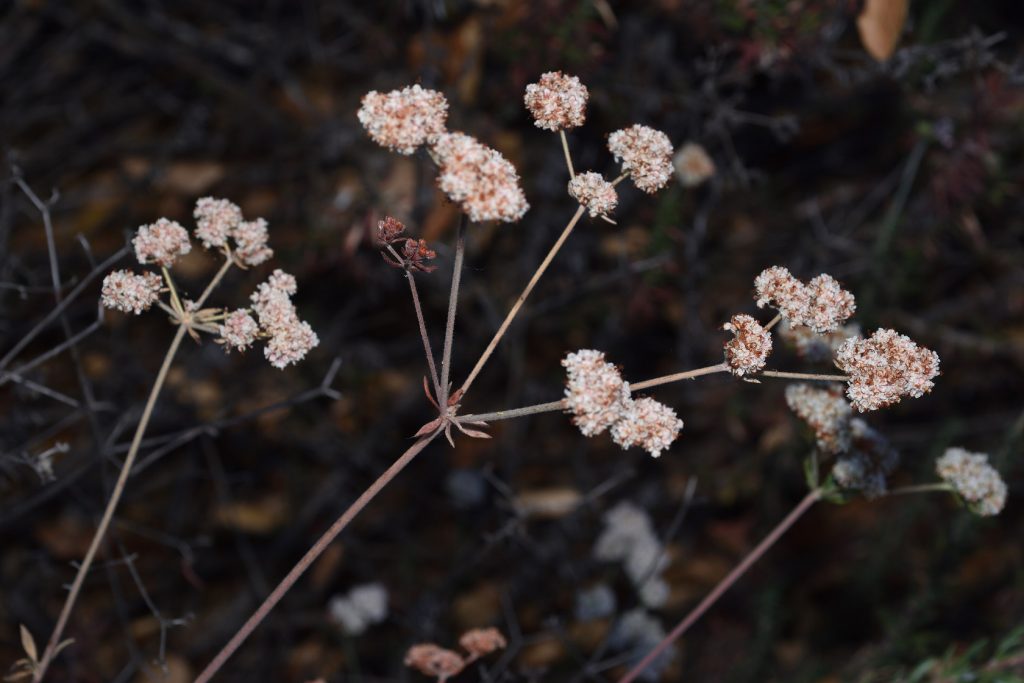
California buckwheat (Eriogonum fasciculatum)
San Diego County. 07/04/19
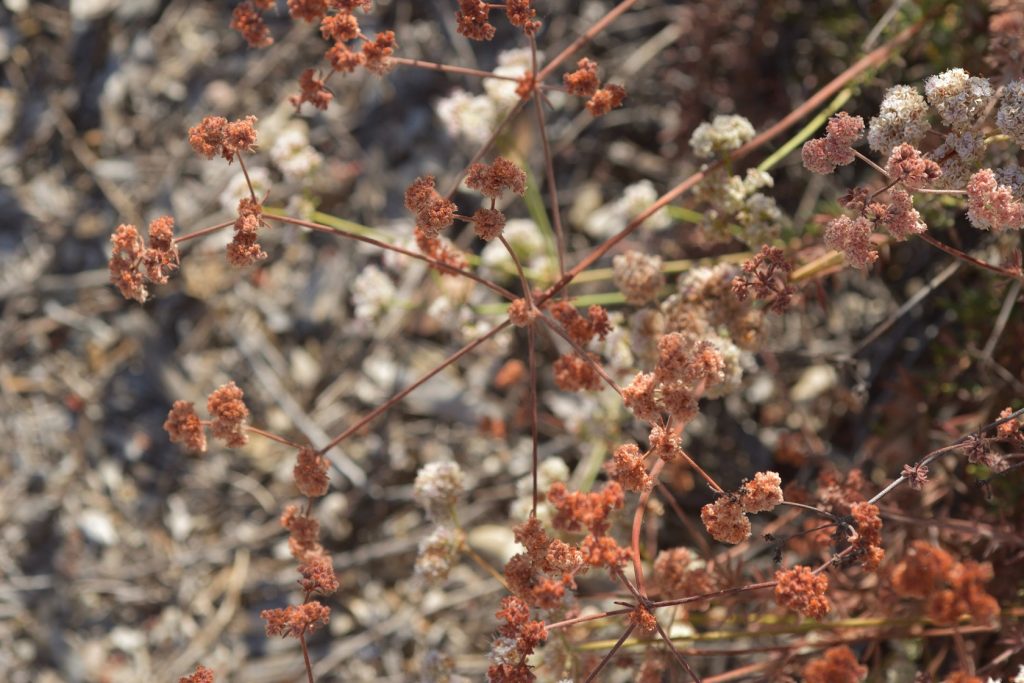
San Diego County. 07/04/19
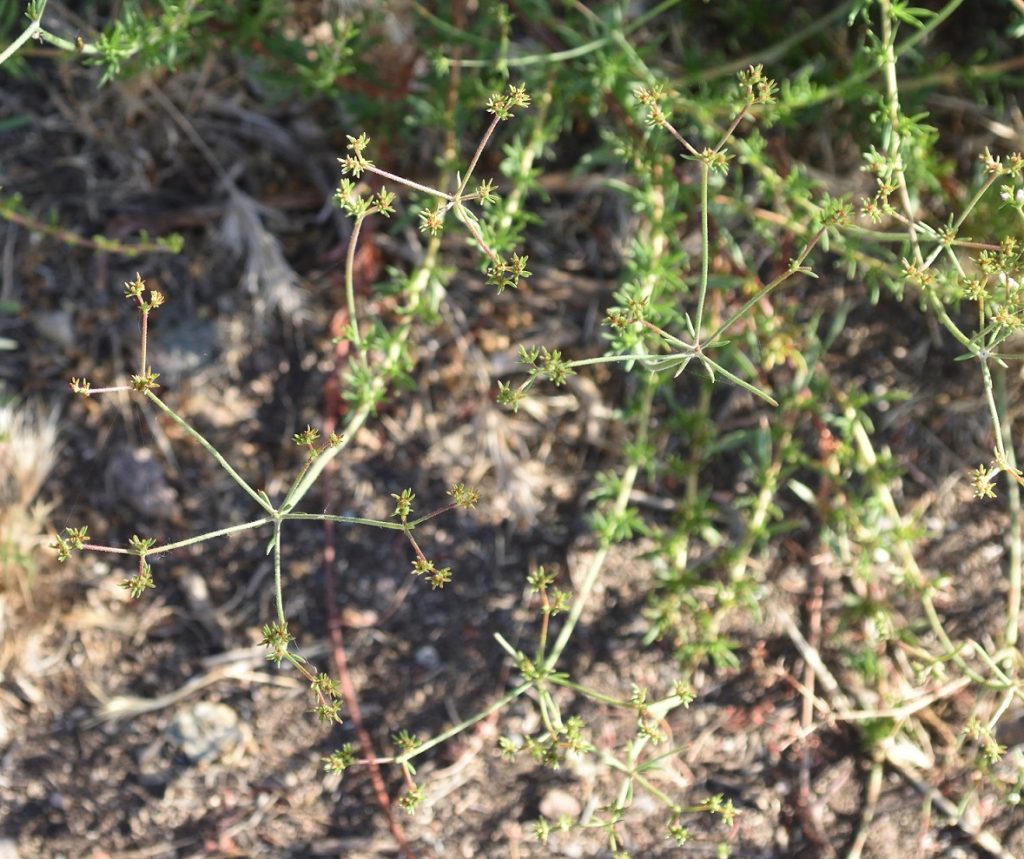
San Diego County. 07/04/19
A common species of Eriogonum in the Sonoran and Mohave deserts of southern California is E. inflatum or desert trumpet. Here’s a photo I took of this weird plant in the badlands of the Sonoran desert. You can just see the dried remains of a rosette of leaves at the bottom of the plant.
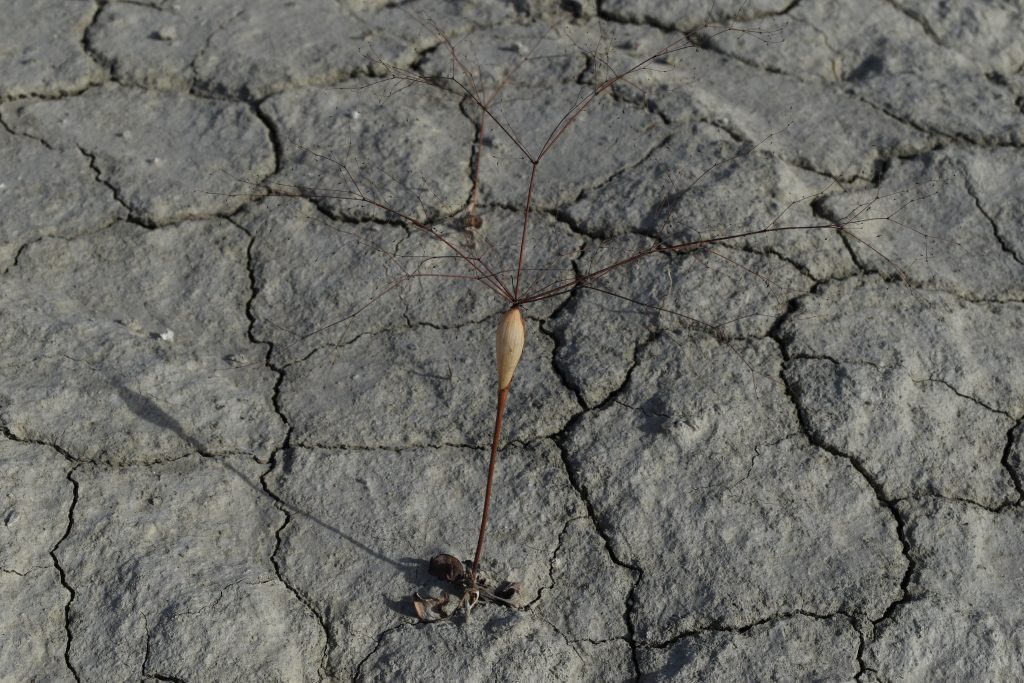
Anza Borrego State Park. 12/09/17
According to a molecular study done by A. S. Lamb Frye and referenced in an article on the Flora of North America website, Chorizanthe is actually embedded within Eriogonum. This means that either all the species in Chorizanthe should be moved into Eriogonum or Eriogonum should be broken up into multiple genera. You can check out the Flora of North America article here.
So it looks like any botanists out there that happen to specialize in Chorizanthe or Eriogonum can expect a bit of an upheaval in the near future as taxons are reorganized. As always, I’m amazed by the extraordinary variety of forms exhibited by organisms that are, nevertheless, very closely related.