In July of 2016, not too long after moving to California, I hiked to the top of a peak in the Colorado Desert. When I got close to the top, I witnessed an astounding sight — hundreds of thousands of ants flying in a vast swarm at the highest point of the peak. (Yes, you read that right — flying ants. More on that later.)
The phenomenon is called hilltopping and I’ve encountered it in ants a couple of times since then. The last time was on the top of Stonewall Peak near Julian, CA. My nephew, Derrick, was hiking with me. It was the first time he’d encountered hilltopping ants, so I got some great videos of him savoring the experience.
Ants hilltopping. Stonewall Peak near Julian, CA. July 2016.
Ants hilltopping. Stonewall Peak near Julian, CA. July 2016.
Many people are surprised to learn there are flying ants. The majority of ants in a colony are workers. All the workers are female, but they’re sterile, so they don’t reproduce. All they do is work. An ant colony needs some way to start other colonies, though, so the colony also produces non-sterile ants. Naturally, these come in both the male and female variety and, when sexually mature, they have wings. (This is true for most types of ants. As with most things in nature, there are exceptions.)
At certain times during the year, typically in spring or summer, all the reproductive ants of a particular species in an area will leave their colonies and come together in a huge swarm to mate. How do these ants find each other? One solution is hilltopping. When a flying ant leaves its colony, it will head for the highest spot in its immediate vicinity. As a result, ants will congregate at the summit of the highest peak in the area.
Many hiking peaks have registers at the top. A register is just a notebook inside a can or jar, which is usually left wedged in between some rocks. Hikers will sign the register — writing their name, the date, and maybe a comment or two. So you end up with a record of the hikers that have visited a peak over the years. On that peak back in July 2016, the register was inside a large red can. The can was easily visible and the entire swarm of ants was centered directly on it! It’s hard for me to get across just how remarkable this was. The swarm covered a large area, but it was at its absolute densest right at that can. It was very obviously the center of the swarm.
Why were the ants targeting the can? Two possibilities come to mind. The top of the can could have been the absolute highest point of the peak — it did look pretty close. The other possibility is that the ants were attracted to the can because its bright red color made it stand out. I’m leaning towards the latter explanation. I’ve read that some types of ants will congregate around the shiniest object in a vicinity instead of the highest point. Maybe this particular species combines the two behaviors.
After mating, the male ant dies, his purpose in life fulfilled. Their bodies will collect in depressions in the ground where you can scoop them up by the handfuls! The female, meanwhile, flies off to find a place to start a new colony. Her chances are not good — ants are tasty snacks for a lot of animals — but if she survives long enough to find a suitable spot, she uses her legs to break off her wings, digs a chamber in the ground, and gets down to the business of laying eggs.
Many other types of insects hilltop. I often see butterflies hilltopping, for instance. Unfortunately, they don’t do it in vast swarms like the ants. (How cool would it be if they did?) The males of some butterfly species will actually establish a territory, chasing off intruding males. I’ve even seen a butterfly chasing off a small bird! Sometimes two male butterflies will fly around each other in a spiral, flying higher and higher, until one of them gives up. This establishes the dominance of the other male. I presume the loser will fly off, leaving the territory to the winner.
I absolutely refuse to make any jokes about fungi being “fun guys”. People who do that should be shot. Really. Fungi is the plural of fungus. The fungi are a separate kingdom of life — like the animal kingdom or the plant kingdom. They include yeasts, molds, and mushrooms.
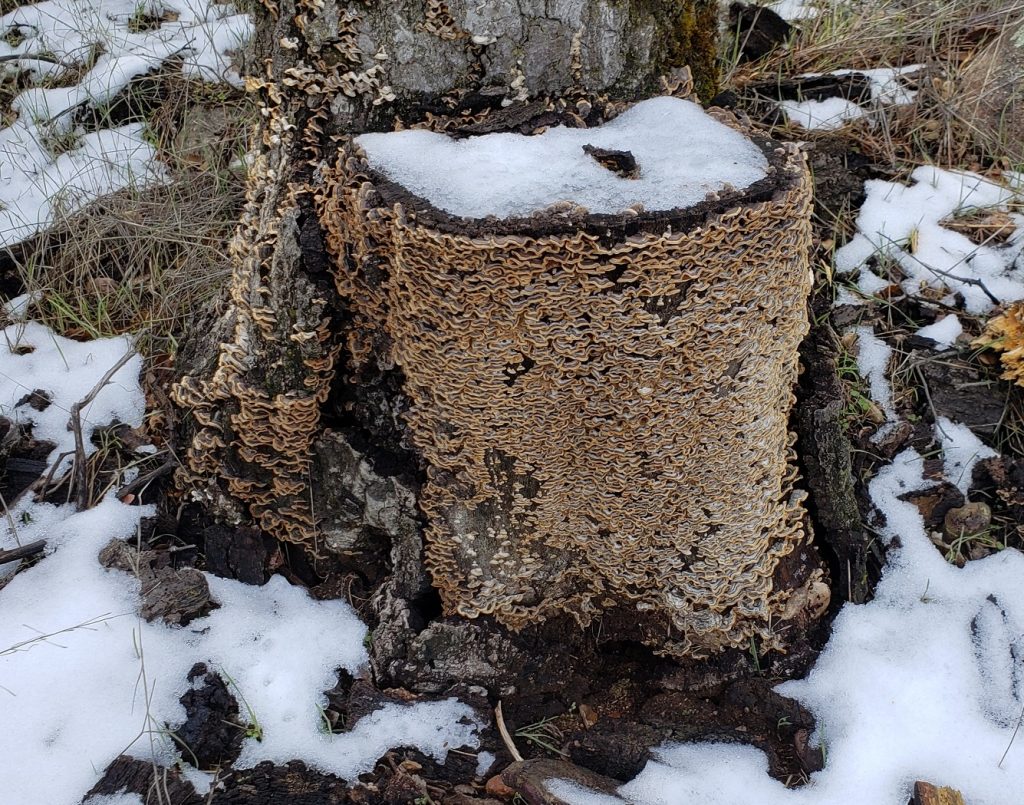
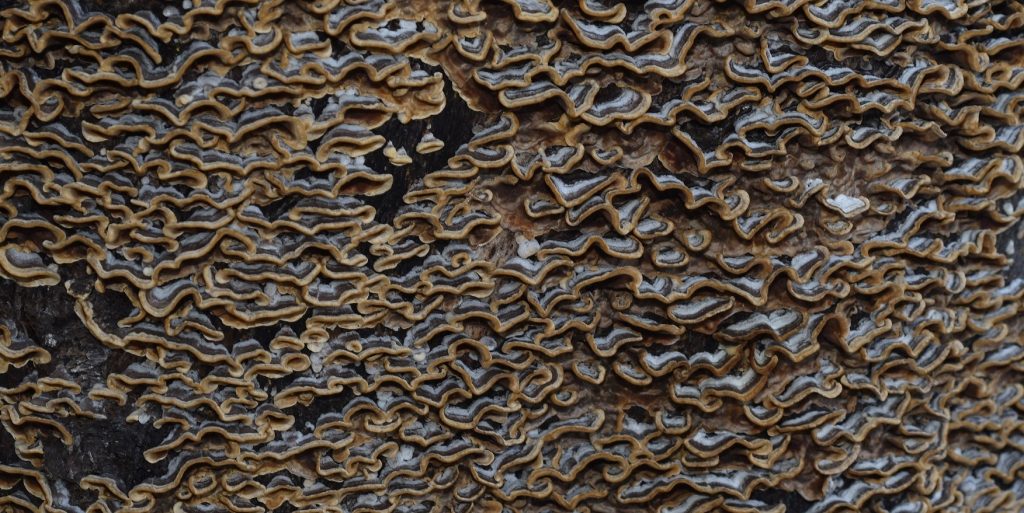
Hairy Curtain Crust (Stereum hirsutum)
Near Lake Morena, Campo, CA 2/24/2019
Actually, a mushroom is just the fruiting body (reproductive part) of the associated fungus. The main body consists of very thin filaments called hyphae (singular hypha). These hyphae are hidden in the substrate — that is, in the soil or inside the wood or whatever — that the mushroom is growing on. Collectively, the hyphae form an extensive network called a mycelium (plural mycelia).
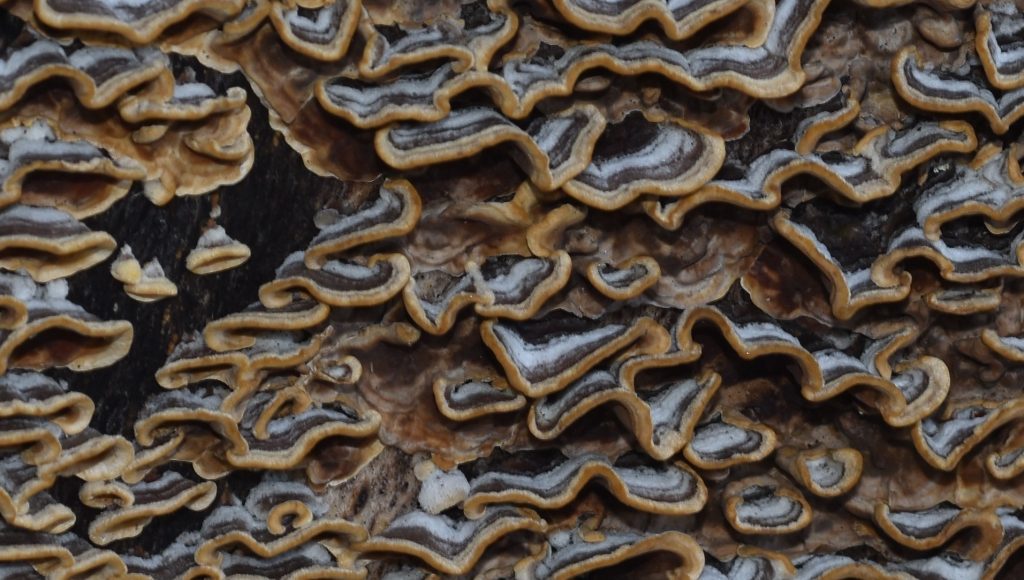
Gills of the hairy curtain crust mushroom (Stereum hirsutum)
Because fungi don’t move around like animals, most people assume they’re closely related to plants. In fact, geneticists have found that fungi are more closely related to animals! This makes sense when you consider that fungi don’t use photosynthesis to make their own food like most plants do. Like animals, they feed off detritus (rotting organic matter) or off other organisms. The difference is, instead of ingesting their food and then digesting it inside their bodies, fungi secrete digestive juices into the surrounding environment. Their food gets broken down by these secretions and the fungi absorb the resulting nutrients.
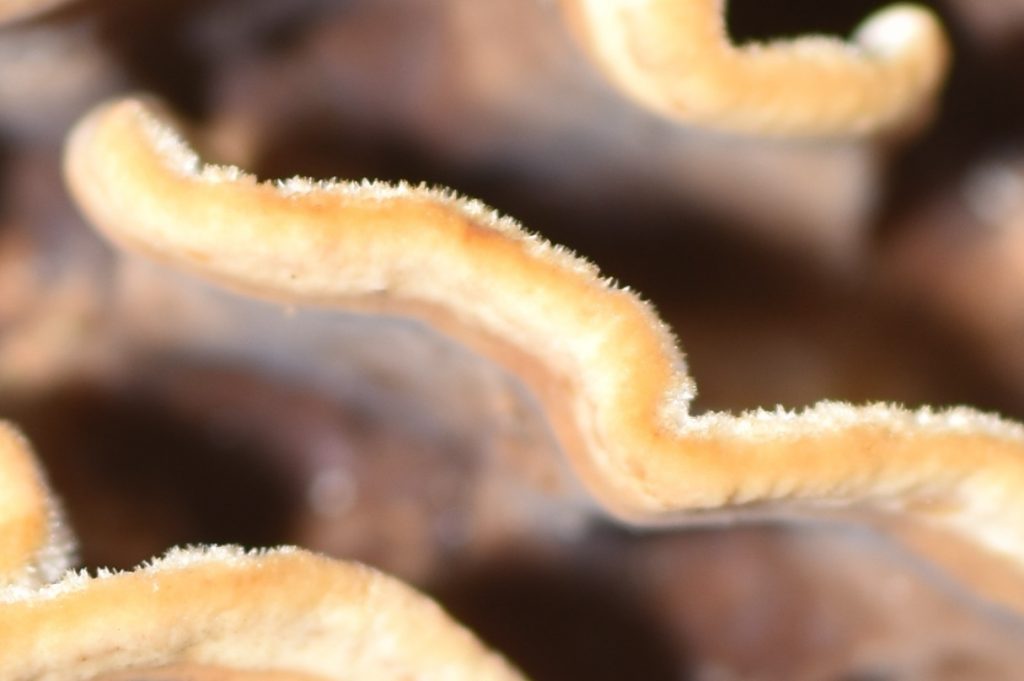
Hairy Curtain Crust (Stereum hirsutum)
Closeup
It’s long been known that fungi serve an important role in ecosystems as decomposers and recyclers, but, in recent years, scientists have uncovered other roles that are nothing short of mind-blowing. It turns out that most plants form mutualistic relationships with certain types of fungi. These fungi, called mycorrhyzal fungi, grow around and often into the roots of their host plant. The fungal network (mycelium) then acts as an extension of the plant’s root system, greatly increasing the plant’s ability to absorb water and minerals from the soil. In return, the plant supplies the fungus with carbohydrates, such as glucose and sucrose. If a plant is forced to grow without its usual fungal symbionts, it will be much smaller and less healthy, if it survives at all. Similarly, some mycorrhizal fungi will not survive unless a host plant is present.
That’s pretty interesting, but it gets better. It turns out that mycelia form a kind of communication and transportation network between plants. If a tree is not getting enough sunlight because it’s being shaded by larger trees, the fungal network may actually transfer food from the larger trees to the smaller one to supplement its diet. Remarkably, the fungi sometimes even transport food between different species of tree! All this is not meant to suggest that plants or fungi are actually intelligent; although, some people have suggested that there may be a kind of intelligence or even consciousness involved. That seems unlikely to me, but, either way, the relationship between plants and fungi is certainly much more complicated than anyone expected and we’re still learning more.
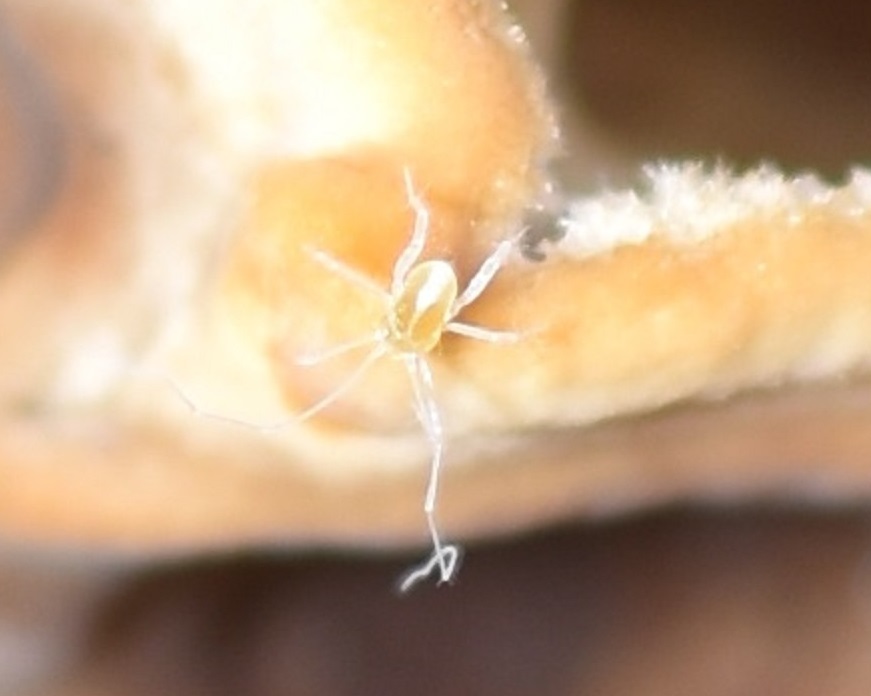
Mite
One final note… As I just mentioned, many fungi send their hyphae into the roots of their host plants. There is some evidence that the vascular systems of plants evolved from such a relationship. In this scenario, fungal hyphae would have formed a relationship with some non-vascular plant, living inside the plant just as fungal hyphae often do today. Eventually, these hyphae became a part of the plant, evolving into the vessels of the plant’s vascular system!
This isn’t quite as far-fetched as it might sound. It’s been shown that many of the organelles in plants and animals, such as chloroplasts, protoplasts, and mitochondria started out as free-living microbes that were ingested by a larger microbe. Instead of being digested, they somehow managed to survive inside the larger cell, eventually forming a symbiotic relationship with it. This “dual” cell eventually evolved into a multi-cell organism. This would be a nice subject for a future post, but, for now, suffice it to say that such relationships lend credence to the idea that the vascular system in plants could have started off as a network of invading fungal hyphae.
I’ve been talking mostly about the fungi that form mushrooms. I shouldn’t end this post without a brief mention of the other two types of fungus. Molds are similar to the mushroom fungi, but they have much smaller and, presumably, simpler reproductive structures. Yeasts are single-cell fungi. Some yeasts do form chains of cells, but they don’t form mycelial networks.
This post has been about an entire kingdom of living things, so, obviously, we’ve barely scratched the surface. I’m sure there’ll be many more posts to come about this fascinating group of organisms!
Liverworts are primitive, non-vascular plants in the division Marchantiophyta. Mosses, hornworts, and liverworts, collectively, are referred to as bryophytes. Like mosses, liverworts tend to be small and green. They also often grow alongside mosses, so many people who see liverworts assume they are mosses, although the two don’t really look much alike.
“Wort” is simply a Middle English word meaning plant. So the name liverwort means “liver plant”. It got this name because, in olden times, people thought that the main body of some types of liverworts were shaped like livers. And, believe it or not, they thought that meant that the plant would be good for treating liver diseases. This was based on the doctrine of signatures, which argued that God made plants for the benefit of people and so he provided clues to their uses by making them look kind of like the organs they could be used to treat.
The earliest known fossils of land plants, which are between 471 million and 473 million years old, are liverworts, so they’re probably closely related to the first plants to colonize the land. Non-vascular just means that they don’t have a vascular system consisting of xylem and phloem. These are highly specialized tissues used to transport water and nutrients. This is not to say that liverworts don’t have any kind of transport system at all — they have to have some way to get water and nutrients to their cells — but the lack of a vascular system means that they depend more on simple diffusion, which limits the size they can attain. As a result, all liverworts are quite small. Liverworts don’t have roots. Instead, they have single-celled rhyzoids (thin filaments) that anchor them to the substrate.
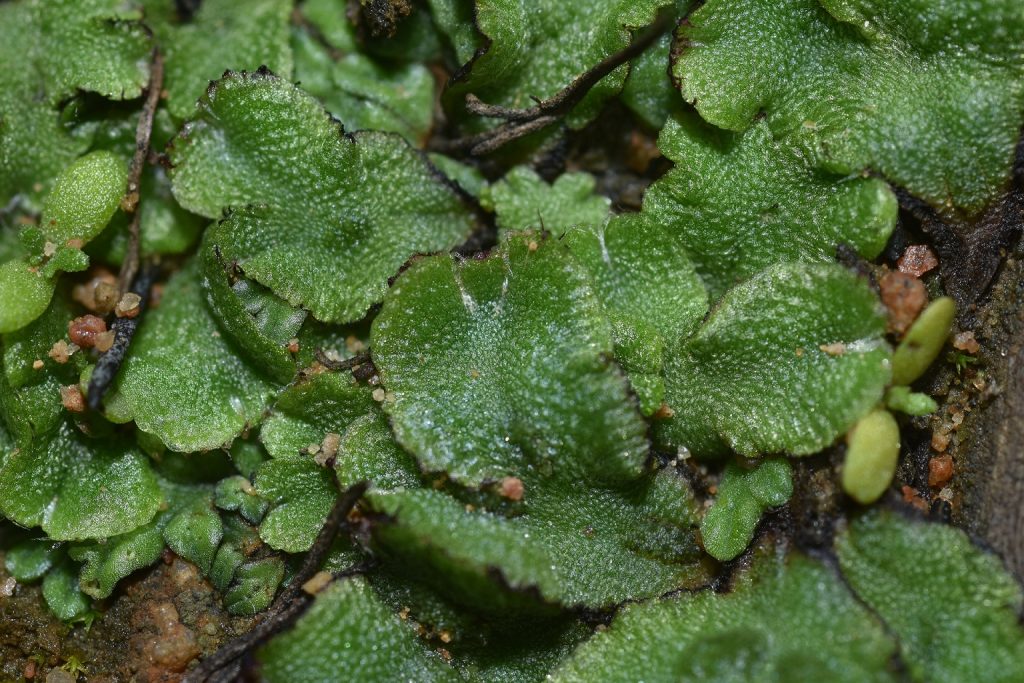
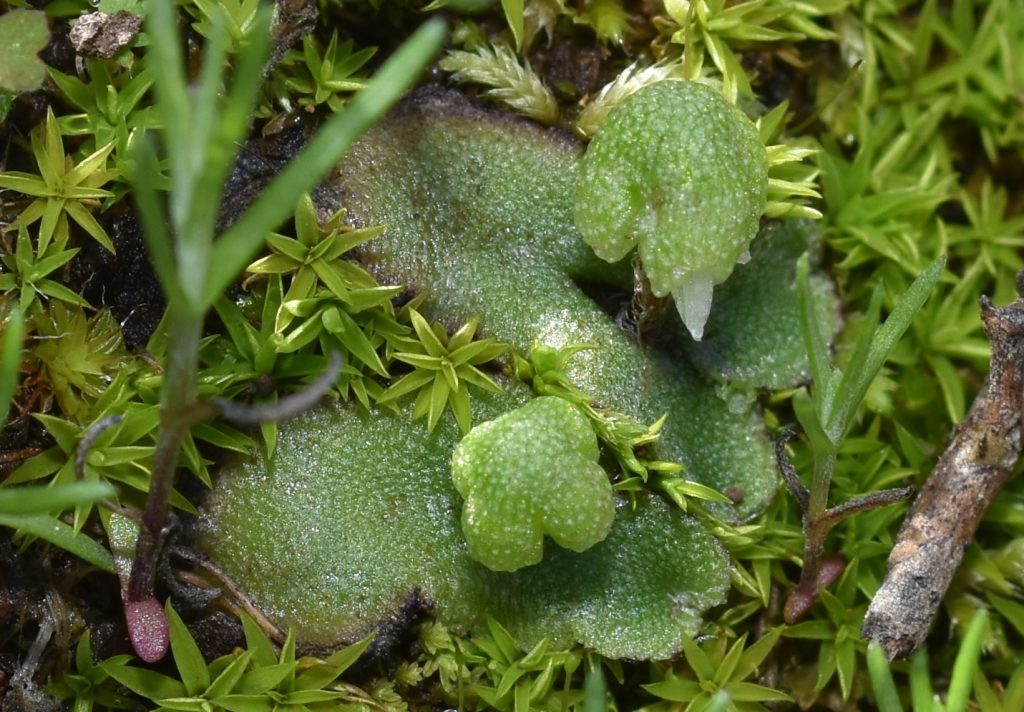
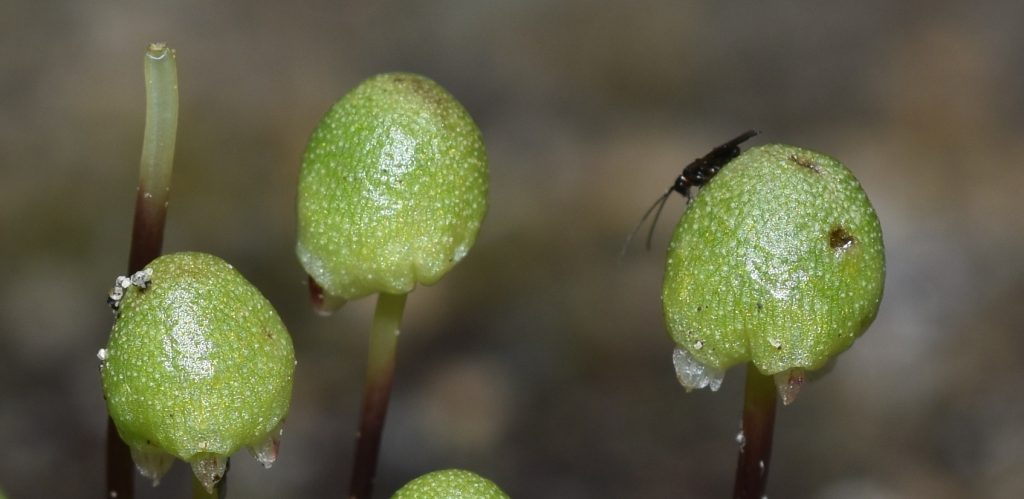
Here’s some photos of liverworts I’ve seen in San Diego County. Notice that in some of the photos, the liverworts consist of very flat, blob-shaped or leafy structures. These are thalli (singular thallus). They are the main body of the plant. In other photos, each thallus has a stalk rising up from it. This is called a gametangia and it’s the reproductive part of the plant.
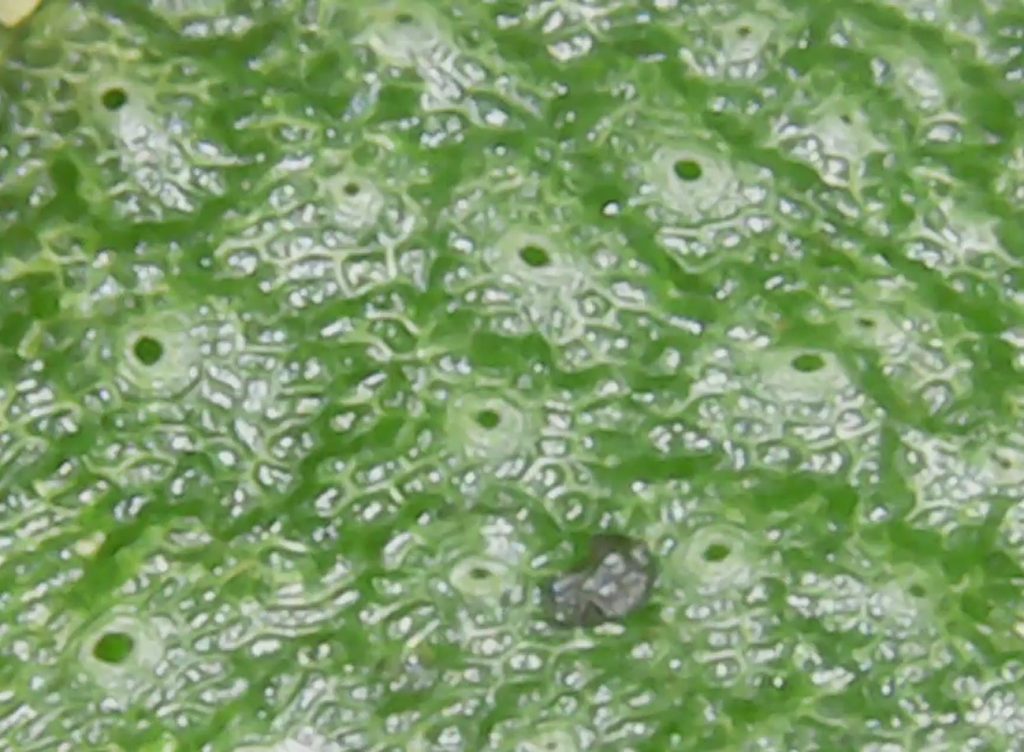
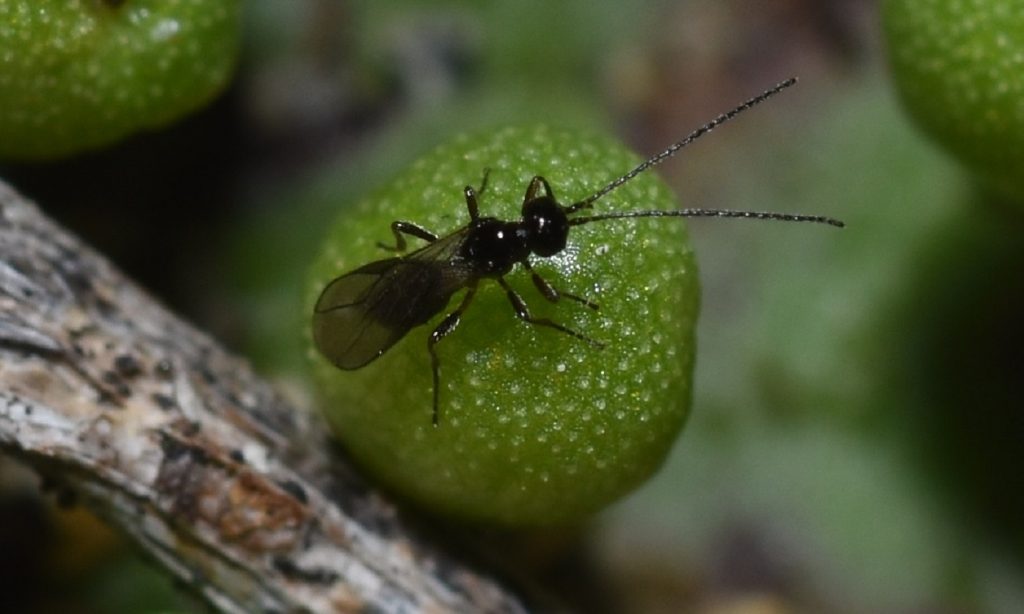
Liverworts (Asterella bolanderi)Gametangia sprouting from thalliLiverwort (Asterella bolanderi) This is a microscope image of the pores on the thallus of one of the liverworts in the previous photo.This photo shows gametangia sprouting from the thalli of some Asterella bolanderi liverworts. The tiny insect pictured is a jaw wasp — a type of Braconid wasp.A closeup of the wasp
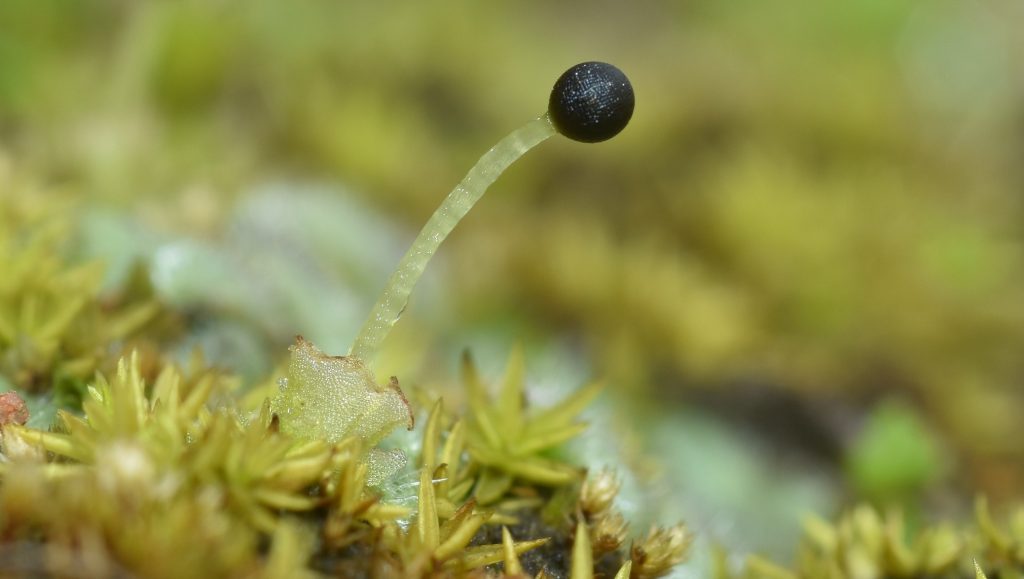
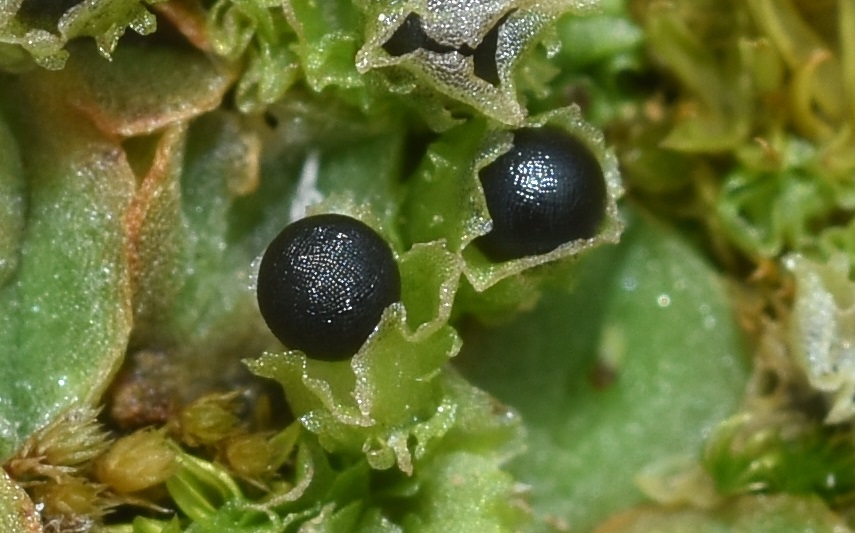
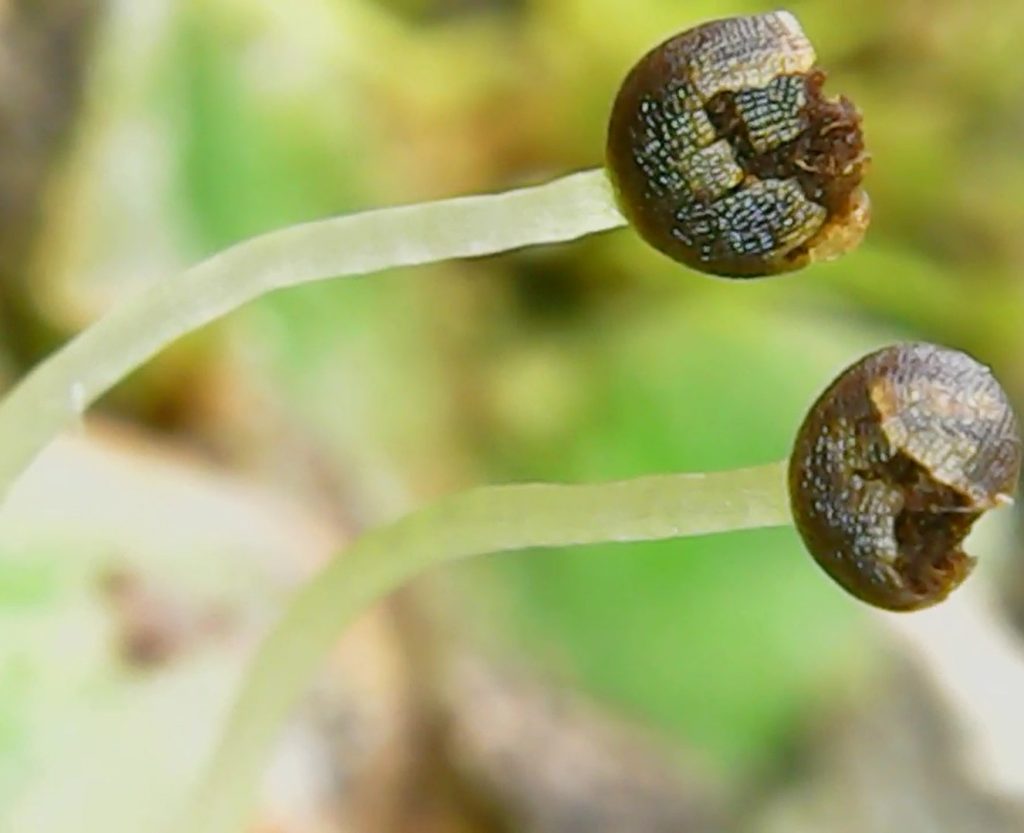
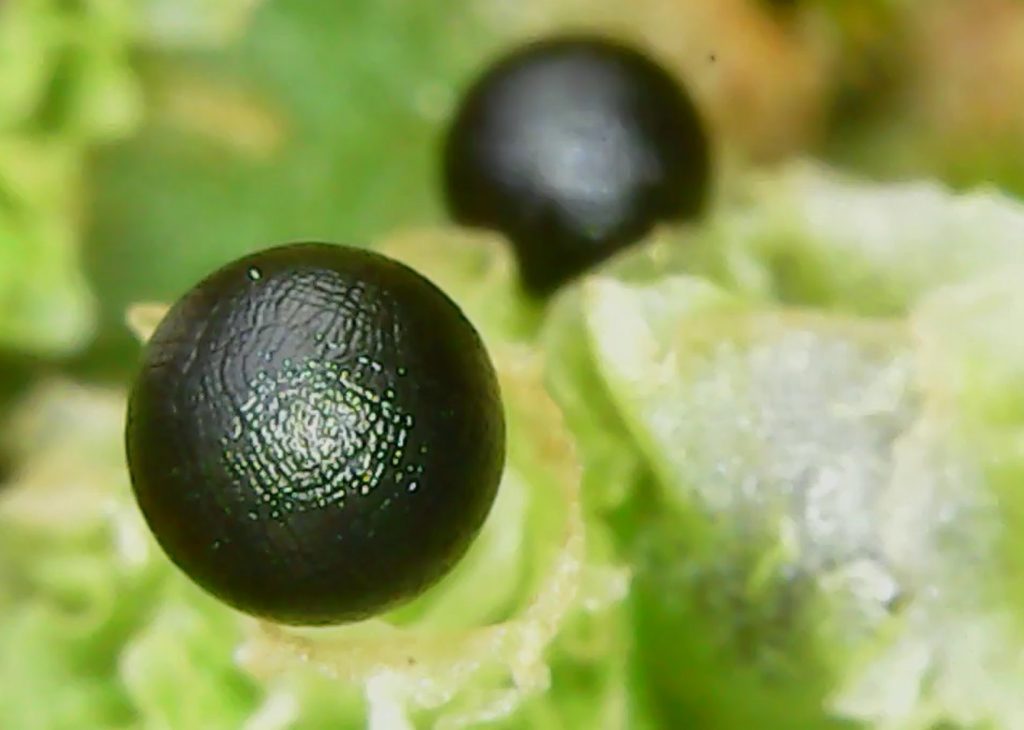
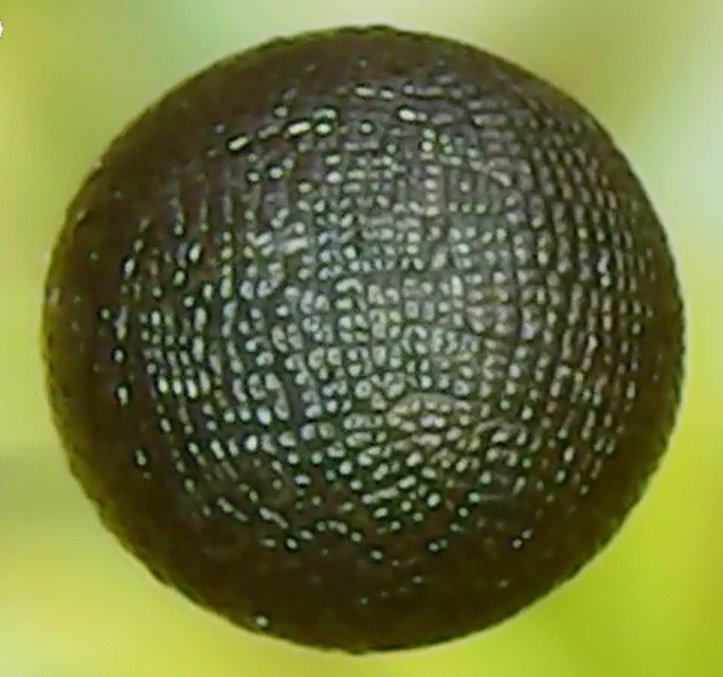
Next, we have some liverworts in the family Fossombroniaceae. The black capsules at the tops of the gametangia are smaller than the head of a pin.
Liverwort in Fossombroniaceae familyLiverworts in Fossombroniaceae familyHere, the capsules of the gametangia have broken open to release the spores.Liverwort (Fossombroniaceae)Extreme closeup of one of the capsules
Finally, here are some bottle liverworts (Sphaerocarpos).
Most land plants breathe through stomata, which are openings, usually on the undersides of leaves, that can be closed if the plant needs to conserve water. Liverworts do not have stomata. They have pores that serve the same purpose, but which cannot be closed. So if a liverwort’s environment gets too dry, the liverwort just dries up. Like mosses, liverworts can withstand a great deal of drying. They just re-hydrate when the environment gets wet again.
Liverworts In Depth
The rest of this post gets into the life cycle of liverworts and it involves some fairly technical stuff, so I’ll forgive you if you want to skip it. But if you’re interested, we’ll start with some genetics. First, let’s talk about animals, specifically humans. A person’s appearance and, to some extent, their behavior, is determined by their genes. Most of the cells in a human body have two copies of each type of gene. One of the copies comes from the person’s mother and the other copy comes from their father. These two copies are called alleles. For example, a person’s cells may each have two alleles that code for eye color. Maybe both of them code for blue eyes. In that case, the person will actually have blue eyes. Or maybe one of the genes codes for blue eyes, but the other one codes for green eyes. In this case, one of the genes may be dominant. If the gene for green eyes is dominant, it will override the gene for blue eyes and the person’s eyes will be green. (I don’t actually know whether genes for green eyes are dominant or not, I’m just giving an example.) It gets way, way more complicated than this, but the point is that how the person turns out is determined by the interaction of the two sets of genes.
When a female human produces an egg cell, only one copy of each allele ends up in that cell. Likewise, when a male human produces a sperm cell, only one copy of each allele ends up in that sperm cell. When a sperm cell fertilizes an egg cell, it injects it’s genes into the egg cell where they combine with that cell’s genes. So the resulting fertilized egg ends up with two copies of each allele. Thus, the resulting embryo and the person it grows into will have two copies of each allele.
If you think of sperm cells and unfertilized egg cells as separate organisms from the humans that produce them (which they are), you could say that the human life cycle consists of an alternation of generations. You have a multi-cellular generation (the actual humans) consisting of cells with two copies of each allele and a single cell generation (the sperm and unfertilized eggs) in which each cell has only one copy. (Btw, a cell with two copies of each allele is called a diploid cell. A cell with only one copy is called a haploid cell. Try to remember that — it’s important.)
Now plants do things in similar, but different, ways and it varies a lot depending on what plant you’re talking about. Since we’re just concerned with liverworts here, I’ll stick to them. Liverworts that have thalli are called thallose liverworts and the following discussion applies specifically to them. Other types of liverwort probably do things in similar ways, but there’s no way I’m going to try to cover all the variations here.
The thallus and gametangia (the main body and the stalk) are together referred to as the gametophyte. They are analogous to the human body, except that they’re made up of haploid cells (i.e. each cell contains only one set of alleles). A specific gametophyte will be either male or female. If it’s female, then it will produce egg cells in the structure at the end of the gametangia. If it’s male, then the gametangia will produce sperm cells. The egg cells remain in their gametangia on the gametophyte that produced them. The sperm cells must leave their gametangia and make their way to a nearby female gametophyte. They do this by swimming, so there must be at least a film of water connecting the two gametophytes. So liverworts are limited to areas that are very wet for at least some of the time. Once the sperm cell reaches the neighboring gametophyte, it swims up the gametangia and finds an egg cell to fertilize.
The fertilized egg cell now contains two copies of each allele — the one that it started with and one from the sperm cell. So it’s a diploid cell. The egg cell divides and multiplies, forming an embryo. This embryo, which again, is made up of diploid cells, is called a sporophyte and is a separate organism from the gametophyte, even though it’s growing on it. So you have a diploid organism growing on (or in) a haploid organism. Again, alternation of generations, but this time both generations are multi-cellular.
Some of the diploid cells in the sporophyte divide in such a way as to produce haploid spores — the spores only get one copy of each allele. The spores are contained within capsules in the sporophyte. When the sporophyte matures, these capsules dry out, open up, and release the spores, which are dispersed by the wind. If a spore falls in a suitable area, it will germinate and grow into a new, haploid gametophyte, completing the cycle.
Now, will this new gametophyte be male or female? Obviously, it depends on whether the spore that produced it was male or female. But what does it mean for a spore to be male or female? Remember that a cell contains multiple chromosomes. In the case of humans, the presence or absence of a Y chromosome determines whether or not the fertilized egg will be male or female. Some such mechanism is also going on in liverworts. According to my reading, at least one liverwort — Marchantia polymorpha — does have something like a Y chromosome. I suspect that’s probably true of all liverworts, but I don’t know for sure. The point is that whether or not a liverwort gametophyte is male or female depends on what genes it ends up with and that’s determined mostly by chance.
Liverworts can also reproduce asexually. Thallose liverworts have structures called gamma cups that form on the thalli. Spores form in the gamma cups and, when it rains, water droplets splashing in the cups release the spores into the environment.
While hiking Cowles Mountain in San Diego County, we came across what we naturally assumed was a snake. The head didn’t look quite right, though. After a bit of research online, I found out that it was a legless lizard — specifically, a San Diegan Legless Lizard – Anniella stebbinsi.
Juvenile San Diegan Legless Lizard (Anniella stebbinsi) Cowles Mountain, San Diego County 06/26/18
Legless lizards evolved from regular lizards. For whatever reason, they found that having legs wasn’t an evolutionary advantage in their particular niche, so, over many generations, their legs were reduced and in some species disappeared entirely.
So if you see what looks like a snake, how can you tell if it’s really a snake or a legless lizard? As noted above, the shape of the head is a good clue. A lizard’s head just looks different. Another clue is that lizards have eyelids — snakes don’t. So if it blinks, it’s a lizard. A few other clues: Lizards have external ear openings. Snakes don’t. Snakes have broad belly scales. Lizards don’t. Snakes have forked tongues. Lizards have notched tongues (whatever that means. I’ve never had the opportunity to examine a lizard’s tongue that closely.)
Another difference is that lizards have two fully developed lungs. Snakes have either one lung or one functioning lung and one vestigial one. (Granted, that’s not going to help much, unless you’re dissecting it.)
The lizard we saw was probably a juvenile, since the color was darker than usual and it didn’t have the usual yellow coloration on the belly. From what I understand, they are pretty rare, so we were lucky to see it. Here’s a few more pics:
So do bees pee? Yes and no. Insects don’t have separate systems for pooping and peeing. All their waste comes out of their anus, so you could argue that they poop, but don’t pee. On the other hand, if plenty of water is available, so that they don’t have to conserve it, their waste will be very watery and look like pee coming out. Then again, their “pee” is definitely not urine. Then again, uh… again, the following video shows a bumble bee excreting and it sure looks like pee 😉
If you’re ever hiking in Southern California and you see what looks like a remarkably lively earthworm, chances are you’re seeing a thread snake. Also called blind snakes, slender blind snakes, and worm snakes, thread snakes are true snakes — if you look closely, you can see the scales — but they are quite unlike your typical snake. For one thing, as one of their common names implies, they’re blind. Instead of eyes, they have eye spots, which are probably sensitive to light, but don’t form images. For another, they eat mostly ants and termites.
During a hike on the Sweetwater River Trail in El Cajon, CA, I was fortunate enough to spot a thread snake invading an anthill. Here’s the resulting video:
Threadsnake invading an ant colony
Thread snakes usually eat the eggs and larvae of the ants or termites. As you can see from some of the following photos, the snake has a tiny, under slung lower jaw. It isn’t poisonous and, in any case, it would never be able to open that mouth wide enough to bite a person.
Southwestern Threadsnake (Rena humilis humilis)Southwestern Threadsnake (Rena humilis humilis)Southwestern Threadsnake (Rena humilis humilis) and some kind of seedSouthwestern Threadsnake (Rena humilis humilis
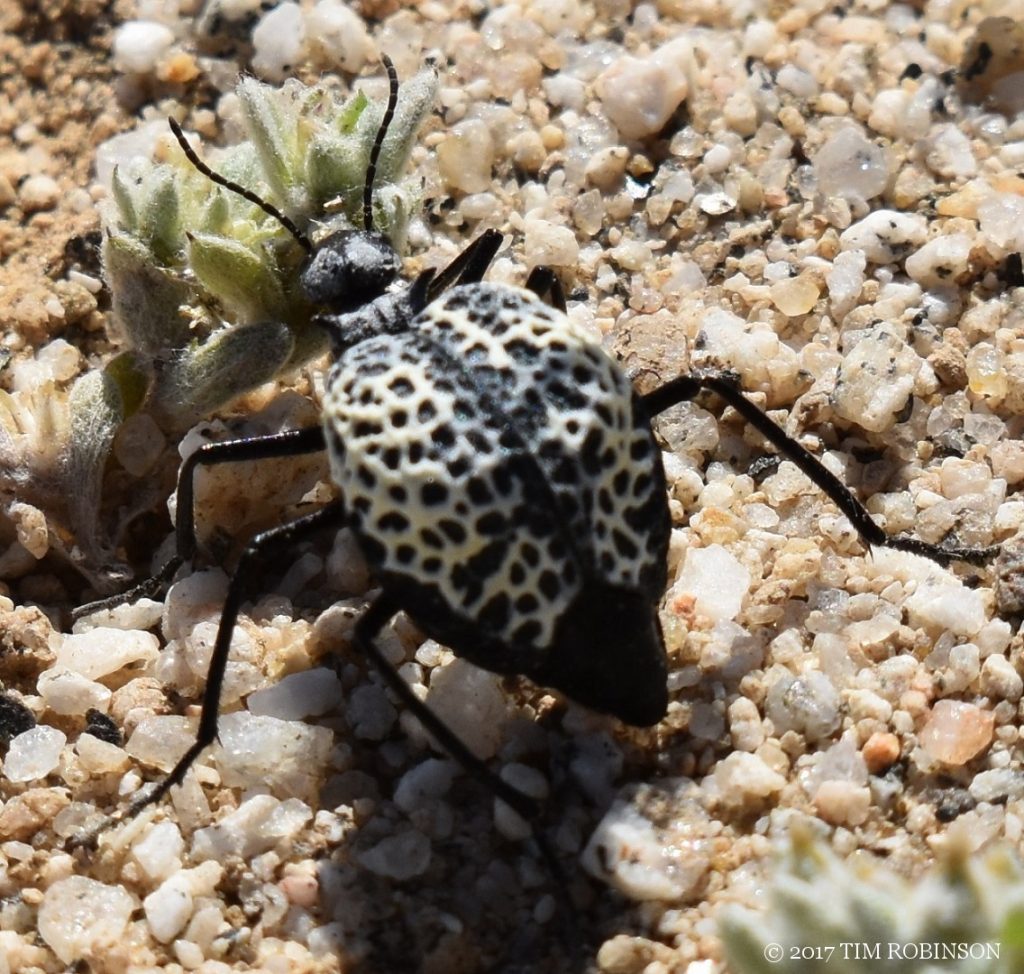
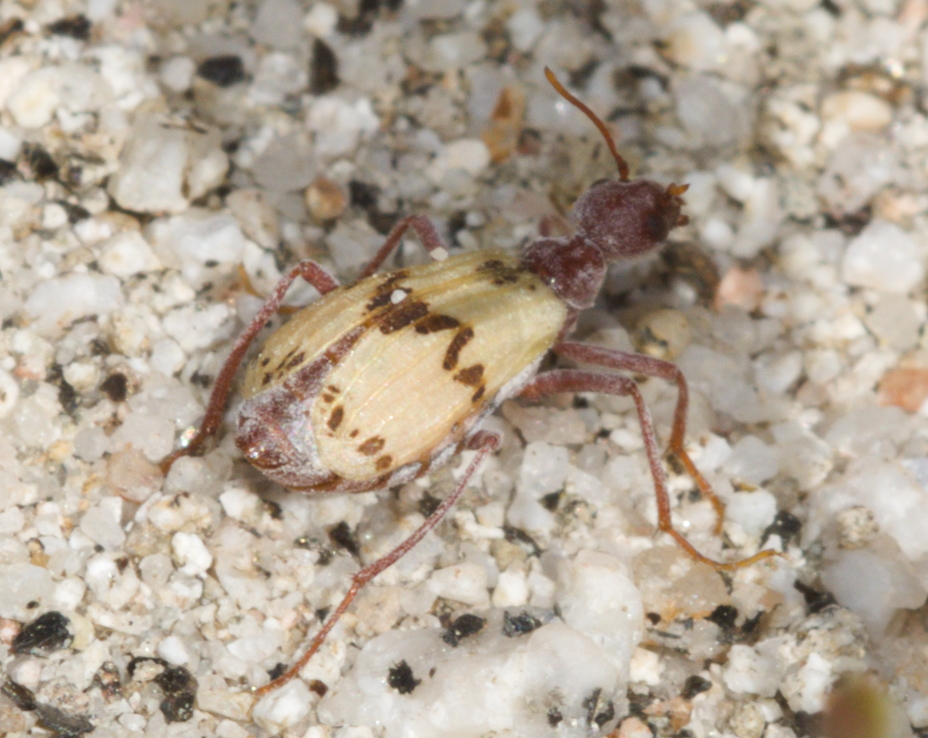
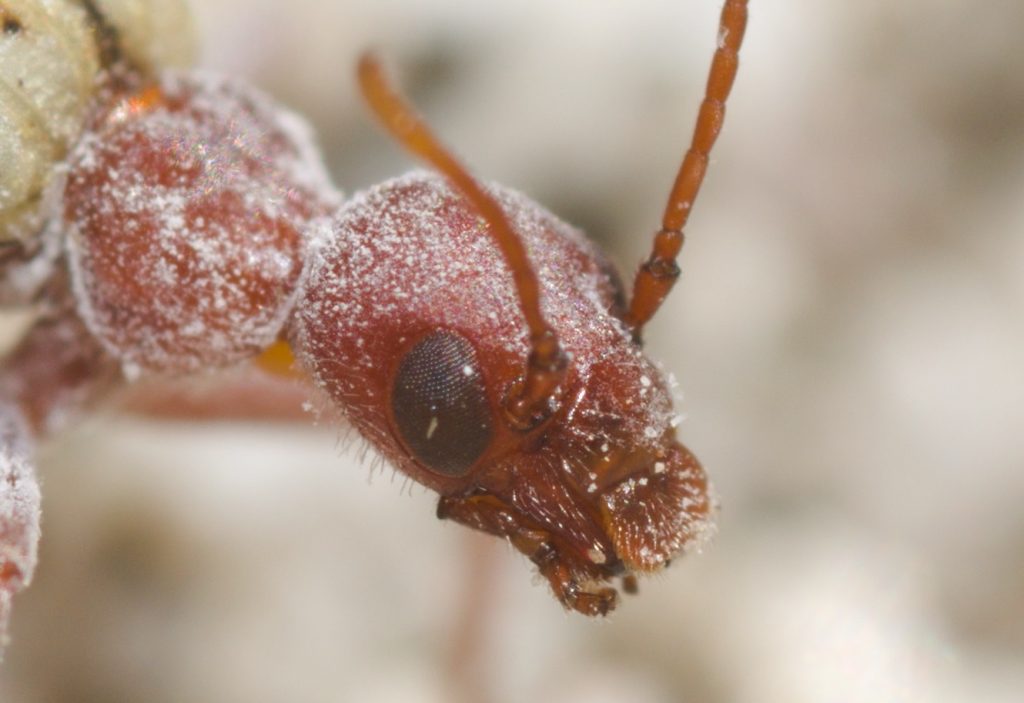
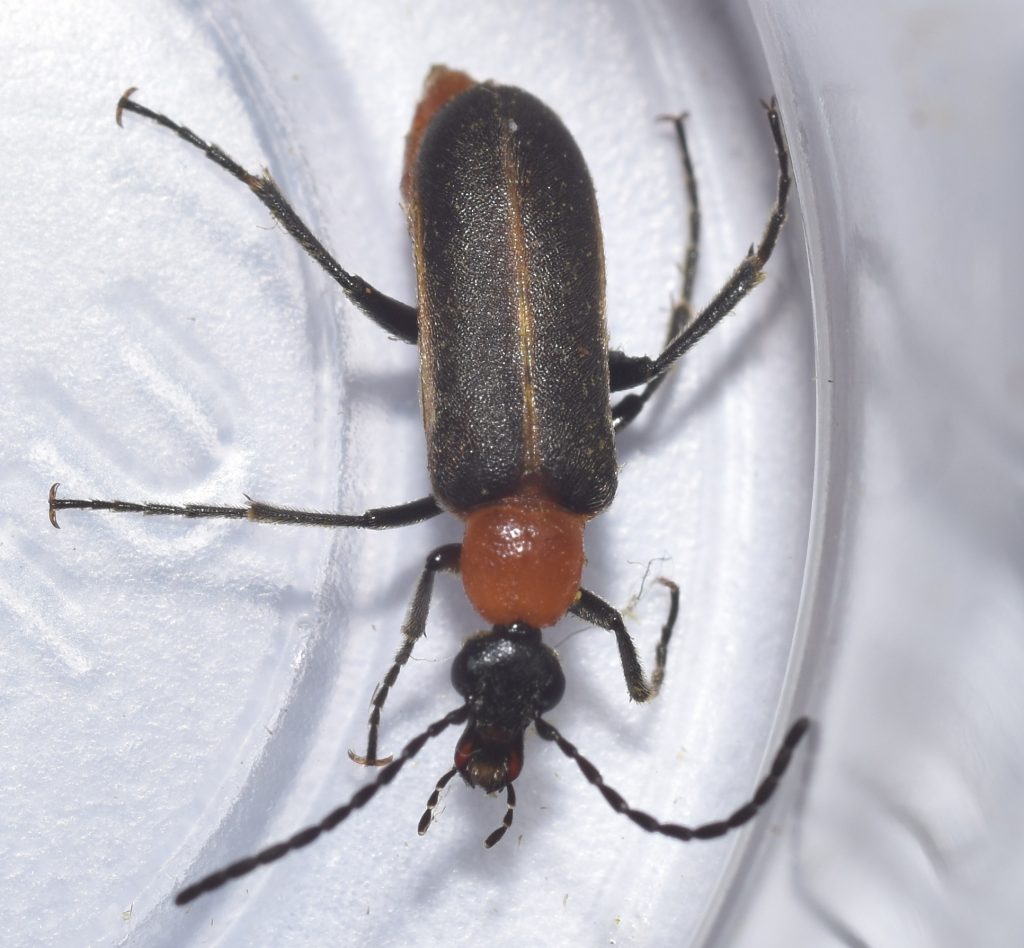
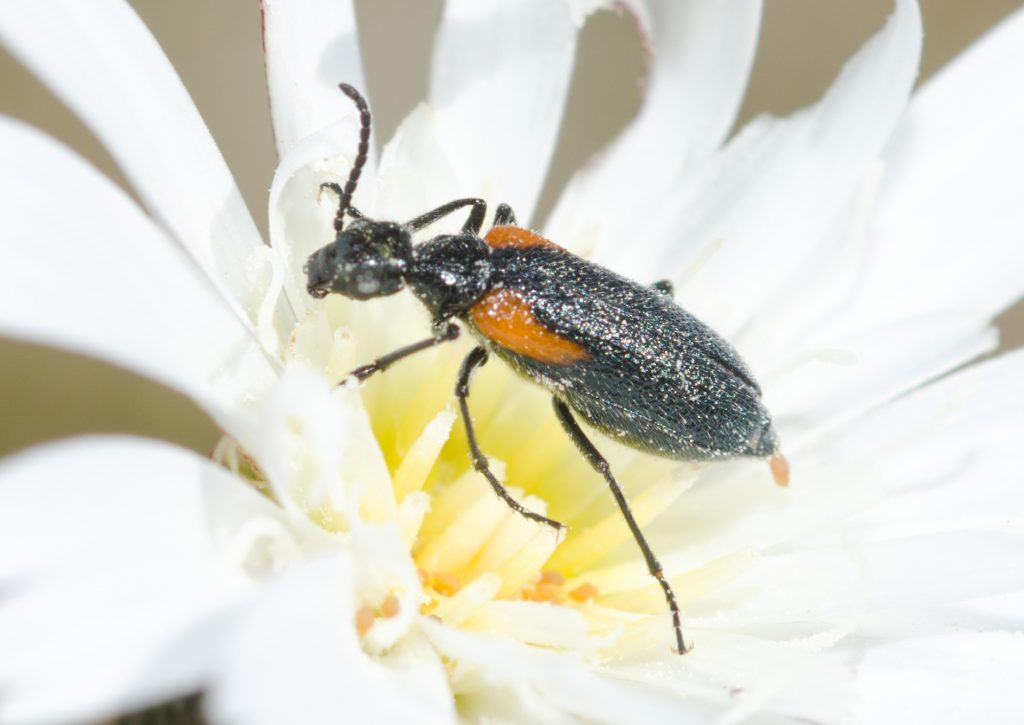
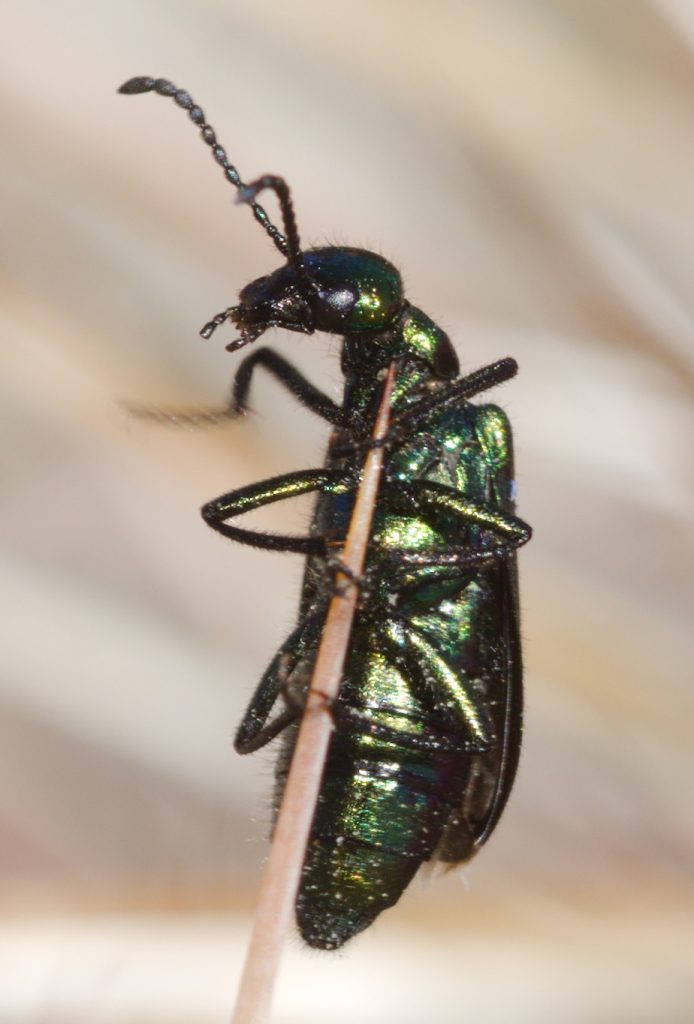
Many insects secrete chemicals that make them bad-tasting or poisonous. Beetles in the family Meloidae have taken it to the next level. Many members of this family secrete a chemical called cantharidin, which is a blistering agent. Just handling a blister beetle can result in severe chemical burns!
That, alone, is pretty amazing, but it doesn’t stop there. Cantharidin is the active ingredient in the aphrodisiac Spanish Fly, which is rather unusual in that it actually is an aphrodisiac — it can cause prolonged erections. Unfortunately, in too large a dose, it’s also a poison. So there are pros and cons. Cantharidin, unsurprisingly, is not approved by the US Food and Drug Administration.
Oh, and it’s also used to remove warts.
Only the male beetle actually secretes cantharidin; however, he gives some to the female as a copulatory gift during mating. The female will cover her eggs with it to protect them against predators.
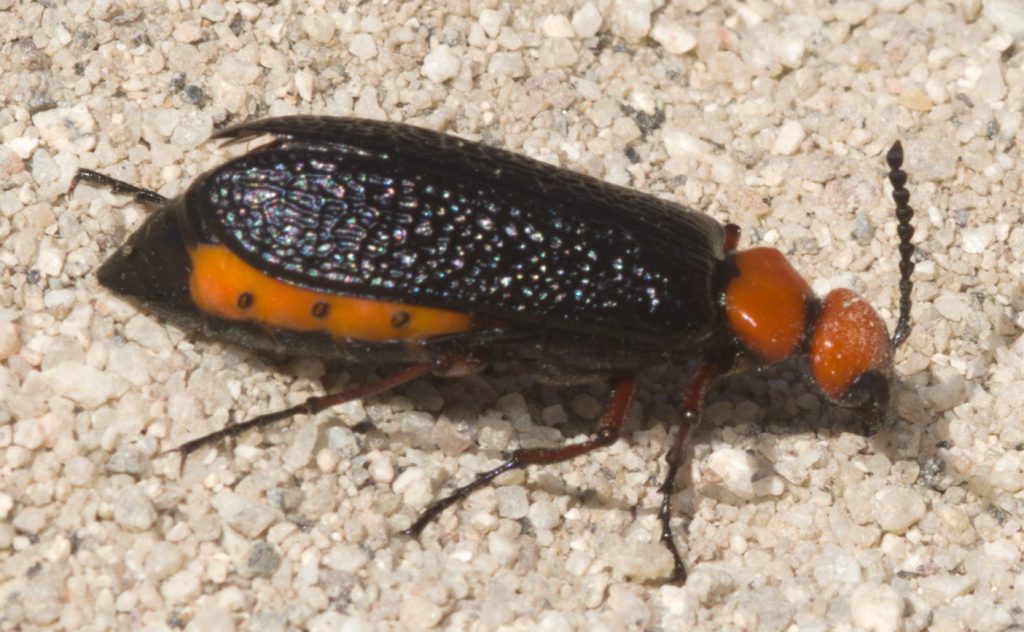
Like most insects that are poisonous, blister beetles tend to be aposematically colored. In other words, they have colors that make them stand out. This serves as a warning to predators that it’s not a good idea to eat them. For instance, many of the beetles pictured here are black and red. Also, since we’re talking about an entire family, blister beetles come in a wide variety of forms. Here’s some photos of the blister beetles I’ve encountered in California:
Master blister beetle (Lytta magister)
Lyceum Wash (Anza Borrego State Park)
03/24/19Inflated Beetle (Cysteodemus armatus)
Anza Borrego State ParkPleuropasta mirabilis
Lyceum Wash (Anza Borrego State Park)
03/24/19Pleuropasta mirabilis up close
Lyceum Wash (Anza Borrego State Park)
03/24/19Gnathium sp.
Anza Borrego State Park near East Butte
02/03/19Gnathium sp.
Anza Borrego State Park near East Butte
02/03/19Eupompha elegans elegans
Harper Canyon (Anza Borrego State Park)
03/17/19Unidentified blister beetle clinging to a cactus spine