All posts by Tim Robinson

Of Mites and Men… and Ticks

One of the frustrations of macro photography is that, no matter how powerful your lens, it’s never powerful enough. There’s always some tiny bug that you can almost make out, but not quite. Mites are a case in point. Some mites are completely invisible to the unaided eye. Many others are visible, but just barely. Mites are super common, so I’ve photographed a lot of them, but usually with very poor results.

So I bought a microscope. It’s not a great microscope. It was manufactured in China; as far as I can tell, it doesn’t have any brand name; and it took about a month for it to get here. On the other hand, it was cheap, it’s portable, and, because it plugs into the usb port of my smartphone or laptop, it doesn’t require batteries. It also magnifies up to 1000x, which is not bad. It can take both videos and still shots. Oddly enough, the videos have better resolution, so I always take videos and make screenshots of the frames that I like.

As soon as I began using my new microscope, I started seeing mites all over the place. They were in moss and lichens. They were crawling around on mushrooms. A strange new world was revealed. In this article, I’ll try to give you a quick introduction to that world.

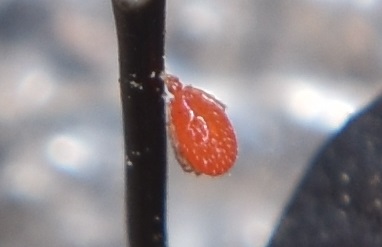
So what are mites? Mites are arachnids, which means they’re related to spiders. Like spiders, they have eight legs in their adult form. They’re also related to ticks, although maybe not as closely related as their appearance would suggest. More on that later. Here’s a photo of a fairly typical mite:

Sidewalk mite (genus Balaustium)

The bodies of mites and ticks are divided into two segments — the cephalothorax and the opisthosoma. The cephalothorax is a fusion of the head and thorax. The opisthosoma is the rear part of the body. It’s similar to the abdomen of insects, but has a few different internal organs. Sometimes the division between the two segments is easily discernible. Most times, like in the above photo, there’s no clear separation.

Mites and ticks are grouped together for convenience into the suborder Acari. I say “for convenience” because this is not a natural grouping. Some types of mites are more closely related to other types of arachnids like Solifugidae (sun scorpions) than they are to other mites. Some research even suggests that ticks are more closely related to spiders than to mites. Nevertheless, historically, they’ve tended to get lumped together, so I’m going to follow that tradition by covering them both in this article.

Mites have a very long evolutionary history. The oldest fossil mite dates back to the early Ordovician about 480 million years ago. So they’ve had plenty of time to diversify and they haven’t wasted it. It’s a hugely diverse group.

Ticks are quite a bit younger, but they do go back at least 145 million years, which puts them right in the middle of the age of dinosaurs. Lumps of 99 million-year-old amber found at a fossil site in Myanmar contain material from a dinosaur nest, including a number of ticks, bits of beetles, and at least one feather from a dinosaur. (Yes, many dinosaurs did have feathers. See my earlier post The Coolest Thing about Birds.) The feather couldn’t have been from a bird because they hadn’t evolved yet. This is the strongest evidence we have to date that ticks parasitised dinosaurs. This isn’t surprising, but it’s always nice to have hard evidence.

Among he ticks preserved in this amber was a previously unknown species, which the researchers named Deinocroton draculi or “Dracula’s terrible tick”, because one of the ticks was still bloated with blood. You can check out an article about this discovery in The Guardian. It even includes a nice interactive 3D model of Deinocroton draculi.

Another bit of amber found in Myanmar, also from about 99 million years ago, contains a tick wrapped in spider silk. One paleontologist speculated that the tick may have been trying to feed on small, tree-climbing rapter dinosaurs when it got caught by the spider. You can read about this find on National Geographic‘s website.

While all ticks are parasitic, mites have a variety of lifestyles. Some eat plants; some are detrivores, living off decaying material; some are predators; and some are parasites. A mite might be parasitic as a larva or nymph and switch to another way of making a living as an adult. Or it might be parasitic as an adult, as well.

Some More Visuals

The following series of photos shows the nymphal form of a mite of the genus Leptus (family Erythaeidae) parasitizing a harvestman (aka daddy-long-legs). This is an unusually large mite, so I was able to get some pretty good photos with my macro lens.
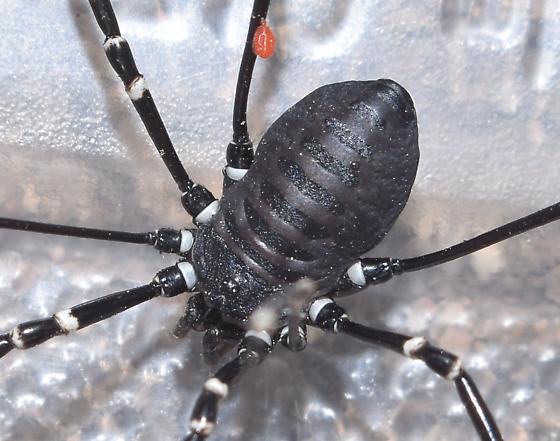
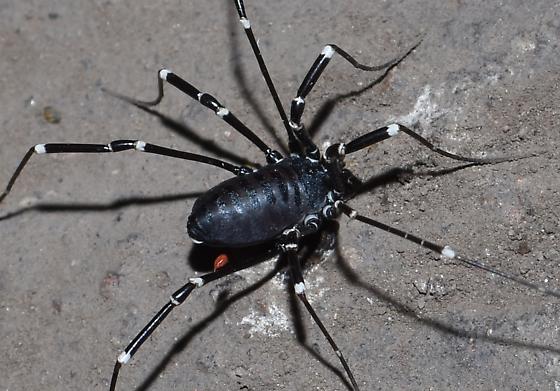
Harvestman (genus Eurybunus) with a parasitic mite attached to its leg

Leptus uses its mouth-parts to pierce the skin. It then injects saliva into the opening. The saliva contains digestive juices which break down cells and cause the surrounding tissue to harden. The mite sucks up the digested cells. The saliva gradually seeps lower into the body of the host, breaking down cells and hardening the surrounding tissue as it goes. The resulting tube is called a stylosome and acts like a drinking straw for the mite. (Note: What looks like the head in the above photo is actually the mouth-parts. As noted earlier, the head and thorax in mites are fused together.) In its adult form, Leptus is predatory.

Speaking of predatory, the next series of photos shows a whirligig mite (family Anystidae) eating a thrips. Thrips are very tiny insects that are often found on flowers. (“Thrips” is both the singular and plural form.)
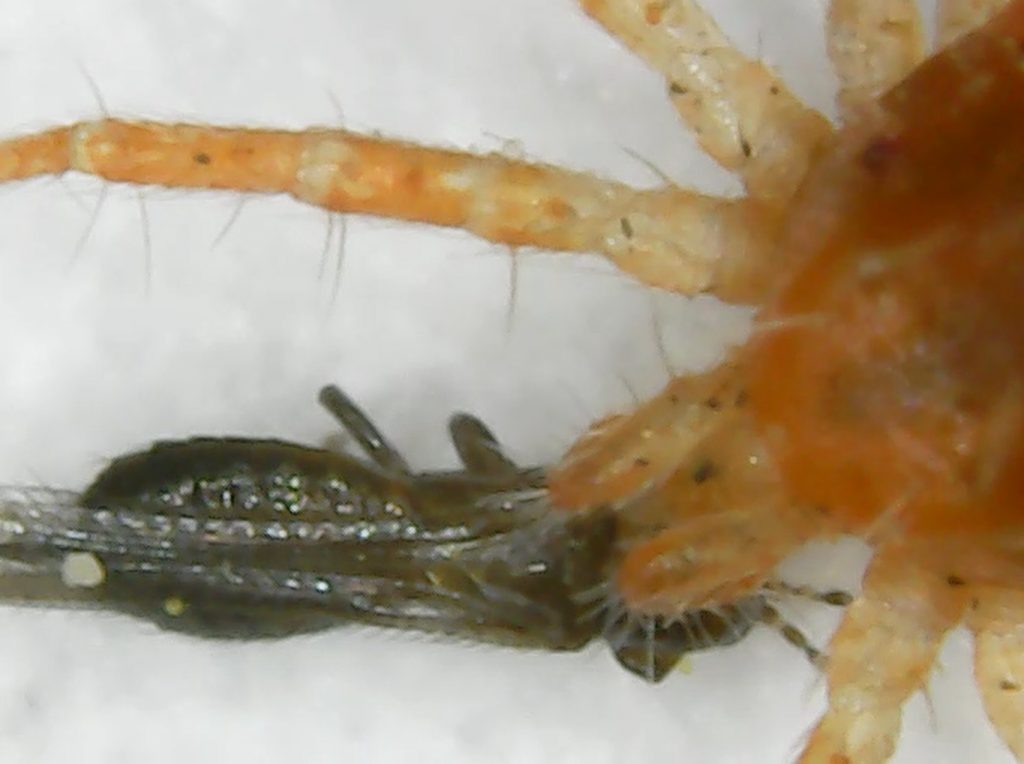
Whirligig mite eating a thrips

I collected this mite in a small plastic container. Later, I came across some thrips and caught a few of them, too. When I got home, I shook out the contents of the container onto a sheet of typing paper and started using my microscope to try to videotape the mite. I wasn’t having much luck because the mite was moving around too quickly. Then it suddenly stopped. When I finally got it in focus, I found out why. It had latched onto one of the thrips and was busily sucking it dry.
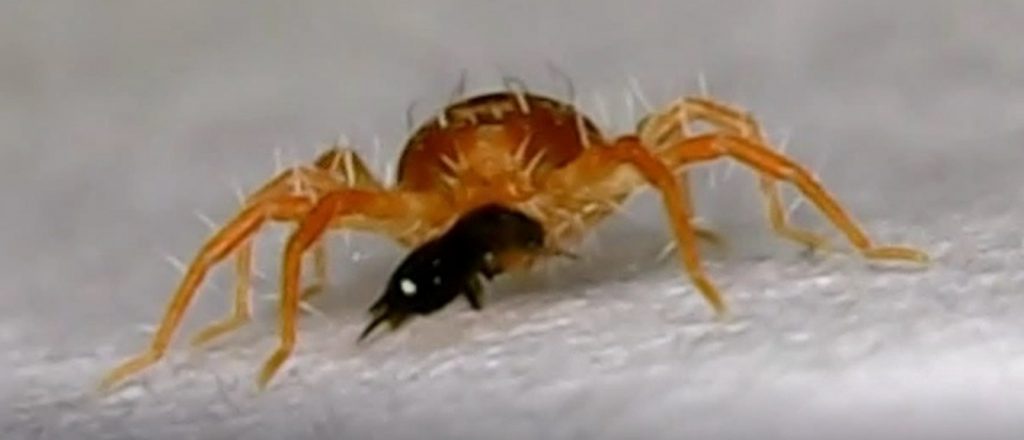
Here’s a couple of videos. Notice that you can see the mite’s internal organs working in the first video.

The next video is a little less violent. It shows a winter grain mite (Penthaleus major) crawling around on some lichen. I think I probably brushed it with the microscope, which is why it’s flailing around so much. I doubt that it’s that clumsy ordinarily.

One of the first things I looked at when I got my microscope was this huge mushroom:
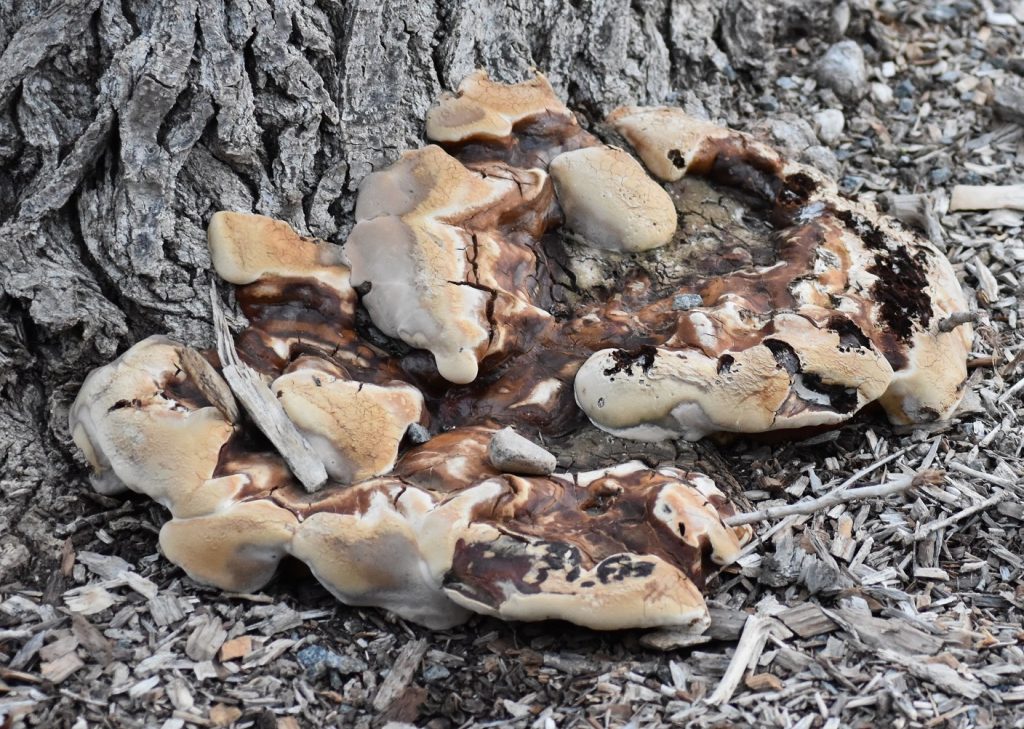
Mushroom in Mission Trails Regional Park, San Diego County

And this is the mite I saw on it. It’s in the order Mesostigmata. I love the way it looks like it’s crawling around in a snowfield. Oh, and you get a couple of quick glimpses of an ant, which should give you some idea how of just how tiny this mite is.

The next video shows some mites on a lichen. It looks like there may be a couple of different species here. Notice that some of them appear to have glued bits of rock onto their backs as camouflage. (You can see it a lot better if you view the video full screen.) According to Matthew Shepherd (see comments), these mites are probably in the genus Bryobia, which is in the spider mite family Tetranychidae.1

Phoresis

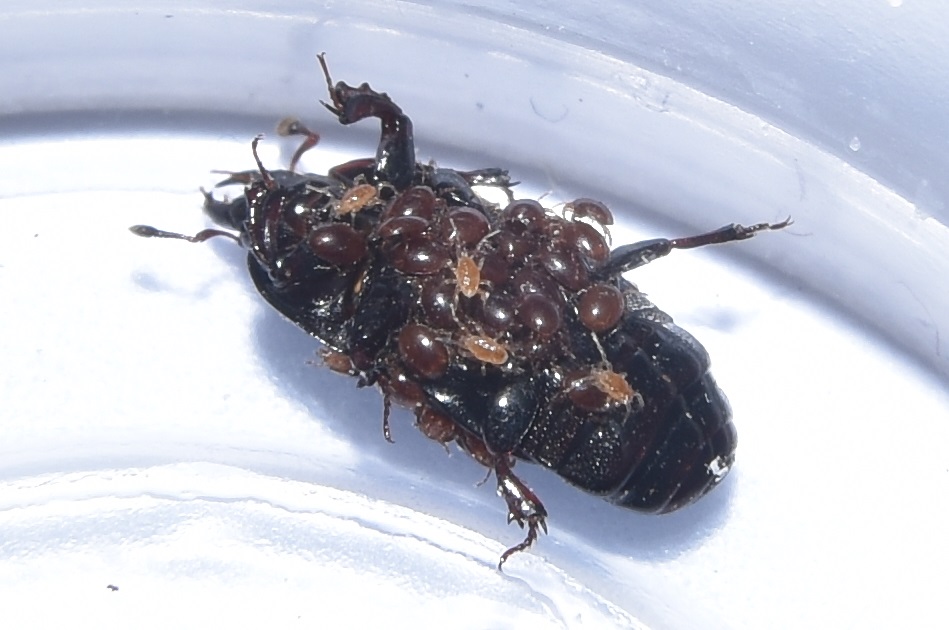
I know this next part is going to gross some people out. I found this beetle under the bark of a rotting log (which is a great place to find beetles, btw). This is a clown beetle (Hololepta populnea). As you can see, it was covered in mites. In the original version of this article, I said that the larger mites were probably orbatid mites. This was incorrect. Matthew Shepherd (see the comments) correctly identified them as turtle mites (family Uropodidae). They are in the order Mesostigmata.

Mites in this order are free-living and predatory — they’re not parasitic.2 So what, you may ask, are they doing on this beetle if they aren’t parasitising it? This is an example of phoresis. Phoresis is when one organism hitches a ride on another organism. It’s a means of dispersal. The most obvious example is when a seed clings to the fur of an animal, but it’s common among other organisms, as well, including mites.
There are many advantages to phoresis. If an organism is limited to one small area and the environment in that area changes drastically, it could easily be wiped out. Dispersal over a wide area also helps to prevent inbreeding. Phoresis can even be used as a method of seasonal migration (although I doubt that’s relevant to mites).

According to Matthew, “The name ‘uropoda’ means tail-foot and relates to the unusual phoretic adaptations of the deutonymphs [second larval stage] in this family. When the nymphs crawl onto a beetle, they exude a tough stalk called an ‘anal pedicel’ out of their anus which they glue onto the beetle’s back, which then dries, sometimes lifting the animal up and holding it like a lollypop on a stick, while the beetle-transport heads off on its way to pastures new.”

More on Ticks

Getting back to ticks, most of them belong to one of two families — the hard ticks (Ixodidae) and the soft ticks (Argasidae). The hard ticks are so-called because they have a hard shield or scutum on the top of their cephalothorax. The mouth-parts project forward from the body and are easily visible from above. Soft ticks lack a scutum and their mouth-parts are underneath the body.

As noted earlier, all ticks are parasitic. Various species feed on the blood of mammals, birds, reptiles, and amphibians. Ticks go through a series of stages in their lifecyle from egg to larva to nymph to adult. Hard ticks feed from three different hosts during their lifetimes. Soft ticks may have as many as seven nymphal stages, each one requiring a blood meal.

Sadly, I don’t have any photos of ticks in my personal collection. Fortunately, my friend Meridith (of spittlebug fame) sent me this awesome photo of male and female American dog ticks (Dermacentor variabilis). The female is the one with the white patch at the front of the body:

American dog tick (Dermacentor variabilis)
© Meridith Erickson. 2019

Of Dust and Dander

We have mites in our homes and mites on our bodies. Most of you have probably heard of dust mites. Also called house dust mites (or HDM), dust mites include a number of different species commonly found in homes. They eat mostly dead skin shed by humans and their pets, which is known as dander. It’s been estimated that about 80 percent of the dust that you see floating in sunbeams consists of dander, so they find plenty to eat. Dust mites don’t carry diseases and they aren’t normally harmful to humans, but some people can have allergic reactions to their feces and shed exoskeletons.

Two species of mite are known to live on our bodies — Demodex folliculorum and Demodex brevis. D. folliculorum reproduces in hair follicles and D. brevis reproduces in the sebaceous glands near the base of hairs. Otherwise, the two species are very similar. Unlike typical mites, they are long and worm-like with very short legs. These mites are usually harmless; although, D. folliculorum can cause a disease called Demodicosis. It’s believed that all people have mites living on them, but, since it’s not easy to collect them, this hasn’t been confirmed. Click here to read an article about body mites that includes some interesting photos.

Update 07/03/2019

While hiking with a meetup group over the weekend, one of the people in the group found a tick crawling on her. Quickly admonishing her not to brush it off (and ignoring the exaggerated eye-rolls of my companions), I collected the tick in a small plastic container. So I was finally able to get some photos to supplement the one Meridith sent me.

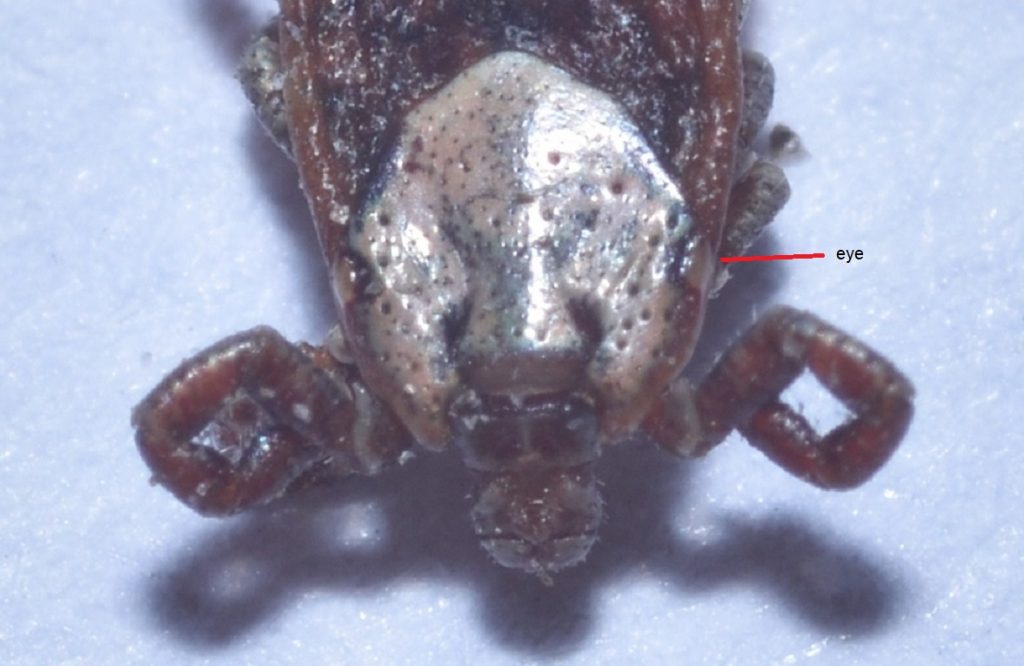
It appears to be another female American dog tick. In the following photos, I’ve highlighted a bit of the anatomy. The first photo shows the scutum — the hard “shield” on the tick’s back. On the male, this would cover the entire back, but, on the female, it leaves room for the body to expand when the tick drinks blood.

American dog tick (Dermacentor variabilis) – female

It’s difficult to tell in these photos, but the hypostome is separate from the chelicerae on either side of it. The chelicerae are similar to jaws. The tick uses them to cut or scrape through the skin. The hypostome is a combination harpoon and drinking tube. If you’re interested, you can read a rather technical scientific article about these mouthparts here.

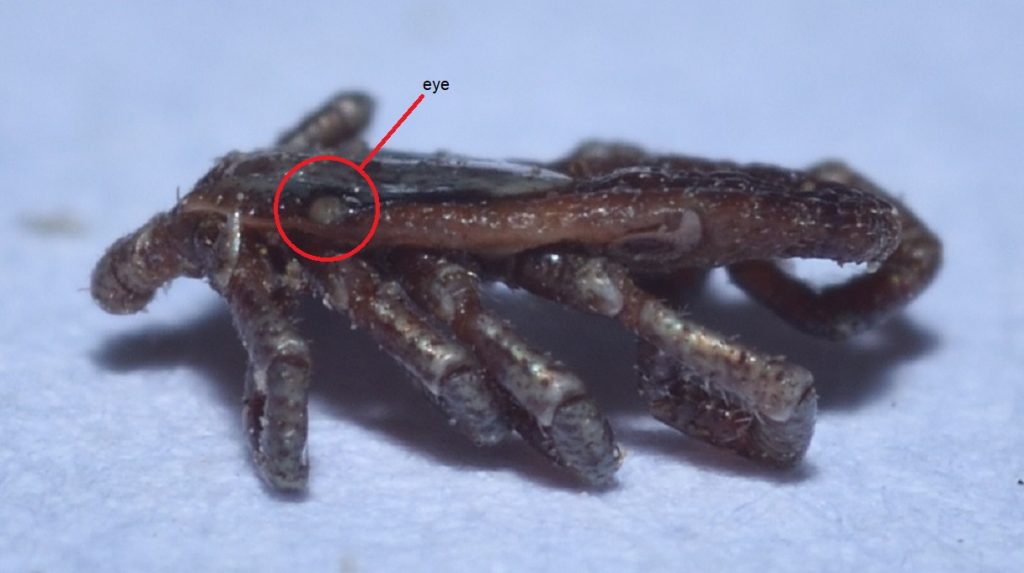
As noted previously, the tick doesn’t have a head separate from the rest of the body. The eyes are actually on the side of the body.
And just because you were wondering…

The Coolest Thing about Birds

Paleontologists have long believed that birds evolved from dinosaurs — specifically theropods, the group that includes bipeds like Tyranosaurus rex. In the 1990’s, however, a revolution in our understanding of the bird/dinosaur relationship was initiated when well-preserved fossils of feathered dinosaurs were found at a remarkable fossil site in Liaoning, China. At this site, fine-grained ash from repeated volcanic eruptions during the early Cretaceous period resulted in fossils that preserve exquisite details, including structures like feathers that don’t usually fossilize. The Liaoning site has continued to yield evidence of dinosaurs with feathers right up to the present. In 2011, paleontologists even found amber containing feathers and evidence suggests those feathers came from both birds and dinosaurs.

All these new fossils, plus new technologies for studying them, eventually convinced the scientific community that there was no sharp dividing line between birds and dinosaurs. One just gradually evolved into the other. Today, you’ll often hear the term “non-avian dinosaurs” used when scientists want to make it clear that they’re talking about dinosaurs that hadn’t yet made it to being birds.

So the coolest thing about birds is that they’re dinosaurs. Seriously, birds are now officially classified as dinosaurs. So, if you have a pet parakeet, you can legitimately tell all your friends that you have a pet dinosaur.

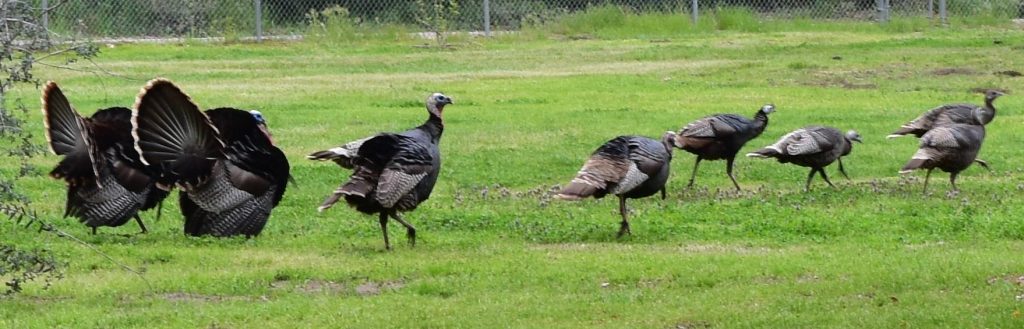
Wild turkeys (Meleagris gallopavo)
San Diego County

It’s remarkable how much we’ve learned about dinosaurs and feathers since that first groundbreaking discovery, but there are still plenty of unanswered questions. For instance, we’re still not sure why feathers evolved. It’s unlikely that they originally evolved for flight, since simple “protofeathers” would be pretty useless even for gliding. One possibility is that they evolved as insulation — the dinosaurs’ answer to fur. This is a very compelling argument and, certainly, many dinosaurs did use feathers to keep warm, just as modern birds do; however, there is some evidence that feathers may have originally evolved for metabolic reasons.

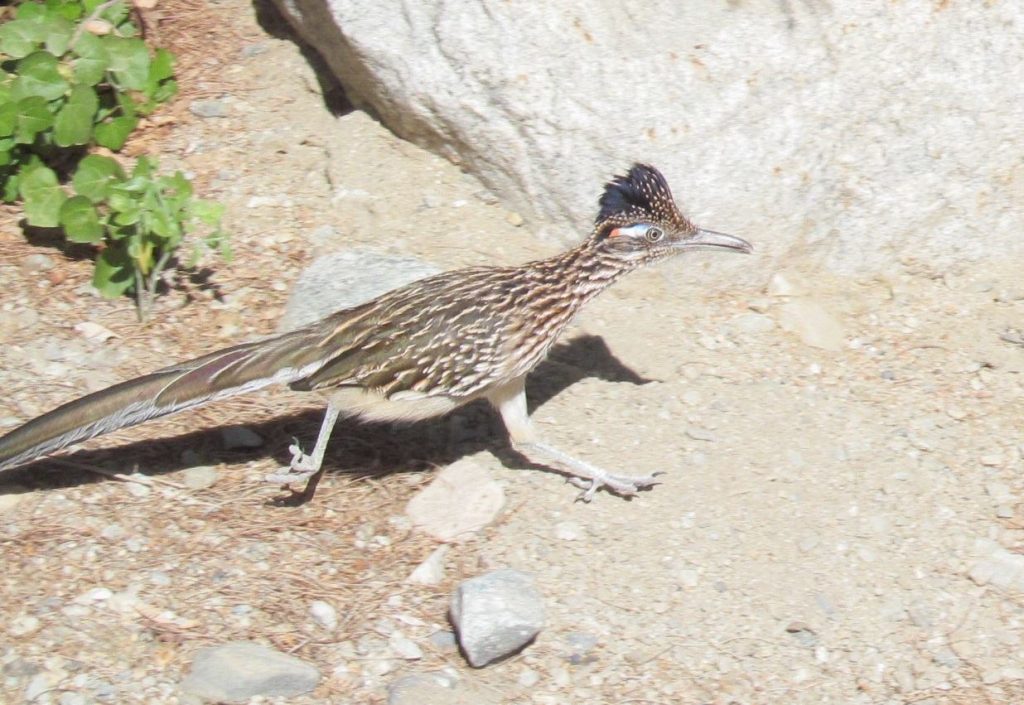
Roadrunner (Geococcyx sp.)
San Diego County

For an organism with a high metabolic rate, the production of excess hydrogen sulfide can be a problem. One way to handle this is to reroute waste chemicals (sulfur amino acids) that would normally get converted into hydrogen sulfide into the production of keratin, which is the main ingredient in feathers. In others words, growing feathers could have evolved as a way to get rid of a toxic waste product. Now, nobody is suggesting that the dinosaurs started out “excreting” full-fledged feathers just to get rid of excess toxins. The idea is that they might have started using the keratin to grow something like primitive down, which later evolved into real feathers.

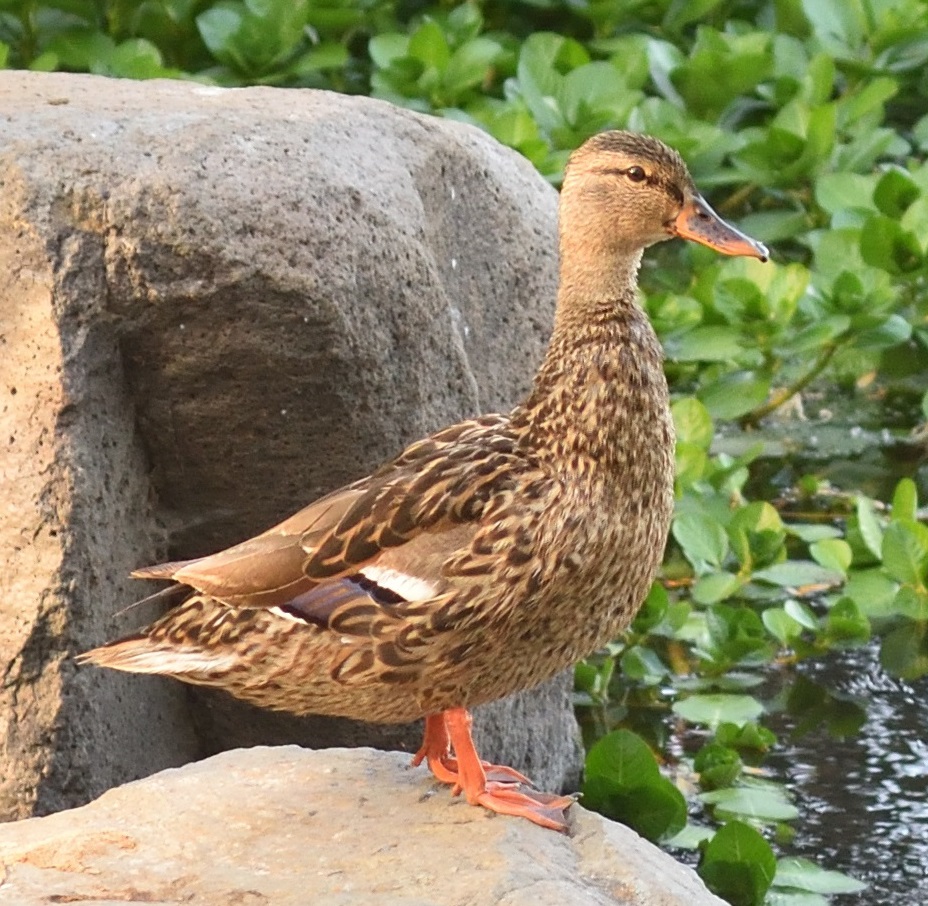
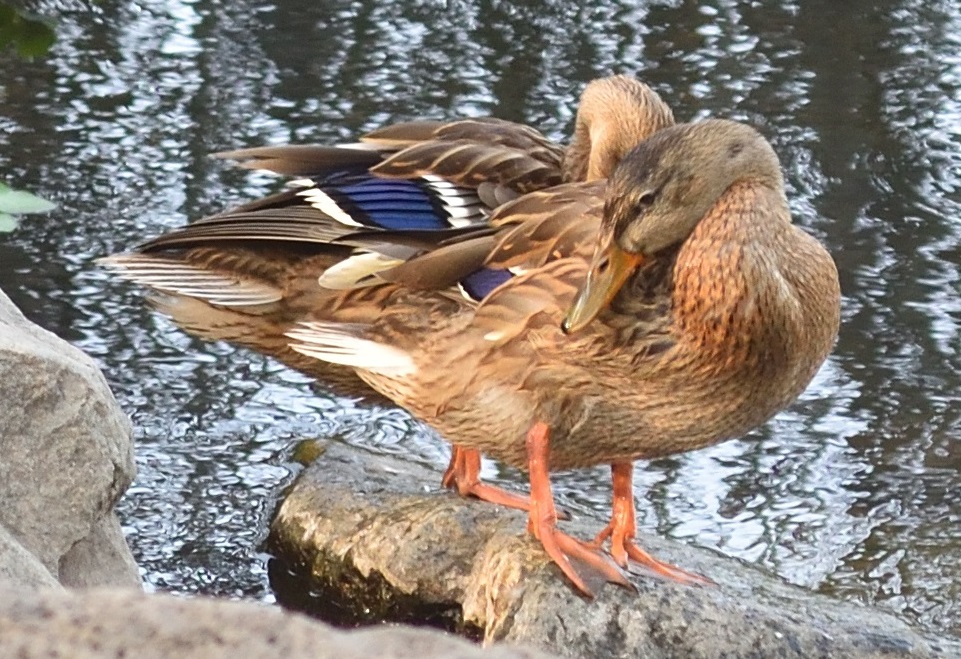
Female mallard (Anas platyrhynchos)
Lake Kumeyaay, San Diego County 06/05/19

Whatever the original reason for the evolution of feathers, they were eventually co-opted for flight. How this happened is still being debated. One possibility is that feathers helped animals jumping from trees to slow their fall. Another is that the flapping of feathered forelimbs allowed dinosaurs to get more altitude when running and jumping. At present, the evidence seems to favor the running and jumping hypothesis, but it’s not yet conclusive. Either route could have led to the evolution of gliding and, later, flight.

Female mallards (Anas platyrhynchos)
Lake Kumeyaay, San Diego County 06/05/19

The Second Coolest Thing About Birds

When we mammals, breathe out, we are exhaling the same air that we just breathed in. Air is pulled into our lungs by our diaphragms and then pushed back out. Respiration in birds is very different. A bird does not exhale the same breath of air that it just inhaled. It exhales the breath it took before that one.

Here’s how it works. A bird doesn’t have a diaphragm. It breathes in by using muscles to expand it’s chest. It exhales by using other muscles to contract the chest. When a bird breathes in, only a little of the air goes directly to the lungs. Most of it goes to air sacs that are distributed in various parts of its body. Birds have hollow bones. Air sacs extend into the hollow spaces of the humerus (the upper wing bone), the femur (the thigh bone), the vertebrae, the skull, and other bones.

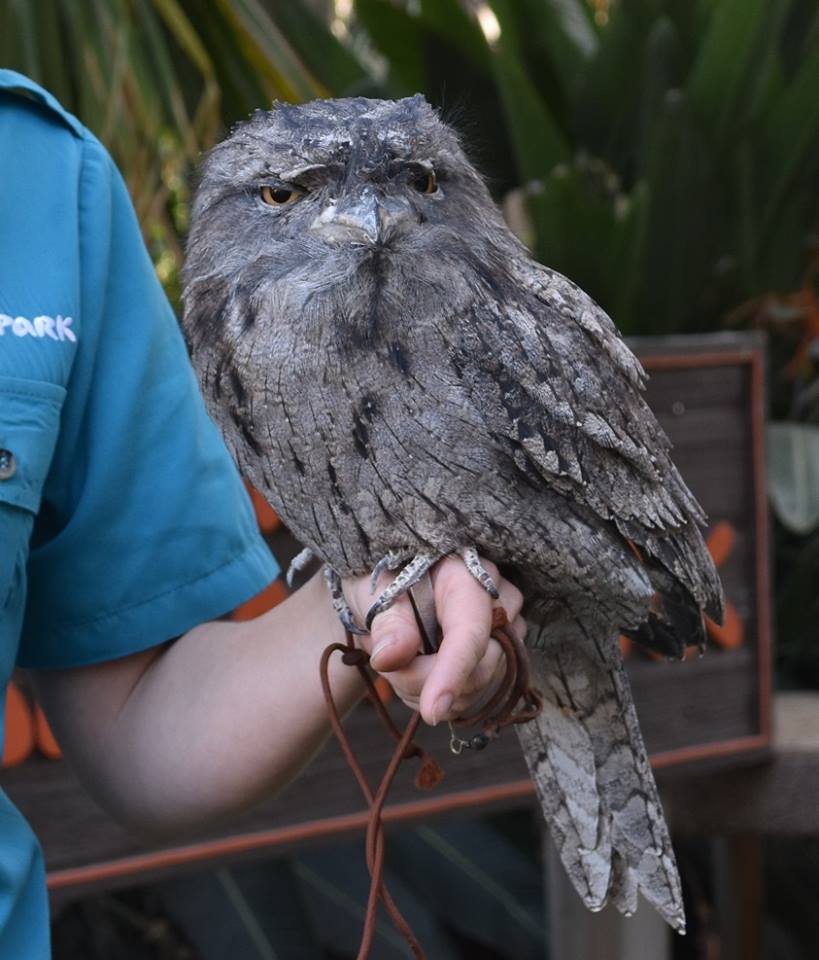
Tawny frogmouth at San Diego Zoo
Native to Australia and Tasmania

When a bird inhales, the air first goes to the caudal (rear) air sacs and then into the lungs. The lungs don’t expand and contract like ours do. Air is forced through them by the rise and fall of the chest. The next time the bird inhales, air in the lungs is pushed into the cranial air sacs. When the bird exhales (for the second time), this air is released back out into the environment through the trachea and nostrils.

A bird’s respiratory system is more efficient than ours, because a breath of air remains in the system for two cycles of inhalation and exhalation, allowing more oxygen to be extracted. This increase in efficiency does have some drawbacks. Because the air sacs extend so deeply into the bird’s body, respiratory infections can easily spread into the bones and abdominal cavity. Also, because they don’t have a diaphragm, birds rely entirely on expanding and contracting their chests for breathing. As a result, it’s very easy to suffocate your pet dinosaur if you hold it too firmly.

So, did non-avian dinosaurs have the same kind of respiratory system as modern birds? It’s possible that birds evolved this unique system only later in their evolution, but the bones of theropod dinosaurs did have air spaces very much like modern birds — even T. Rex had them! So it seems likely that, yes, the non-avian dinosaurs were just as weird as their avian descendants.

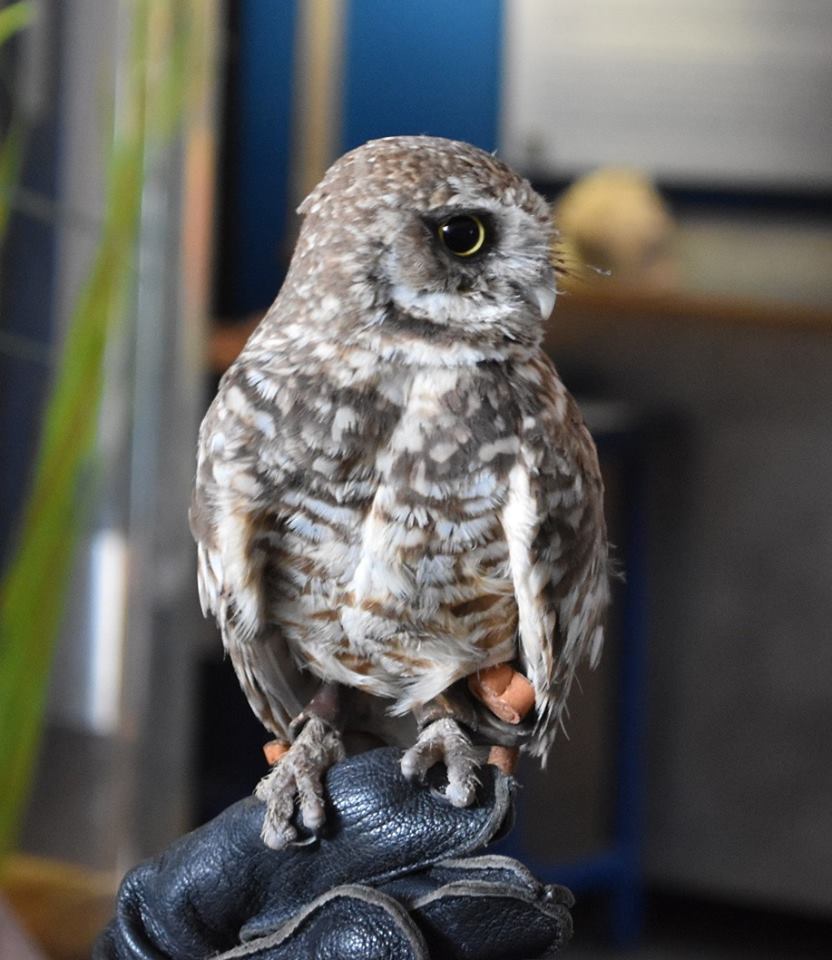
Burrowing Owl (Athene cunicularia)
This one was in captivity, but they are found in the wild in southern California.

So Why Didn’t Birds Go Extinct with the Rest of the Dinosaurs?

They almost did. A study reported on by Newsweek in 2018 showed that, in the aftermath of the asteroid strike 3 that wiped out the non-avian dinosaurs, forests all over the world collapsed. It would have taken hundreds of thousands of years for them to recover. This led to the extinction of all tree-dwelling birds. Only a few small, ground-dwelling species survived.

So how did even those few birds manage to survive when plenty of their small, ground-dwelling relatives didn’t? We can’t be sure, but another study done at the Natural History Museum, London and reported on by Science Daily in 2009 suggests that it was because birds had evolved larger brains. This study analysed CT scans of fossil birds and found evidence that birds at the time of the extinction had already evolved brains comparable to modern birds. Being more intelligent would have given them a better chance of adapting to drastically changed conditions.

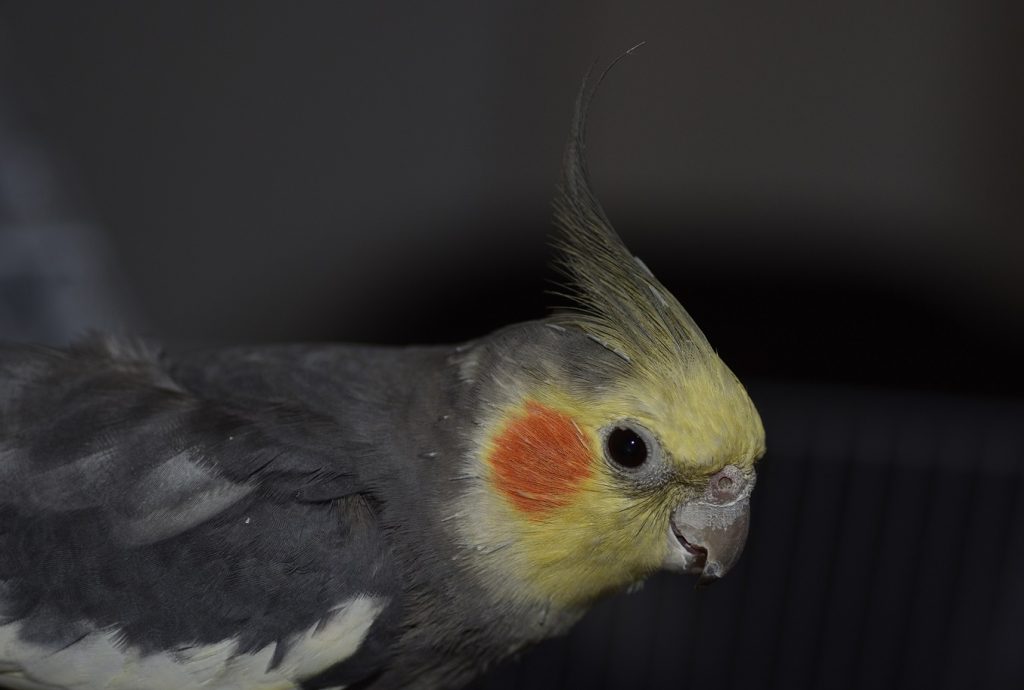
My pet dinosaur, Elvis
Elvis close-up

The Genera Formerly Known as Mimulus

If you hike in southern California, there’s a good chance you’re familiar with monkeyflowers. These plants generally have very attractive flowers, which makes them a popular choice with gardeners. I read one article that even referred to them as “garden porn”. (I was tempted to use that as the title of this post, but I decided that I’d just as soon not have my blog popping up on porn searches.)

Sticky monkeyflower (Diplacus aurantiacus)

They’re called monkeyflowers because supposedly some the species have flowers that look like the face of a monkey. I guess I haven’t seen those species yet.

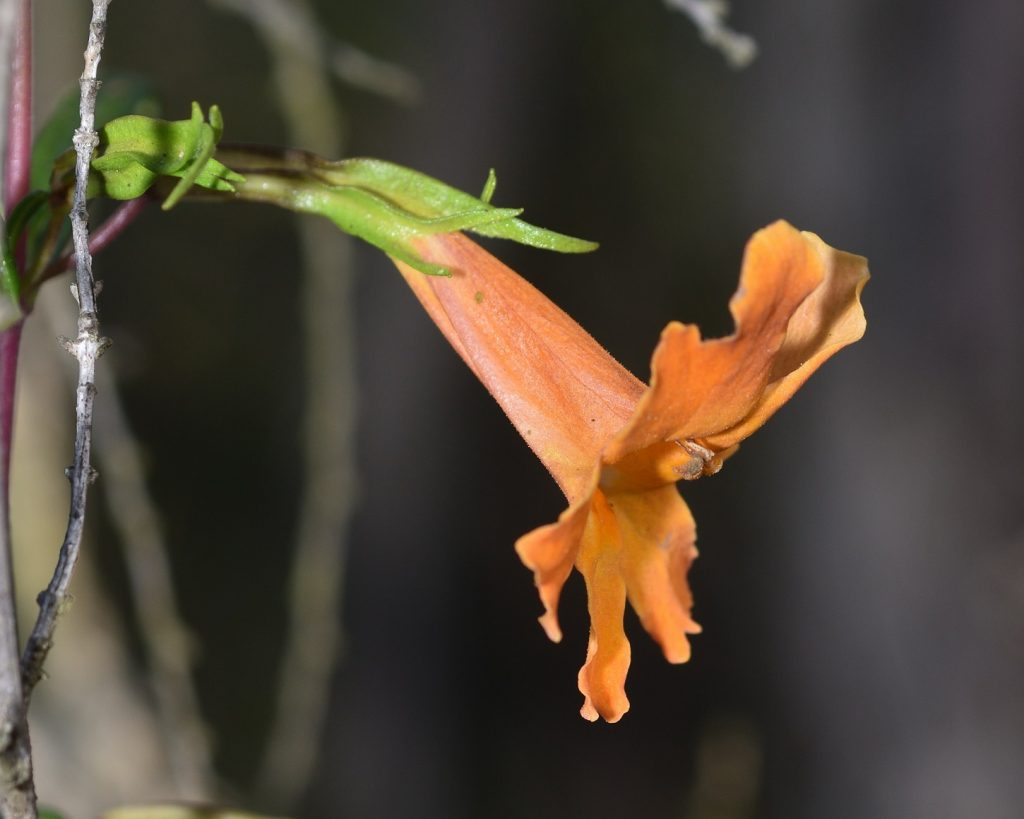
In chaparral, the most common species seems to be sticky monkeyflower (Diplacus aurantiacus). The flower has a long, tubular base, ending in five lobes. The color varies from white to orange or red. The most common color is said to be a light orange, but most of the ones I see in my neighborhood are red with an orange center. They are pollinated by bees and hummingbirds. The plant grows as a low bush.

Sticky monkeyflower (Diplacus aurantiacus) — orange variety

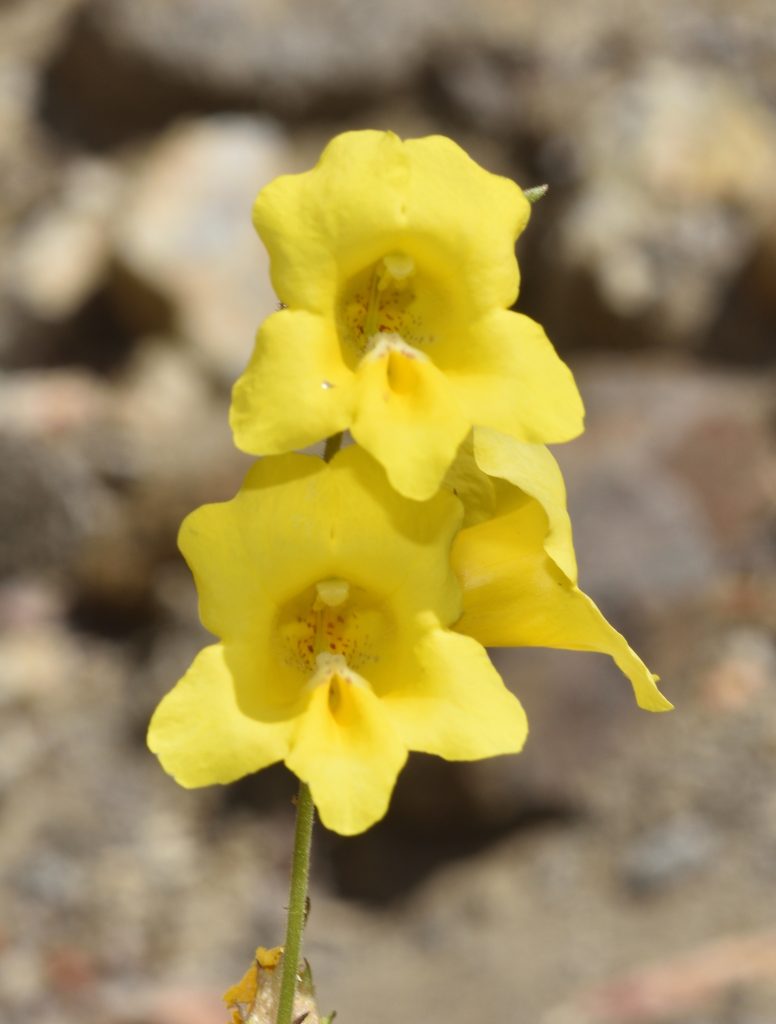
Another monkeyflower I’ve encountered in chaparral is seep monkeyflower (Erythranthe guttata). I first saw this one growing in the middle of a small stream on Cowles Mountain in Mission Trails Regional Park. Most streams in southern California are dry for much of the year. We’d been having a lot of rain for several weeks prior to this, though, so the stream was flowing pretty well. The monkeyflower had just started flowering. Its flowers were bright yellow with the tubular bases of the flowers somewhat shorter than on the sticky monkeyflower. The leaves were much larger and the plant was growing as a small shrub.

Seep Monkeyflower (Erythranthe guttata)

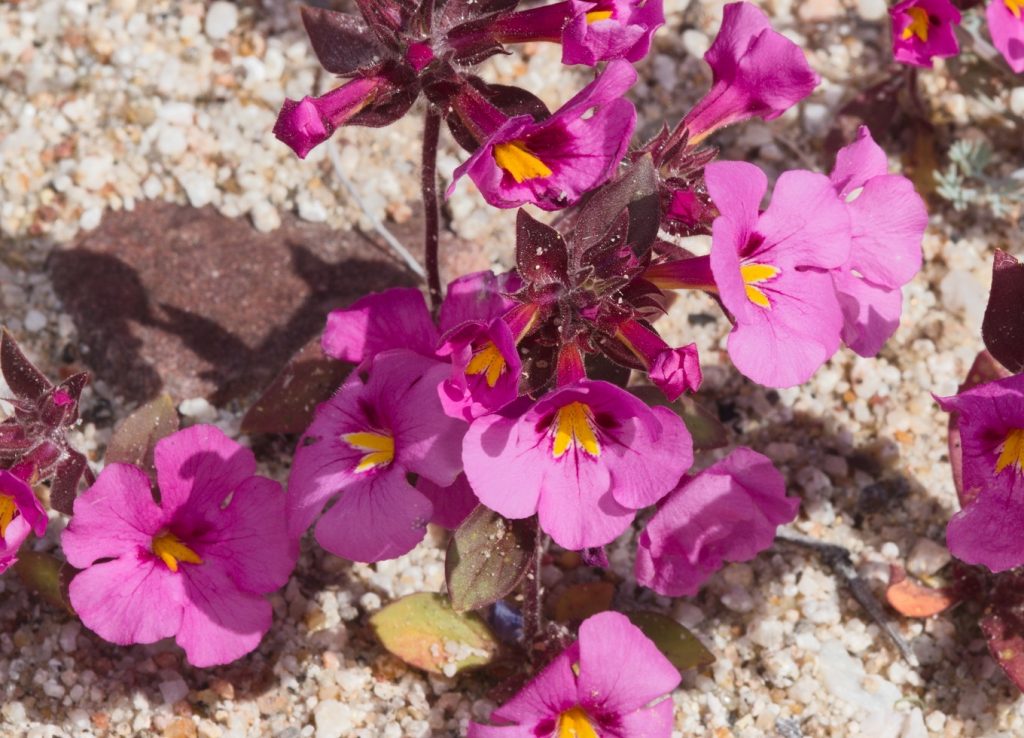
The last monkeyflower I want to mention is Bigelow’s monkeyflower (Diplacus bigelovii). This one grows in profusion in the Anza Borrego desert between February and June. It grows as an annual herb, rather than a bush, and its flowers are a beautiful magenta color. It’s definitely one of the most striking plants in Anza Borrego.

Bigelow's monkeyflower (Diplacus bigelovii)
Bigelow’s monkeyflower (Diplacus bigelovii)

So, why the odd title for this post? All monkeyflowers used to belong to the genus Mimulus and this genus was included in the figwort family (Scrophulariaceae) — nice and simple. Beginning in the 1990’s, though, things started to get a bit more complicated…
For most of the history of biology, the classification of organisms was based almost entirely on shared characteristics. The more characteristics two organisms shared, the more closely related they were presumed to be. This approach has some obvious problems. One problem is simply that an organism can change greatly over the course of millions of years. If we don’t have many intermediate fossils, it may not be at all clear that the early organism is related to the later one.

Another problem is that sometimes organisms that are not at all closely related will evolve similar traits simply because they are experiencing the same environmental pressures. This is called convergent evolution. For example, during the age of dinosaurs, there was a group of reptiles called Ichthyosaurs that was adapted to living in marine environments. These creatures looked and probably behaved remarkably like porpoises. But porpoises are mammals and Ichthyosaurs were reptiles — not very closely related at all. Apparently, the porpoise form is just a really good form for a large, aquatic, air-breathing creature.

With the cracking of the genetic code, scientists have developed tools that can give us a much better idea of the relationships between living things. As a result, many organisms are being reclassified as molecular studies provide us with more accurate information. In the mid-1990’s, studies of the DNA found in chloroplasts (the cell components in plants that contain the chlorophyll) showed that monkeyflowers are more closely related to lopseeds than figworts. As a result, the genus Mimulus was moved from the figwort family to the lopseed family (Phrynaceae).

It 2012, Mimulus itself was split up, also as a result of DNA studies. It was decided that the original genus should be broken up into three genera — Mimulus, Diplacus, and Erythranthe. Most of the monkeyflowers, in fact, have been moved to Diplacus or Erythranthe. The taxonomy of the monkeyflowers is still in flux. After the 2012 breakup, the seep monkeyflower remained in Mimulus, but later got moved to Erythranthe.

It can be hard for a biologist to get used to such name changes, especially if they happen to a group that he/she has been studying for decades. Nevertheless, most biologists support such changes, because they understand how important it is to come up with terminology that reflects the true relationships between organisms. As our understanding of these relationships are refined, our system of taxonomy must be updated accordingly.

Update 07/12/2019

Since posting this article, I’ve encountered several more species of monkeyflower. The first one is Cleveland’s bush monkeyflower (Diplacus clevelandii), which I saw on Otay Mountain in southern San Diego County, near the border with Mexico. It’s a fairly rare species, which grows in chaparral and oak woodland. It also likes disturbed habitats.

Cleveland’s bush monkeyflower (Diplacus clevelandii)
Otay Mountain, San Diego County. 06/22/19
Cleveland’s bush monkeyflower (Diplacus clevelandii)
Otay Mountain, San Diego County. 06/22/19
Cleveland’s bush monkeyflower (Diplacus clevelandii)
Otay Mountain, San Diego County. 06/22/19

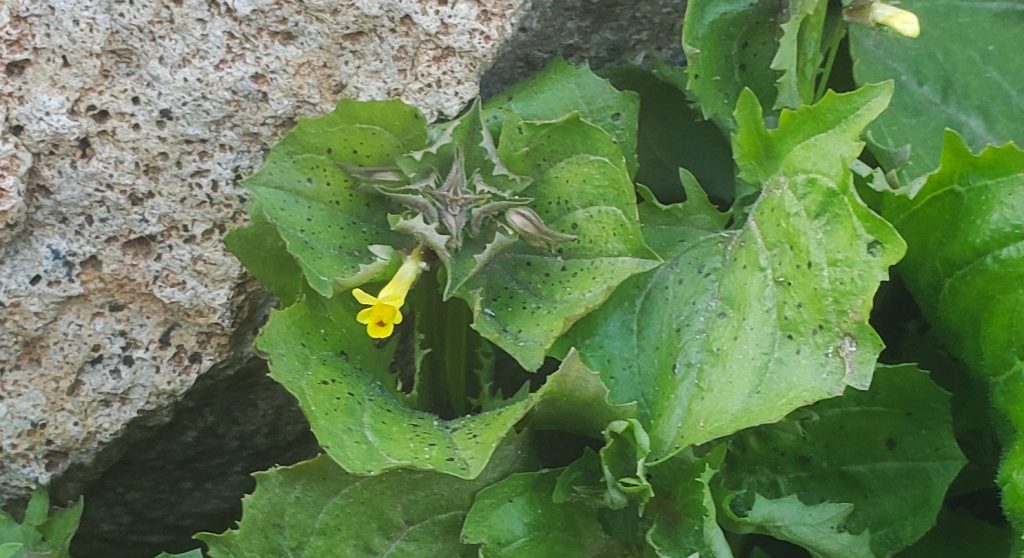
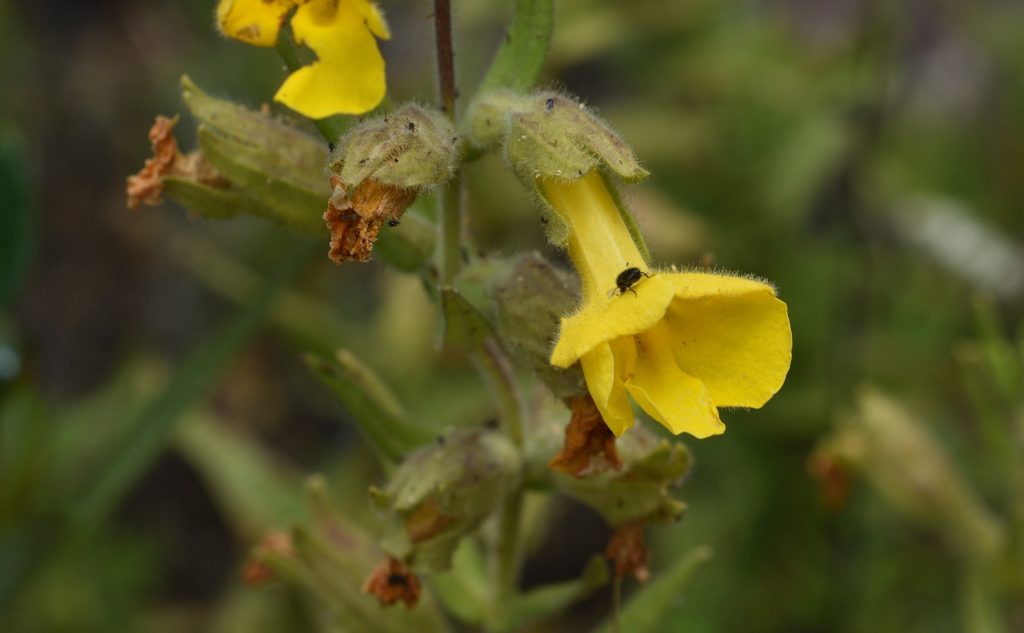
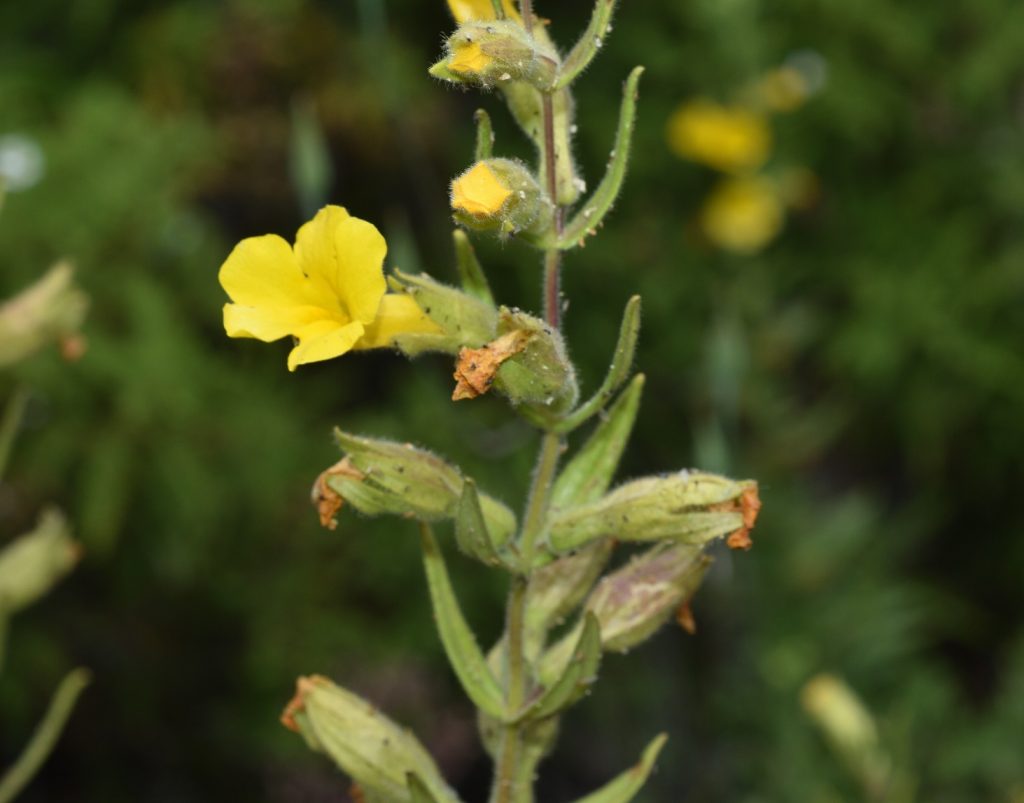
While hiking in Noble Canyon in the Cleveland National Forest (San Diego County), I encountered a second new species called wide-throated yellow monkeyflower (Diplacus brevipes). At first sight, it could easily be confused with seep monkeyflower, but a closer examination will disclose some differences. Maybe the most obvious one is the pleat in the lower lip of the flower. The two plants also grow in very different environments. Seep monkey flower grows near water (sometimes even in water). D. brevipes grows in open chaparral.

Wide-throated yellow monkeyflower (Diplacus brevipes)
Noble Canyon, San Diego County. 07/07/19
Wide-throated yellow monkeyflower (Diplacus brevipes)
Noble Canyon, San Diego County. 07/07/19

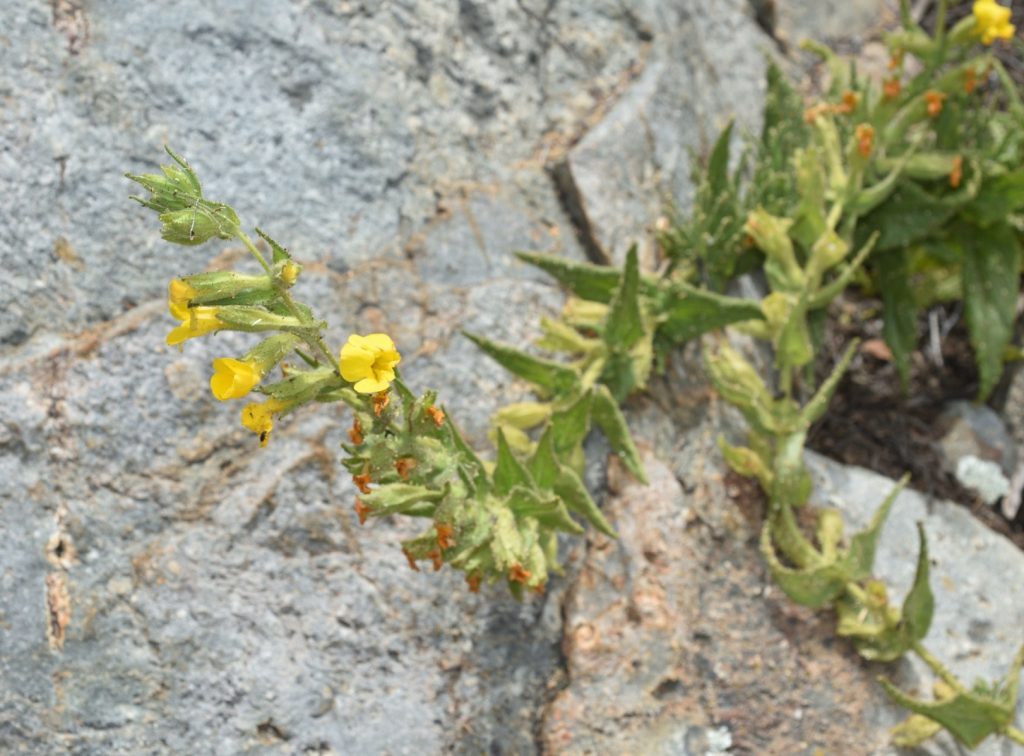
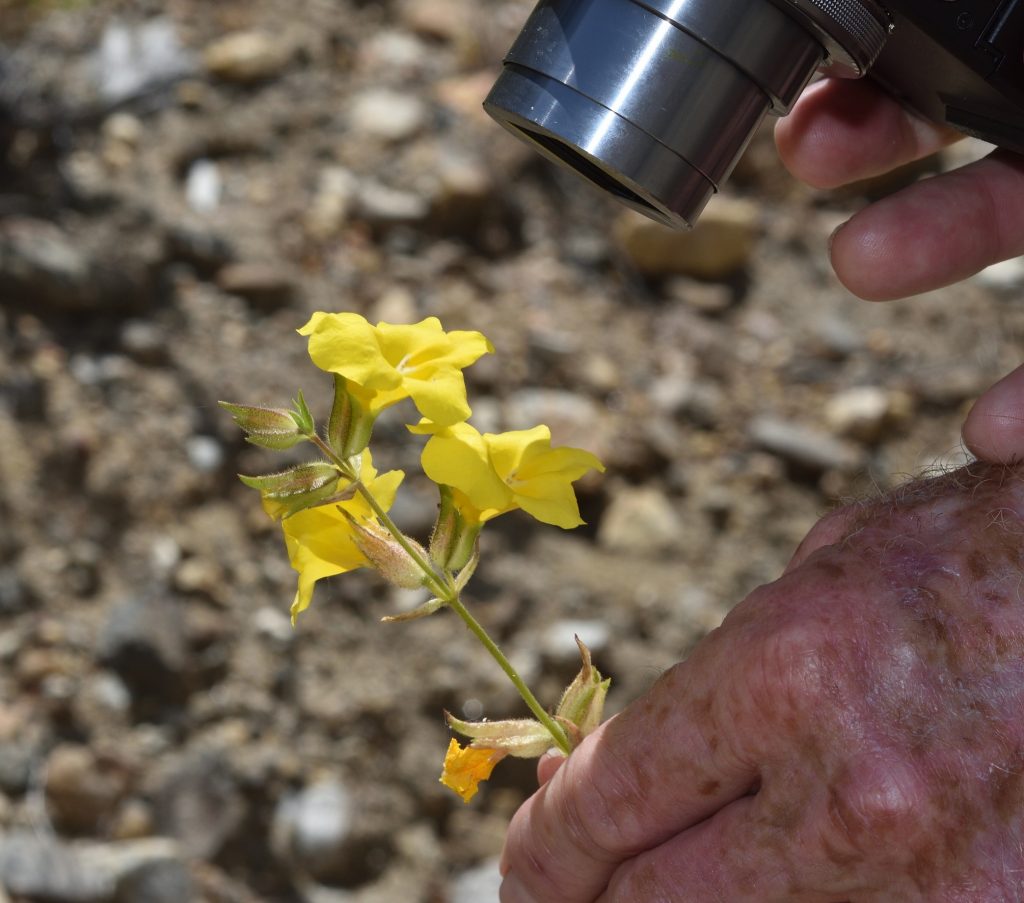
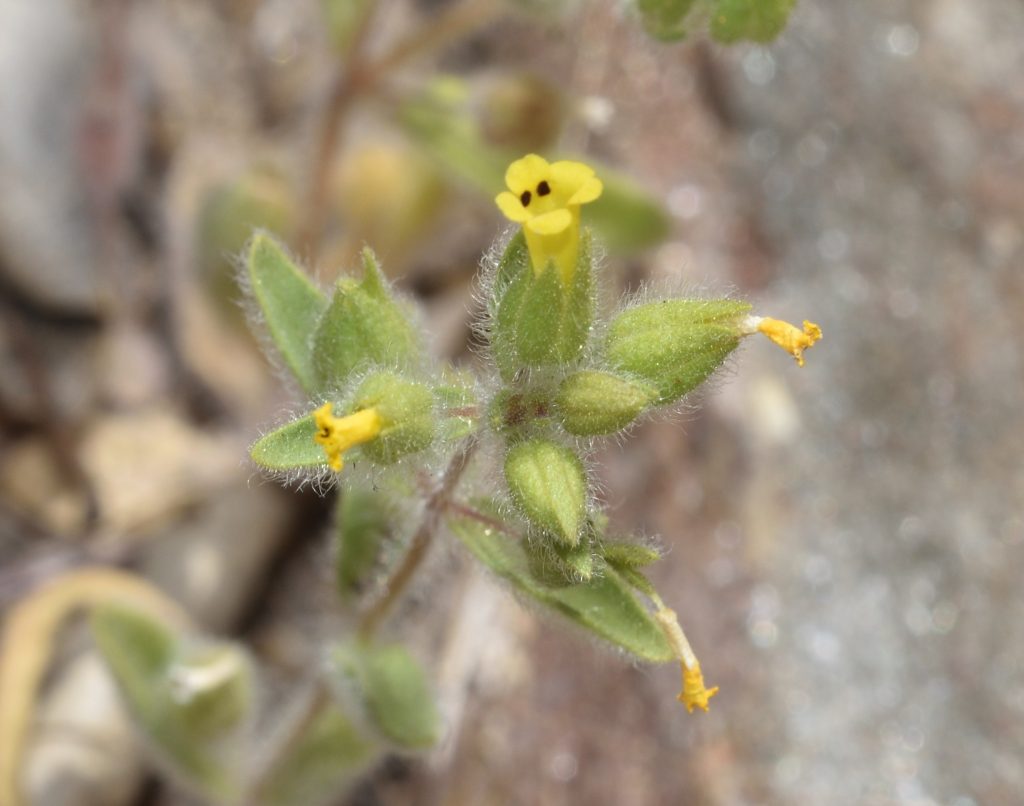
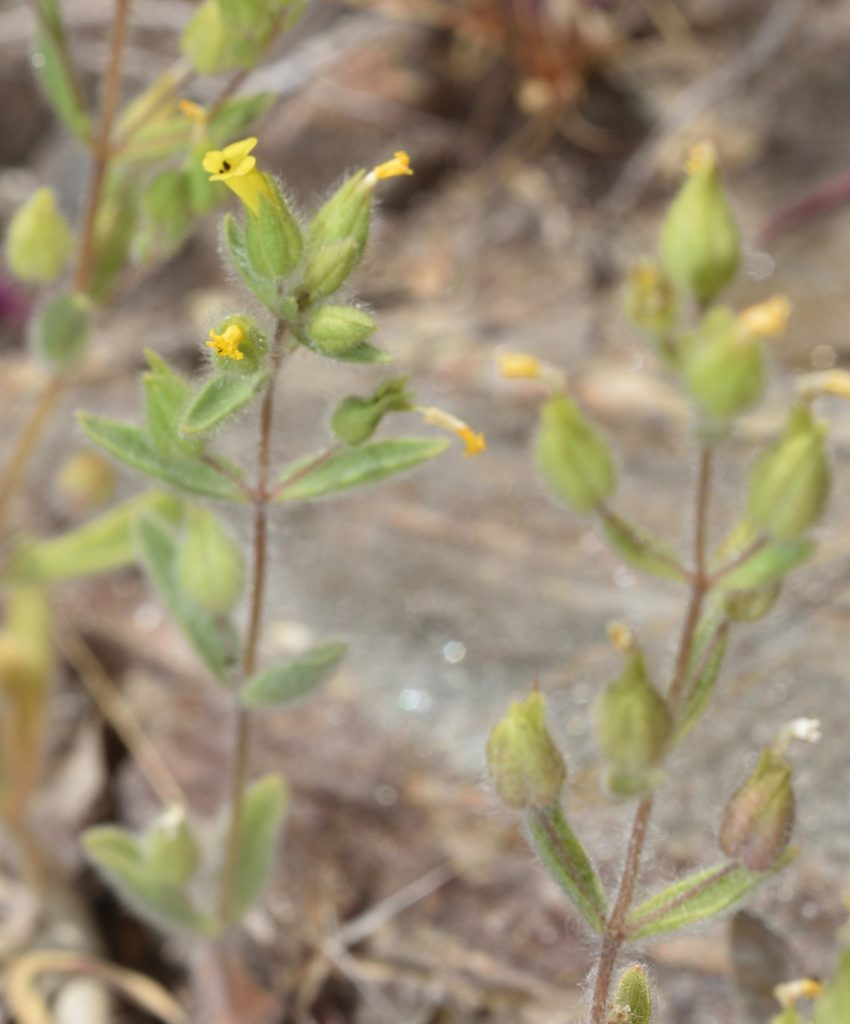
The third new monkeyflower I saw is called false monkeyflower. If you find that last sentence a bit confusing, that makes two of us. As far as I can tell, false monkeyflower is regarded as a true monkeyflower, despite the name. Of course, “monkeyflower” is itself a common name, so, from a scientific point of view, I guess it’s kind of a moot point.

False monkeyflower is quite a bit different from the other monkeyflowers we’ve seen here. The most striking difference is that the flowers are much smaller. I would guess that they are only about an eight of an inch across. (I should have included a coin in one of the photos for reference, but I didn’t think of it.)

False monkeyflower is sometimes classified in the genus Erythranthe, in which case, it’s called Erythranthe pilosus, but because it’s so different from other monkeyflowers, many botanists place it in its own genus, Mimitanthe. In that case, it’s called Mimitanthe pilosa.

False monkeyflower (Mimitanthe pilosa)
Noble Canyon, San Diego County. 07/07/19
False monkeyflower (Mimitanthe pilosa)
Noble Canyon, San Diego County. 07/07/19

The Diabolical Ironclad Beetle

Sam Wells, in his blog post about the diabolical ironclad beetle, states: “How the species got its name is a mystery to me.” Personally, I don’t find it all that mysterious. To me, it looks exactly like it’s encased in cast iron. And, imho, any beetle that looks like it’s encased in cast iron also looks pretty friggin’ diabolical.

In any case, the diabolical ironclad beetle, Phloeodes diabolicus4 is very well-armored. Reportly, you can step on it and it will just get up and walk away. There have even been reports of them being run over by cars without incurring any damage. An insect collector, wanting to mount a specimen. will often resort to using a drill to make a hole in the beetle’s carapace for the pin. It’s just too hard to force a pin through manually. This is one tough bug.

An ironclad beetle is any member of the beetle subfamily Zopherinae, so there are lots of different kinds. P. diabolicus is the only one I’ve seen in San Diego County, though. I haven’t been able to dig up much information about the beetle. Supposedly, they are found in woodlands under the loose bark of oak trees or cottonwoods. According to Charles Hogue in Insects of the Los Angeles Basin, “They are thought to feed on punky fungus-ridden wood.” I can add to this that they also feed on large mushrooms, as evidenced by the following video and photo. The ironclad is, of course, the roughly textured one. The other beetle is a species of Eleodes — a desert stink beetle.

Diabolical ironclad beetle (Nosoderma diabolicum) in the front and a desert stink beetle (genus Eleodes) in back

What Makes a Beetle a Beetle?

Beetles are insects in the order Coleoptera. Coleoptera comes from the Greek words koleos, which means sheath, and pteron, which means wing. Most modern insects have two pairs of wings. In beetles, the front pair have evolved to form thickened, protective shields for the membraneous hind wings. Only the hind wings are actually used for flight. The protective front pair are called the elytra.

Having only one pair of functional wings, plus the extra weight of the elytra, makes beetles less efficient flyers than many other insects. As a result, beetles tend to fly less often and they’re generally slower to resort to flight to escape threats. On the other hand, a hardened elytra is excellent armor. Also, being able to tuck the delicate wings inside the elytra allows the beetle to crawl into narrow spaces or burrow into things without having to worry about damaging its wings.

The following photo shows a blister beetle with its elytra open, exposing the thin hind wings.

Gnathium sp.
Gnathium sp.
Anza Borrego State Park near East Butte 02/03/19

Update: 9/11/20

In the original version of this post, I gave Nosoderma diabolicum as the scientific name for this beetle and Phloeodes diabolicus as a former name. According to Hisserdude on BeetleForum.net, this is incorrect. Phloeodes diabolicus is the correct name. I’ve updated this post accordingly. I’ve also deleted a bit about the number of species in Nosoderma and replaced it with a blurb about the beetle subfamily that the ironclads make up. You can read Hisserdude‘s argument by clicking on this link: Diabolical Ironclad Beetle (Phloeodes diabolicus) PSA.

Our Native Boas

Boas are snakes in the family Boidae. I used to think “boa” was just short for “boa constrictor”, but, actually, the boa constrictor is a single species in the boa family. In fact, the scientific name of the species is Boa constrictor (with the ‘b’ capitalized), which makes this one of those very rare cases where the scientific name is the same as the common name. (See Taxonomy 101 for an explanation of scientific names.)

There are no boa constrictors native to the United States, but we do have a couple of other boas — the rosy boa or northern three-lined boa (Lichanura trivirgata) and the rubber boa (Charina bottae). Both species are found here in California, but the rubber boa’s territory doesn’t quite make it as far south as San Diego County, where I do most of my hiking, so I haven’t seen one in the wild.

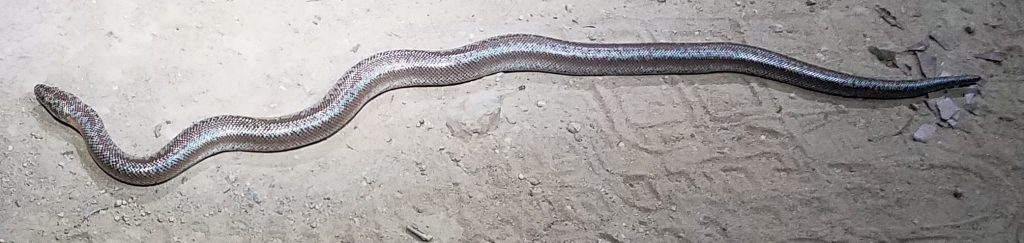
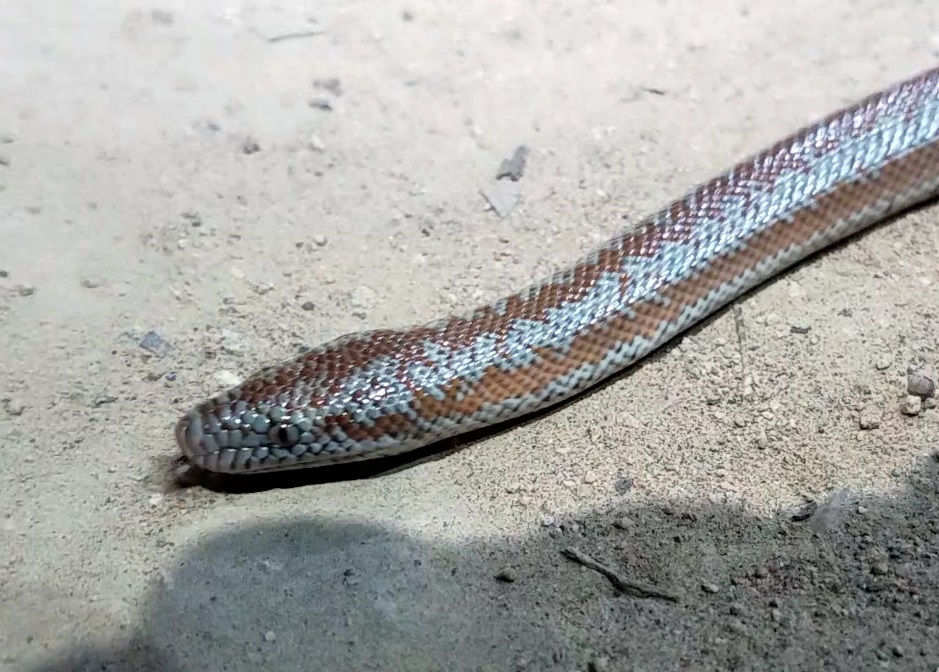
I have been lucky enough to see a couple of rosy boas, though. The first time was at night. I was hiking in Mission Trails Regional Park with a meetup group, when we encountered the snake. It was lit up by the light of our headlamps and the artificial lighting made it appear a beautiful silver color. Slithering along, it looked like it was made of molten silver! Here’s a video, followed by a few still shots:

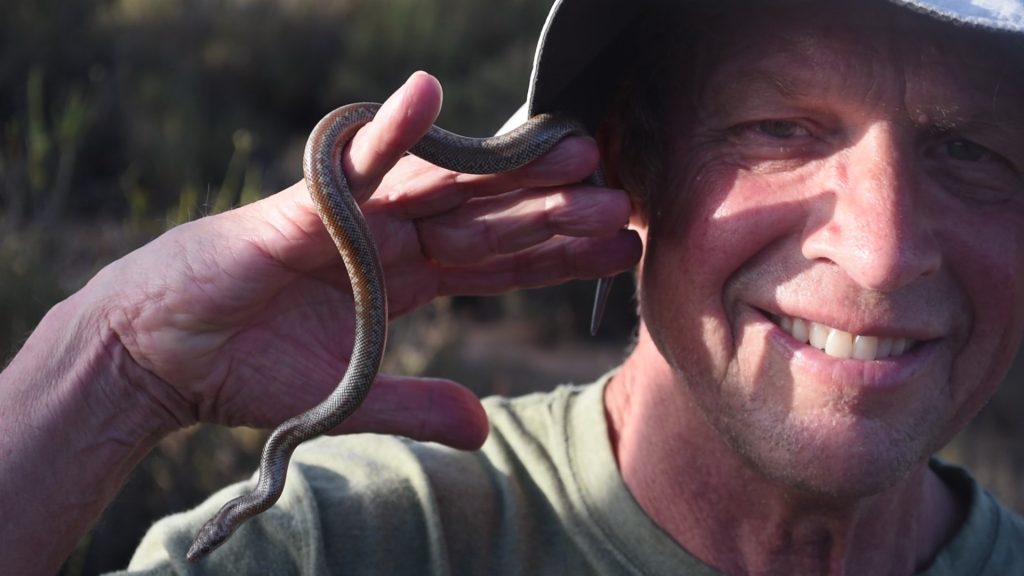
I saw a second rosy boa a couple of years later. This time, it was still daylight, so you can see more color in the photos. Many thanks to my friend, Ed, for holding the snake while I took pictures of it (and for taking my word for it that it was non-venomous).

The Stuff of Nightmares

There are a lot of tarantulas in Southern California. They’re big and hairy and they have very large fangs. This article is not, however, about tarantulas. It’s about a tarantula’s worst nightmare…

Milde’s tarantula hawk wasp (Pepsis mildei)5 is a beautiful insect. Its body is a deep blue-black, its eyes are pitch black, and its wings are reddish orange. The females can be up to two inches long. They’re fairly common in Southern California and are easy to spot.

Milde’s Tarantula Hawk Wasp (Pepsis mildei)
Sweetwater River Trail 9/8/17

The adult wasps feed off nectar, pollen, and fruit juice. (Sometimes they feed off fermented fruit and get so drunk they have trouble flying.) They frequent milkweed, western soapberry trees, and mesquite trees.

Male tarantula hawks don’t have stingers. Actually, no male insects have stingers. There’s a very good reason for this — stingers evolved from ovipositors. An ovipositor is a tubular organ through which an insect lays its eggs. Ovipositors come in a great variety of forms from short and thick to ridiculously long. Some insects totally lack ovipositors and just lay their eggs through an opening in their abdomens. Others have ovipositors with sawtoothed edges. They use these to saw into the stems or leaves of plants, so they can lay their eggs inside.

But in many insects, the ovipositor has lost its original function of laying eggs and, instead, is used to inject venom. In other words, it’s become a stinger. Obviously, a stinger is a pretty great form of self-defense. It can also be used to subdue prey. But, because stingers evolved from ovipositors, only the females have them. So the male tarantula hawk is totally harmless.

The female is another story. The sting of the female tarantula hawk is extremely painful. In fact, according to Justin Schmidt, who developed the Schmidt sting pain index, the tarantula hawk has the second most painful sting of any insect.6

Females are not aggressive toward humans and you’re unlikely to get stung unless you happen to step on one while barefoot. If you are unlucky enough to get stung, though, Dr. Schmidt’s advice is to immediately lay down (so that you don’t hurt yourself running around blind with pain) and begin screaming. (Actually, you won’t have any choice about the screaming part.) Fortunately, the worst of the pain only lasts about five minutes. Unless you happen to be allergic, the sting is not dangerous and, when the pain finally subsides, you’ll have a great story to tell.

The tarantula hawk wasp is a parasitoid. A parasitoid is a parasite that kills its host. In this case, the host is a tarantula. A female wasp will fly around close to the ground, searching for tarantulas. She may even crawl inside the burrow of a tarantula to attack it where it lives. When she finds one, she stings it to paralyze it, then she drags it to a burrow that she dug earlier (or if she stung it inside its own burrow, she may leave it there). She then lays a single egg on the spider’s abdomen and seals the burrow. When the egg hatches, the larva burrows into the tarantula’s abdomen and begins to feed. Note that the tarantula is still not dead. It’s still paralyzed from the sting and will remain so until it finally dies from the larva feeding on its insides. The most amazing part, though — the most horrifying, gruesome, yet amazing, part — is that the larva feeds on the non-vital parts of the spider first, in order to keep it alive and fresh for as long as possible!

Dragging a paralyzed tarantula

While hiking on the Sweetwater River Trail near Jamacha, CA, I chanced upon a tarantula hawk wasp that had just stung a tarantula and was dragging it along the hiking trail. The video and photos accompanying this article all came from that encounter. I must have spent around twenty minutes observing the wasp. I was hoping to get a video of it actually placing the spider in a burrow, but I think the light from my headlamp (this was around dusk) must have been confusing it. It seemed to be dragging the tarantula around at random. It was probably trying to get it out of the light. I was able to get quite close to the wasp — almost touching it. It never acted the least bit aggressive. I don’t think it felt threatened — just confused. Since tarantula hawks don’t have nests to defend and don’t have many natural enemies, they tend to be docile. I finally gave up and left it alone with its prize.

Asparagus & Co.

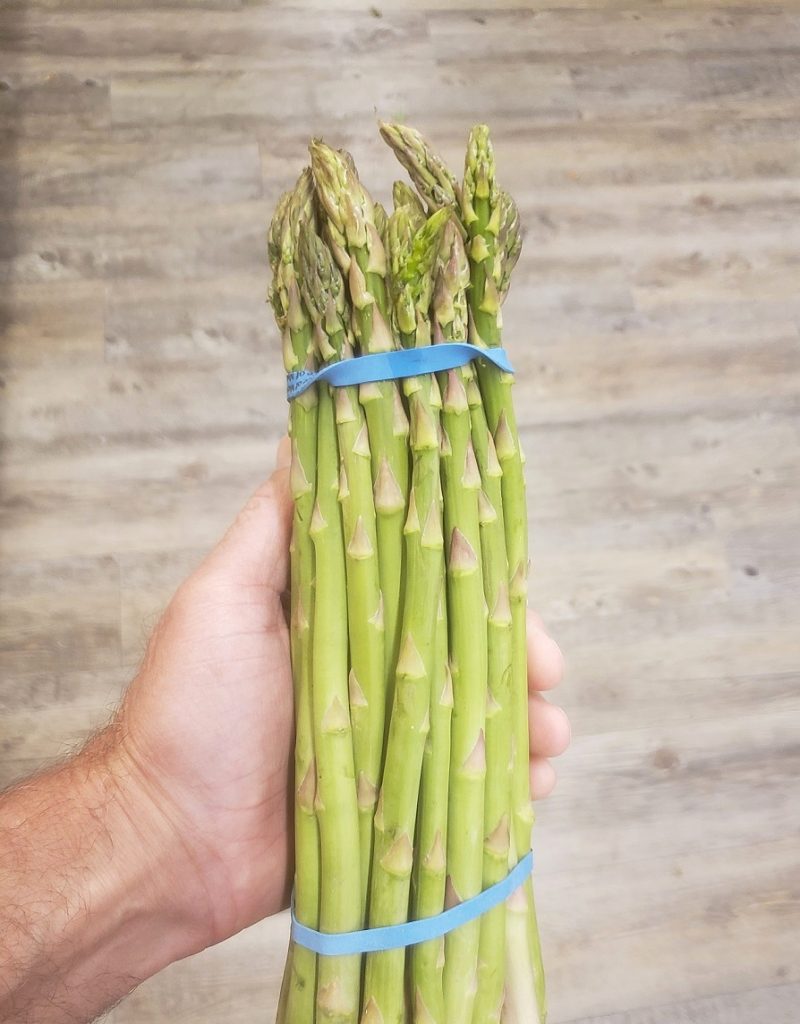
The vegetable asparagus comes from the plant Asparagus officinalis, which is a member of the family Asparagaceae. In botany, all family names end in -aceae, which is usually pronounced as if you were saying the letters A, C, E in quick succession. So, for example, grasses are in the family Poaceae; mustard plants are in the family Brassicaceae; and lilies are in Liliaceae. (For an introduction to the science of classification, see my previous post Taxonomy 101.)

Asparagus officinalis shoots

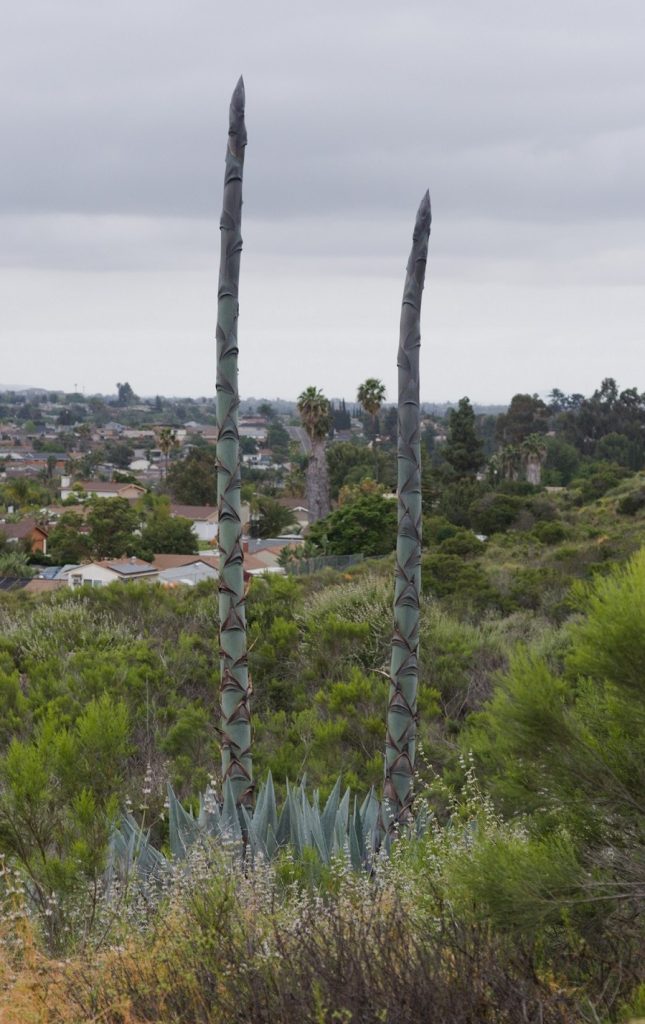
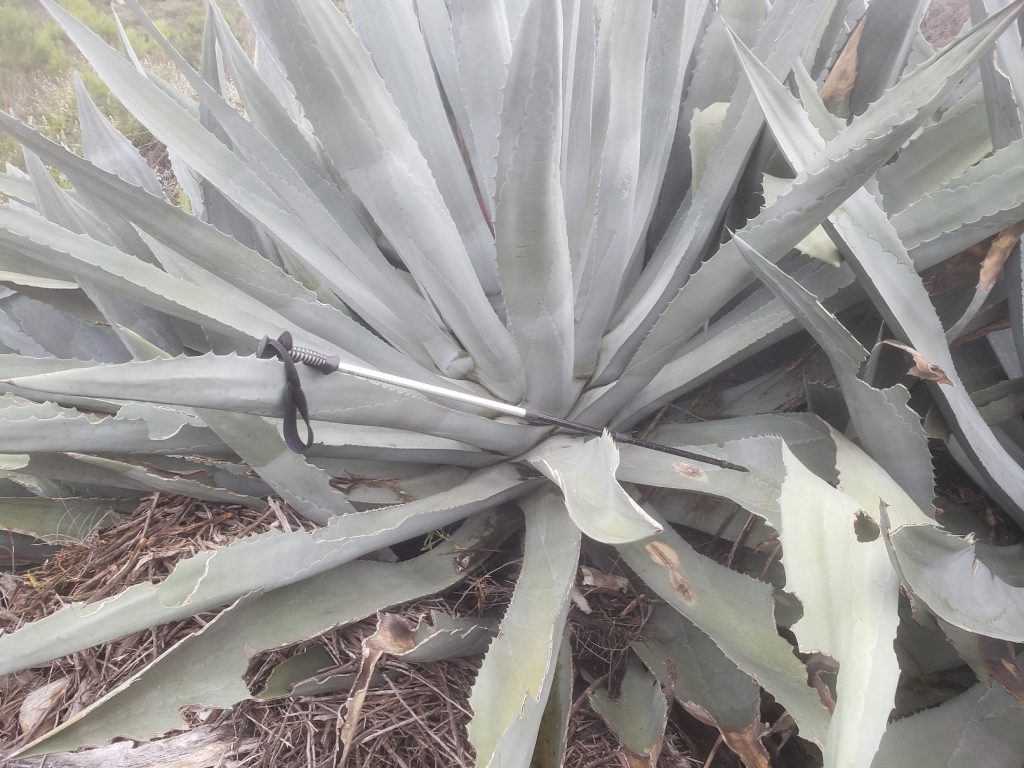
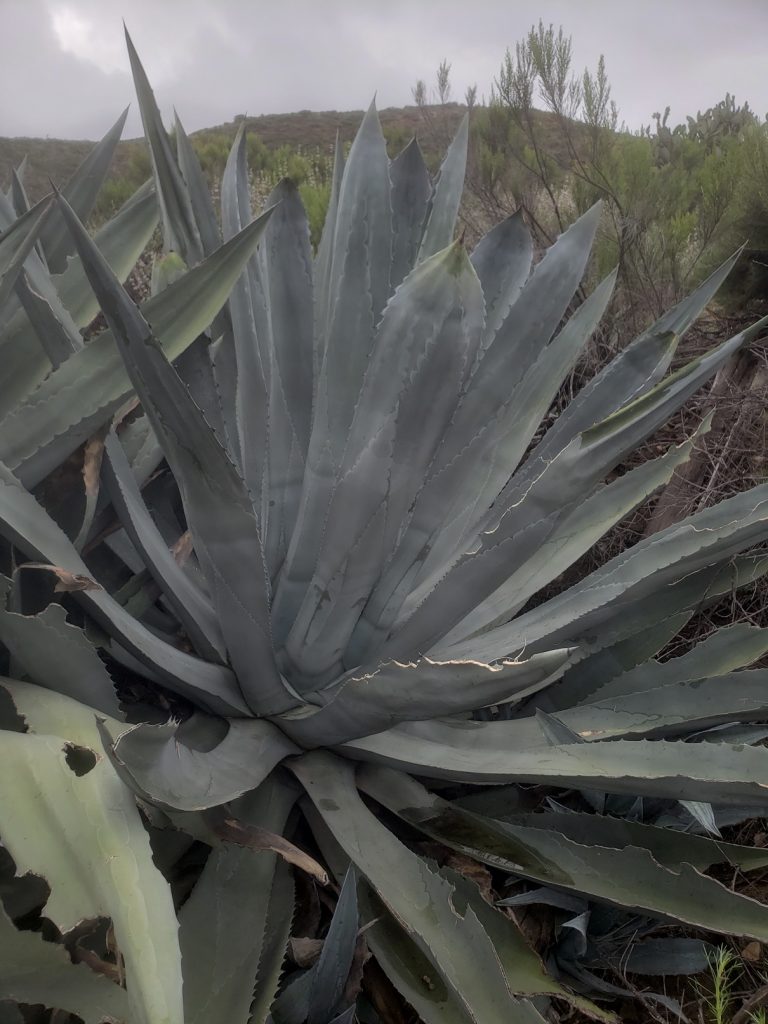
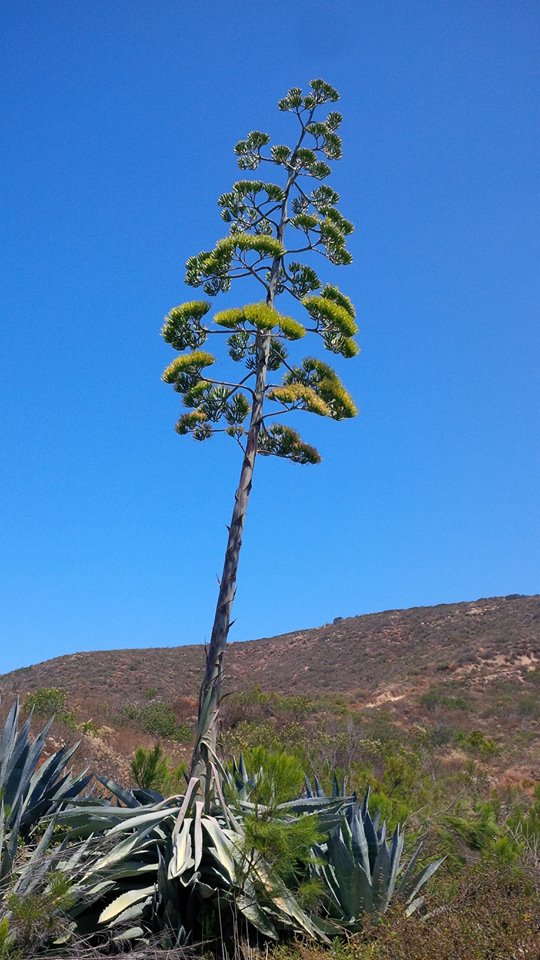
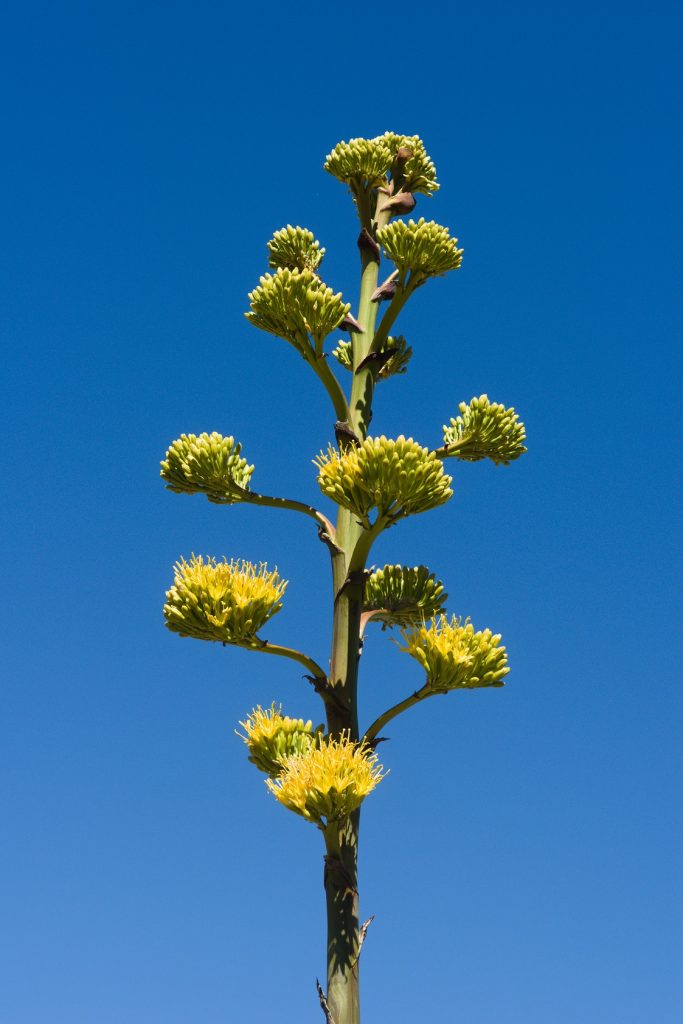
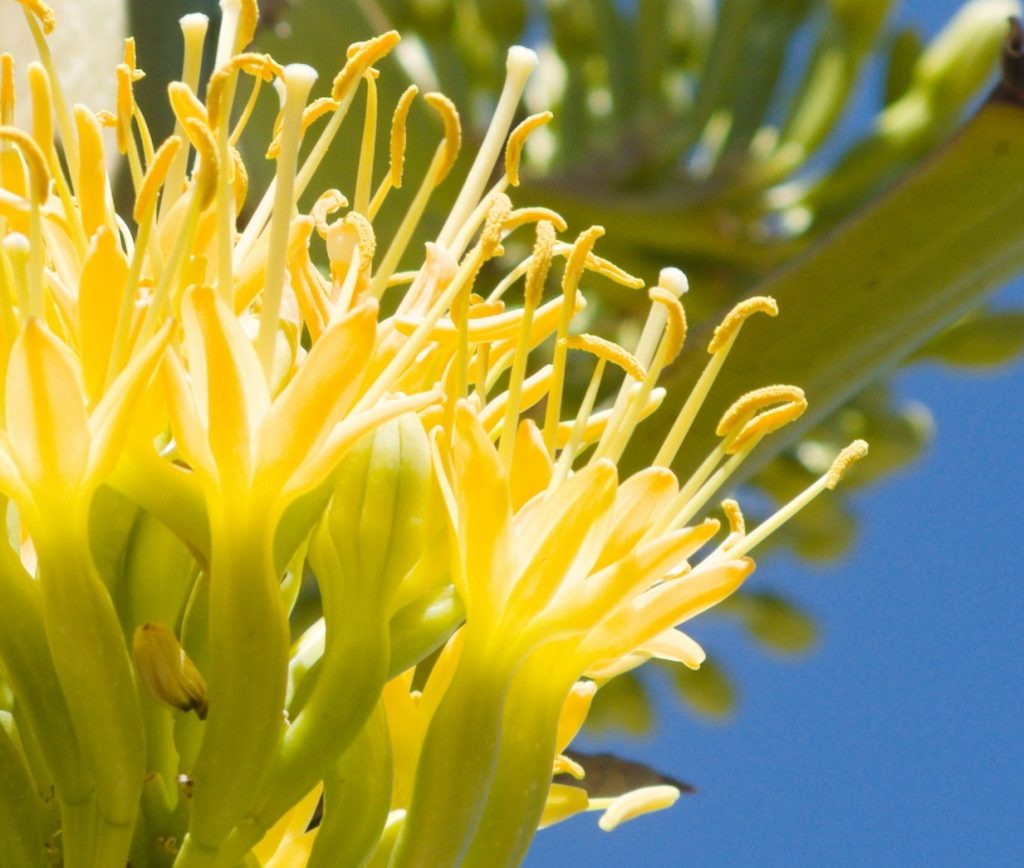
While hiking Cowles Mountain recently, I came across what for all the world looked like two giant stalks of asparagus twenty to thirty feet tall. They were actually Agave americana, a species of Agave that is native to Mexico, New Mexico, Arizona, and Texas. This plant lives for ten to thirty years. For most of its life, it consists of a rosette of sharply-spiked, succulent leaves. This rosette can reach a height of around six feet. Near the end of its life, Agave americana blooms for the first and last time. The plant shoots up a giant stalk, which eventually sprouts a huge inflorenscence of yellow flowers. The flowers are pollinated by bats and occasionally moths. Because of its long life, Agave americana is sometimes called a century plant; although, it never actually lives much past thirty years.

Century plant (Agave amercana)
At the base of Cowles Mountain, Mission Trails Regional Park 4/30/19
The rosette at the base of the plant with my hiking pole for reference

In addition to reproducing sexually through its flowers and seeds, Agave americana reproduces asexually by putting out suckers from its roots. These suckers are called puppies or pups. They form around the base of the rosette and are clones of the main plant. The main plant dies after flowering, but the puppies live on and eventually flower themselves.

One of the pups. This is a sucker sprouting from a root of the main plant. It will continue to live after the main plant flowers and dies.

As you may have guessed, Agave americana and agaves in general (of which there are many) are in the asparagus family. Like asparagus, agave is edible. Agave murpheyi, in particular, was an important food source for Native Americans. Most parts of the plant were eaten at some stage of its development.

This is a century plant in bloom. I saw this one in 2016, also at the base of Cowles Mountain. The plant is probably close to 30 feet tall.

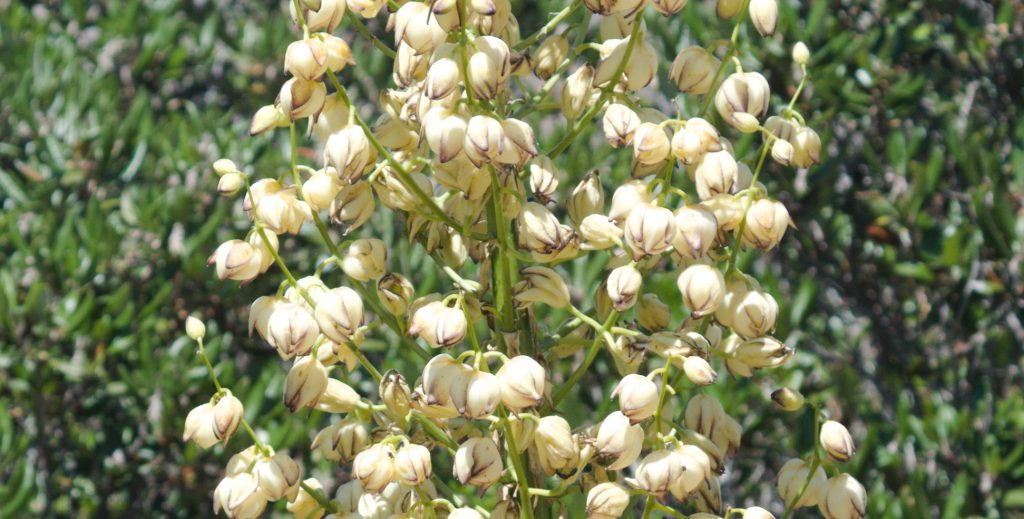
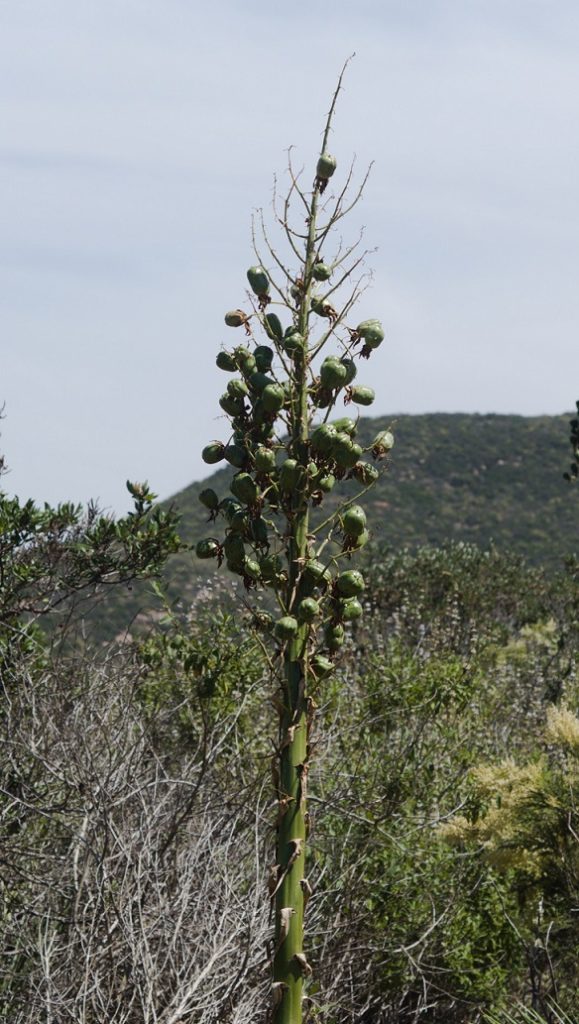
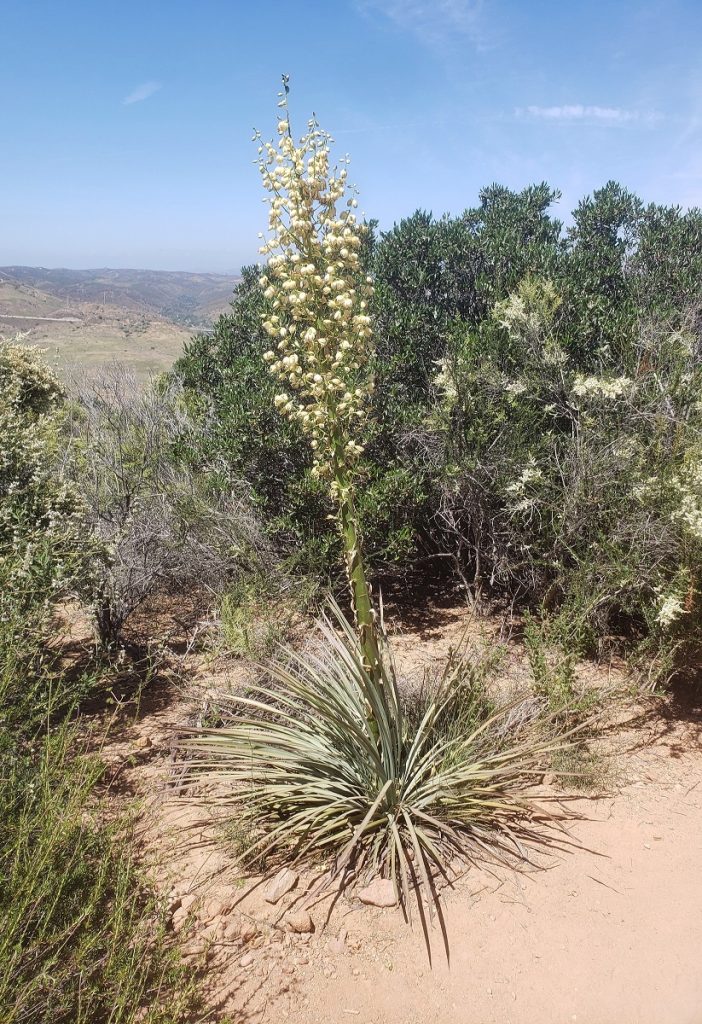
Another closely related member of Asparagaceae found in southern California is yucca. Yucca is the genus name. There are many individual species. They look very similar to the agaves, but the leaves tend to have smooth margins, instead of the spikes that are typically found on agave leaves. The most common yucca in my neighborhood (just east of San Diego) is Hesperoyucca whipplei 7, whose common names include chaparral yucca and Spanish bayonet. In form, it’s very similar to Agave americana, having a rosette of spiky leaves at the base and, when in bloom, a tall central stalk with a large inflorescence. The plant is much smaller than Agave americana, though, with the stalk rarely exceeding ten feet in height.

Hesperoyucca whipplei
Mission Trails Regional Park 5/5/19
Hesperoyucca whipplei flowers
Hesperoyucca whipplei fruiting

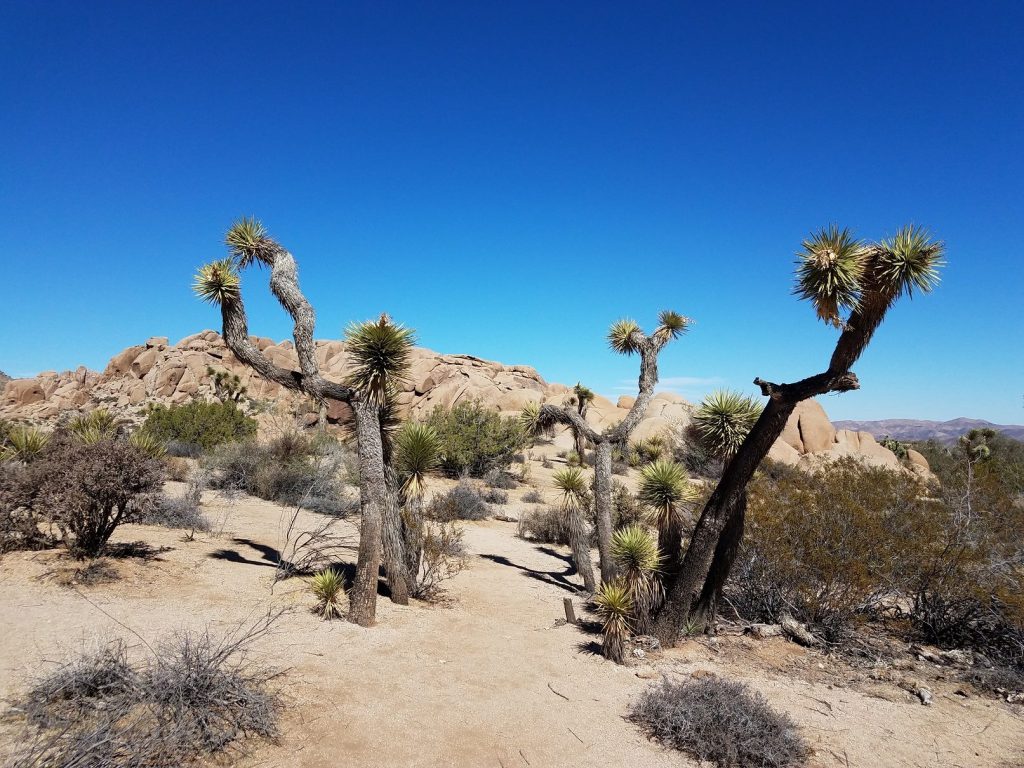
Probably the most striking of the yucca’s, at least in the United States, is the Joshua Tree (Yucca brevifolia). Joshua Trees are common in the Mohave Desert, especially in the part of the desert that extends into Joshua Tree National Park (roughly the northern half of the park). Joshua trees grow quite large — up to about 49 feet. Unlike Agave americana and Hesperoyucca whipplei, Yucca brevifolia has a weirdly branching central trunk and the leaves grow at the ends of the branches, instead of at the base of the plant.

Joshua Trees (Yucca brevifolia)
Joshua Tree National Park 10/18/16

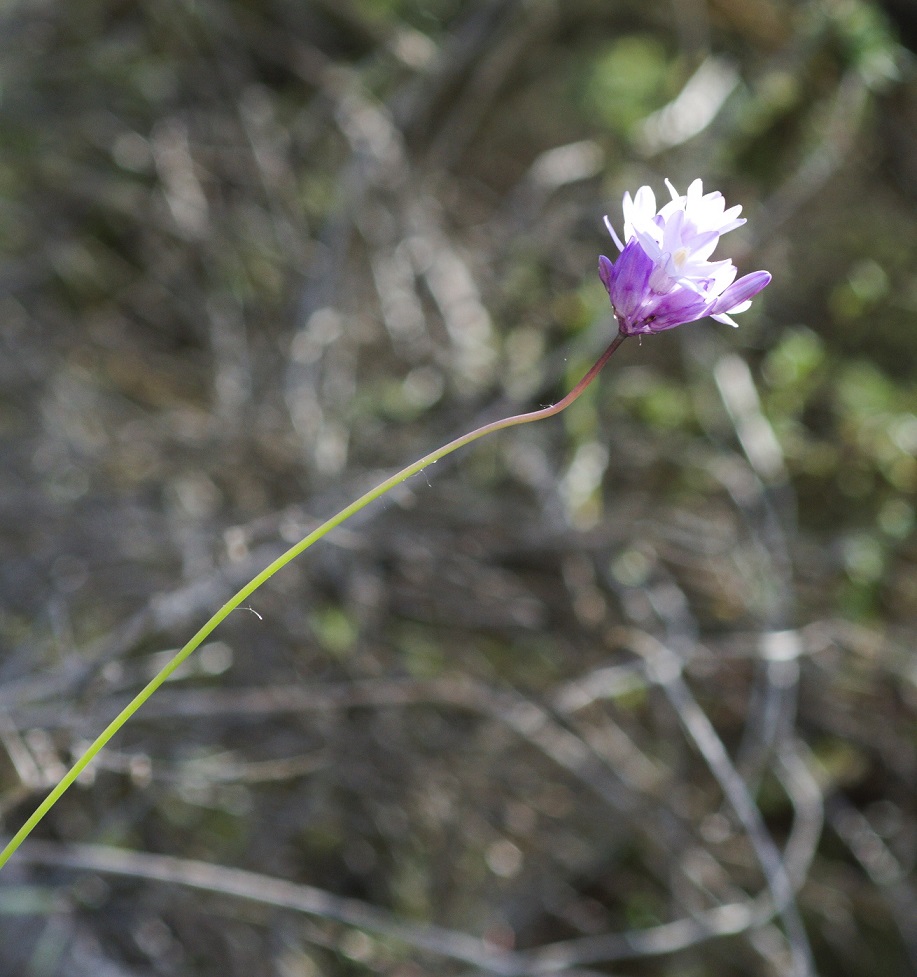
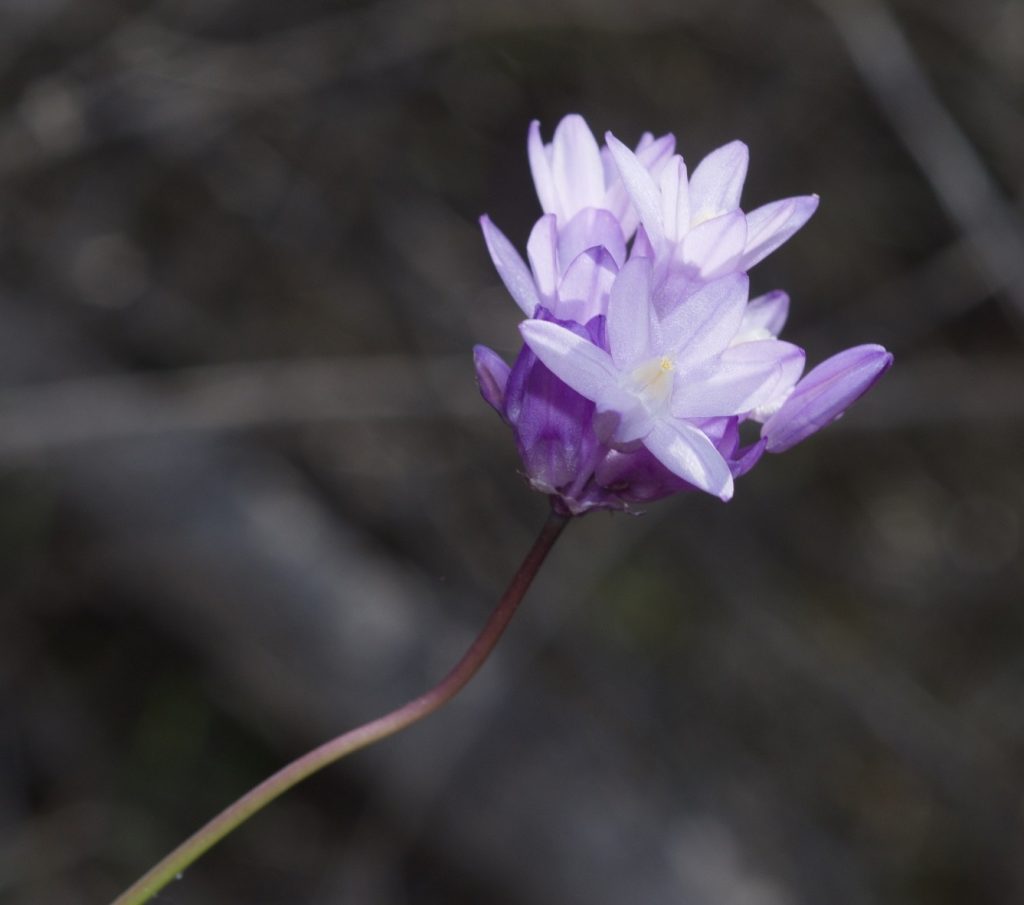
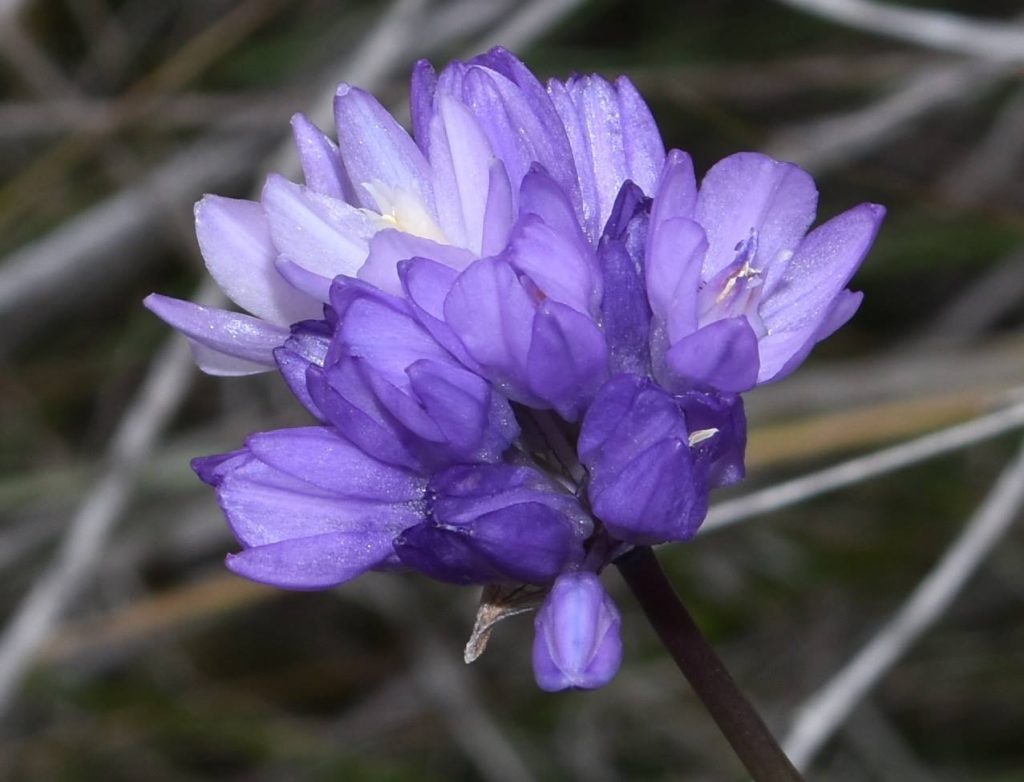
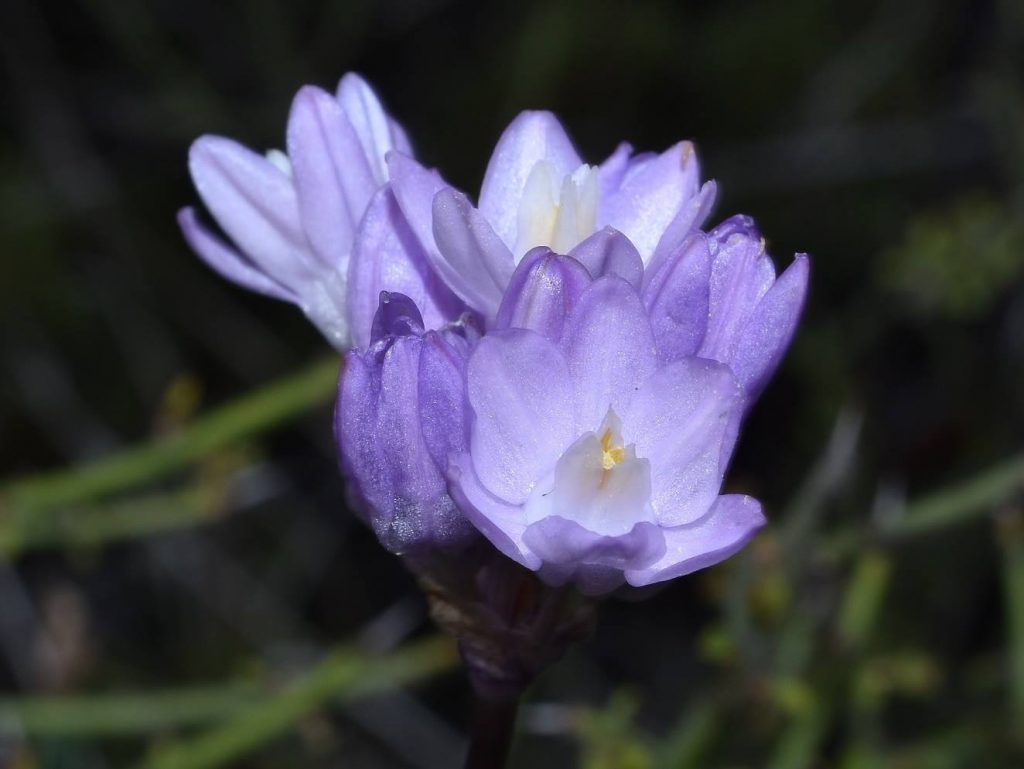
There is one other member of the Asparagaceae family that is very common here in southern California — blue dicks. (No, I’m not making up that up. The vulgar connotation associated with the word “dick” is of fairly recent origin, so the name was perfectly innocent when it was originally adopted.) The “blue” part of the name comes from the color of the flowers; although, they’re usually more purple than blue. “Dick” is probably just a shortening of the genus name, Dichelostemma, where the “ch” is pronounced as a “k”. The complete scientific name is Dichelostemma capitatum.

Blue Dick (Dichelostemma capitatum)
Mission Trails Regional Park, San Diego County 5/2/19

The blue dick does not look very much like asparagus, agave, or yucca. For one thing, it’s quite small — only growing a foot or so tall. It does, however, have a single thin stalk with a cluster of flowers at the top. It only has two or three leaves, but they grow from the base of the stalk like the basal rosettes of many agaves and yuccas.

Here are some more photos of this beautiful plant:

Mission Trails 5/2/19
Mission Trails 3/16/18

Here’s a couple more examples of plants in the asparagus family. First, here are some photos of the beautiful inflorescence of the desert agave (Agave deserti), which looks like a smaller version of Agave americana:

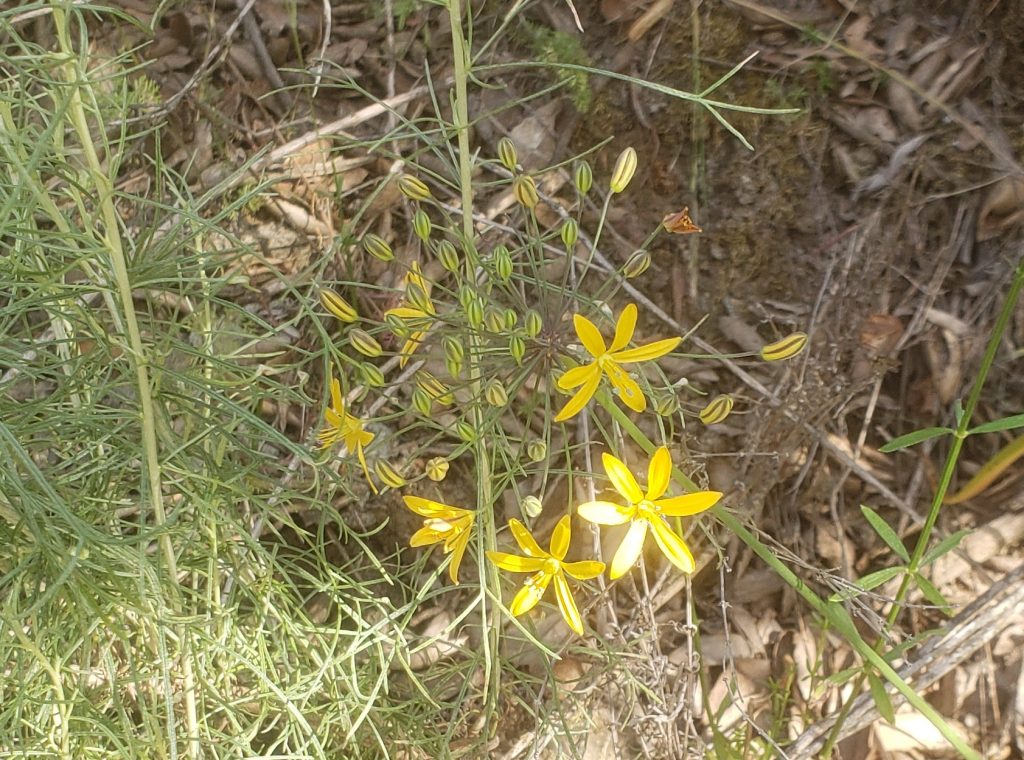
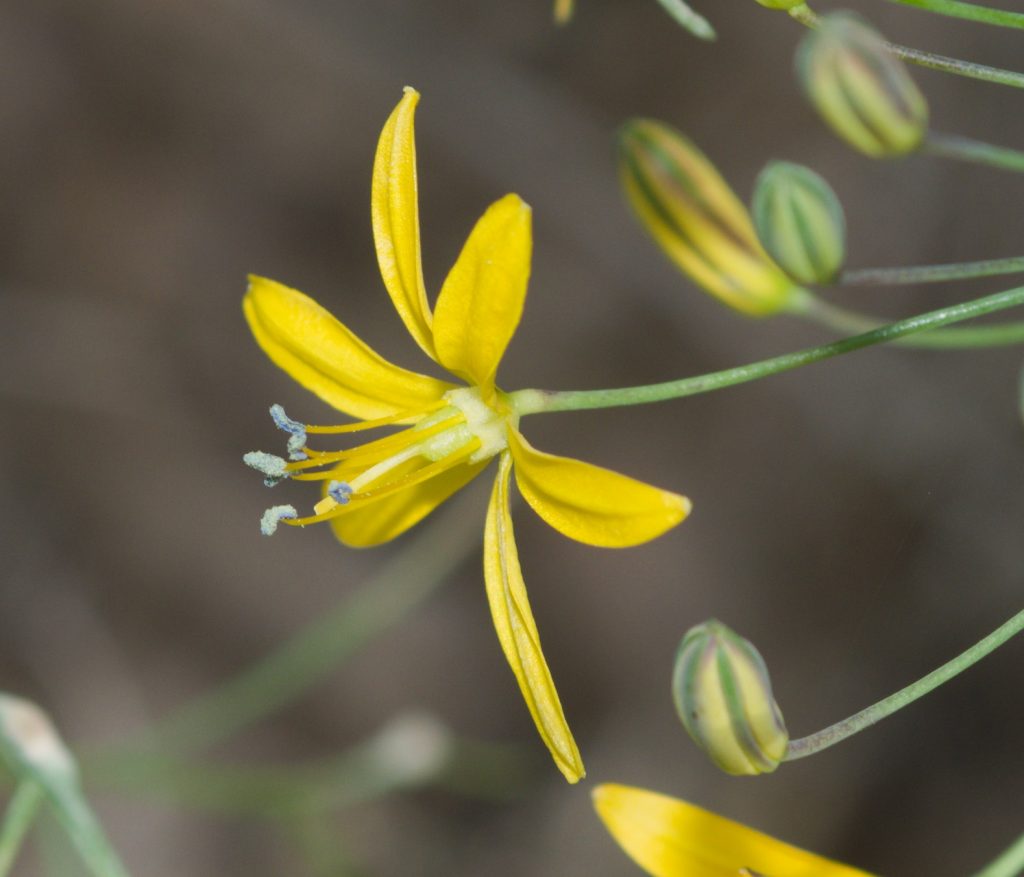
And here’s another of the smaller members of the family, Bloomeria crocea or goldenstar:

Goldenstar (Bloomeria crocea)
Mission Trails 5/2/19

Looking at all these different members of the Asparagaceae, you might be wondering why on Earth botanists would group them all together under one family. As I already mentioned, many of the plants share a basic form — a long, thin stalk with flowers at the top and leaves at the bottom. Often, especially in the case of the agaves and yuccas, the leaves are thick, fleshy, and succulent, with sharp tips.

Many of the members have corms. A corm is an underground swelling of the stem of the plant that is used for food storage. In the case of perennials, such as the blue dicks and goldenstars, the above ground part of the plant will die at the end of the growing season, but the corm will survive, so that the plant can grow again the following year. Yuccas are not perennials, but they still have underground tubers similar to corms that also act as storage organs.

There are some similarities in the inflorescences, too. The most important thing though, beyond all the similarities and differences, is that all the members of Asparagaceae share a common evolutionary origin. At some point long ago, one species of plant branched into multiple species, some of which branched in their turn, until, millions of years later, we ended up with a family of several hundred species of all shapes and sizes.

Extraordinary Variety

My purpose in writing about all these different members of Asparagaceae, beyond just exploring a very interesting plant family, was to introduce a topic that I’ll be coming back to in many future posts — namely, how organisms that are very closely related can, nevertheless, vary remarkably. On the one hand, you have two species of plant — Asparagus officinalis and Agave americana that are in the same family and do look very similar, except that one grows only a foot or so tall, while the other can be up to thirty feet! On the other hand, you have the Joshua Tree (Agave brevifolia), which is similar in many ways to chaparral yucca (similar leaves, similar inflorescences), but has the leaves in the “wrong” place and, moreover, has a branching trunk in place of a single stalk. And then you have the blue dick, which at first glance seems completely unrelated, but, on closer examination, has many features in common with other members of the family.

This observation is not limited to plants. Closely related animals, too, can vary to a remarkable degree. Perhaps there is no better example than the dog. Dogs evolved from wolves. In fact, wolves and dogs are in the same species, Canis lupus. If a dog mates with a wolf, the offspring will be viable. That is, the offspring will be able to mate with each other and, in their turn, produce offspring. This is one of the definitions of a species. So every kind of dog from a miniature chihuahua to a great dane is just a variation on the same basic model.

How is this possible? I like to look at it like this… suppose you want to build a robot dog and you want that robot dog to have all the behaviors of a real dog. How hard would that be? Pretty hard, obviously, but let’s suppose that, being the amazing robotics genius that you are, you somehow manage to pull it off. Now suppose you decide that one incredibly advanced robot dog is a bit boring. You’d like to have lots of different of robot dogs — big ones, small ones, cute robot Pomeranians, ugly robot Pugs 8, annoying little robot chihuahuas, and so on and so forth. How hard would it be to accomplish that? Well, compared to building the original model, it would probably be a piece of cake.

I think it’s much the same with nature. It took billions of years for the first dog to evolve from the primordial soup. But now that we’ve got the basic model, spinning off variations on it is a cinch.

Taxonomy 101

According to Wikipedia, Taxonomy is “the science of defining and naming groups of biological organisms on the basis of shared characteristics”. I think this definition may be a bit dated. Certainly, when Carl Linnaeus came up with our modern system of taxonomy back in the 1700’s, this would have been an accurate definition. But Linnaeus didn’t know about evolution. He was literally classifying things according to their perceived characteristics.

Now that we do know about evolution, biologists try to classify organisms based on their lineage. Granted, they still rely heavily on perceived characteristics to determine the probable lineage of an organism, but genetic and molecular studies are playing an increasingly important role.

The Linnaean system of taxonomy (slightly modified to take into account current knowlege) includes eight major taxonomic divisions:
Life
Domain
Kingdom
Phylum
Class
Order
Family
Genus
Species


Phidippus phoenix

Let’s take a specific example. The jumping spider pictured above can be classified as follows (based on the excellent online resource bugguide.net):
Life
Domain: Eukarya
Kingdom: Animalia (Animals)
Phylum: Arthropoda (Arthropods)
Class: Arachnida (Arachnids)
Order: Araneae (Spiders)
Family: Salticidae (Jumping Spiders)
Genus: Phidippus
Species: phoenix

Usually, when identifying a particular specimen, it’s enough to give its genus and species. So this spider would be identified as Phidippus phoenix. The genus name should always be capilized and the species name should always be lowercase. Sometimes the species name will be followed by the name of the person who first described the species or an abbreviation of that person’s name. For example, Patella vulgata Linnaeus is a species of limpet described by Linnaeus. Linnaeus is often abbreviated to L, especially in botany. (Linaeus named a lot of species.)

Just to confuse things, sometimes the species name will be followed by the variety name. Since this is just an introduction to taxonomy, I’m not going to get into varieties and subspecies and so forth. You can google those terms, if you’re feeling ambitious. If the name of the person who described the species is included, it should go after the variety.

In a scientific paper, or any other publication for that matter, the first time an organism is mentioned, the full genus and species names should be given. Thereafter, it’s okay to just use just the first letter of the genus. For instance, if I was mentioning the above spider for the first time in this post, I should identify it as Phidippus phoenix. Everywhere else in the post, I could just write P. phoenix. If I then wanted to mention another species in the same genus, I could also just use the first letter of the genus — P. regius, for instance.

Suppose you know that a spider is in the genus Phidippus, but you don’t know the species. Then you should identify it as Phidippus sp. If you’re writing about multiple species in Phidippus, you can refer to them as Phidippus spp.

An Aside About Jumping Spiders

As long as I’m using P. phoenix to illustrate this post, I may as well talk a little bit about jumping spiders (family Salticidae).

Jumping spiders are the cutest spiders. (Okay, that’s not exactly an established fact, but I think most people, if they are able to look at spiders at all without freaking out, would agree with that assessment.) This is because they have two huge eyes at the front of their head. (They have four pairs of eyes all together, which form a characteristic pattern that can be used to identify them as being in this family.) This gives them excellent vision for a spider. They need this, because they are hunting spiders. They don’t build webs — they actively hunt their prey. For the same reason, they’ve evolved an impressive jumping ability. They normally move about fairly slowly, but when attacking prey or when startled, they will make very quick jumps.
This tendency to jump can make them seem a bit scary, but jumping spiders are not aggressive toward humans and are unlikely to bite unless you touch them roughly.

When you look at the photos of this spider, notice the beautiful, iridescent green coloration on the fangs. This is probably for sexual display. The specimen pictured is a male spider. I would guess that the female does not have this coloration, but I don’t know for sure.

Here’s one more photo of Phidippus phoenix.

Frankincense and Myrrh and Elephant Trees

“All you have to do is look at the plant to reliably identify it…”
-Tom Chester*

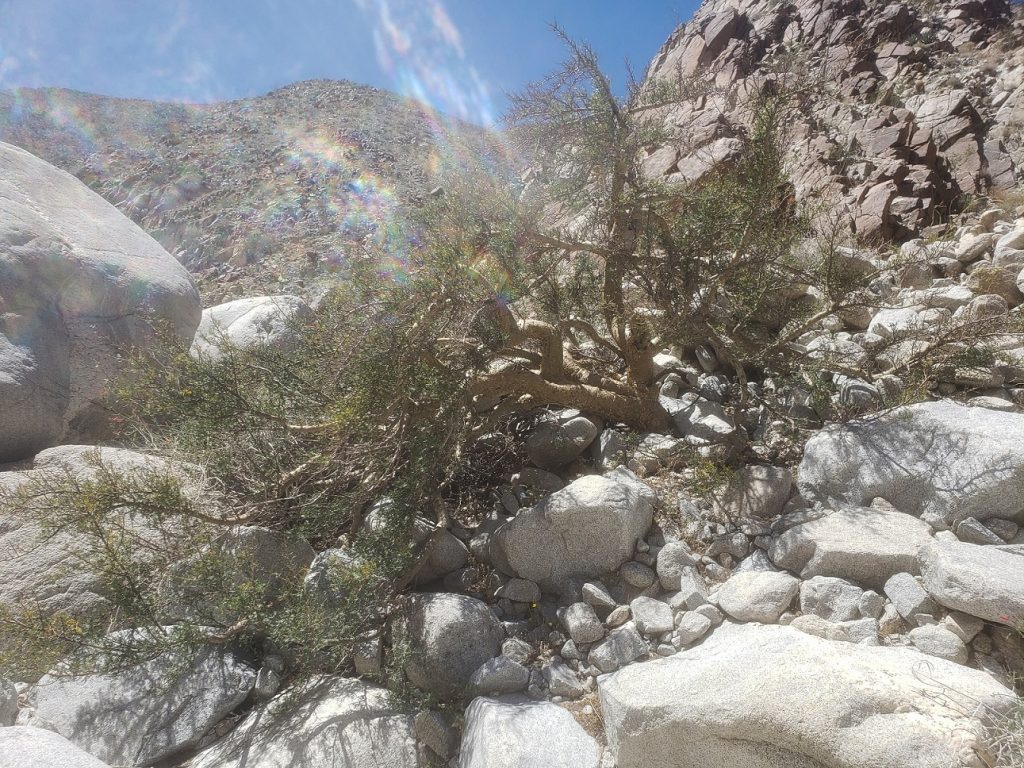
The above quote should give you some idea just how distinctive the elephant tree is. Elephant trees (Bursera microphylla) are fairly common in Mexico, especially in Baja California and the central Sonoran desert, but they’re not so easy to find north of the border. There are a few places in Anza Borrego State Park where you can see them, though. The largest collection is in Alma Wash and Alma Canyon, just south of Ocotillo Wells.**

It’s not an easy place to get to. From Ocotillo Wells, you take Split Mountain Road to the beginning of Elephant Trees Nature Trail. It’s not far to the trail head, but the road is a bit rough. My car is AWD with an 8.5 inch clearance — a bit higher than the average car. So you don’t need an off-road vehicle, but high-clearance is advised. Elephant Trees Nature Trail is a fairly short loop. Unfortunately, there’s only one elephant tree left on the trail, as of this writing, and it’s not a particularly impressive specimen.

If you want the full experience, keep going up the wash, turn into Alma Canyon, and follow it to Starfish Cove. The entire hike is around 11.3 miles, give or take. It’s a long, arduous slog, much of it over broken rock and small boulders. Make sure you go during cooler weather and bring plenty of water.

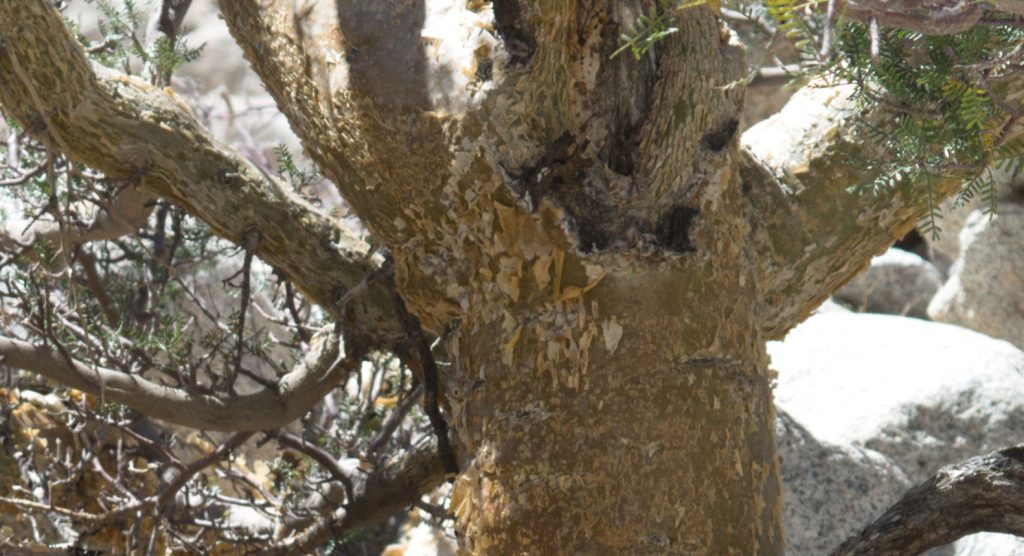
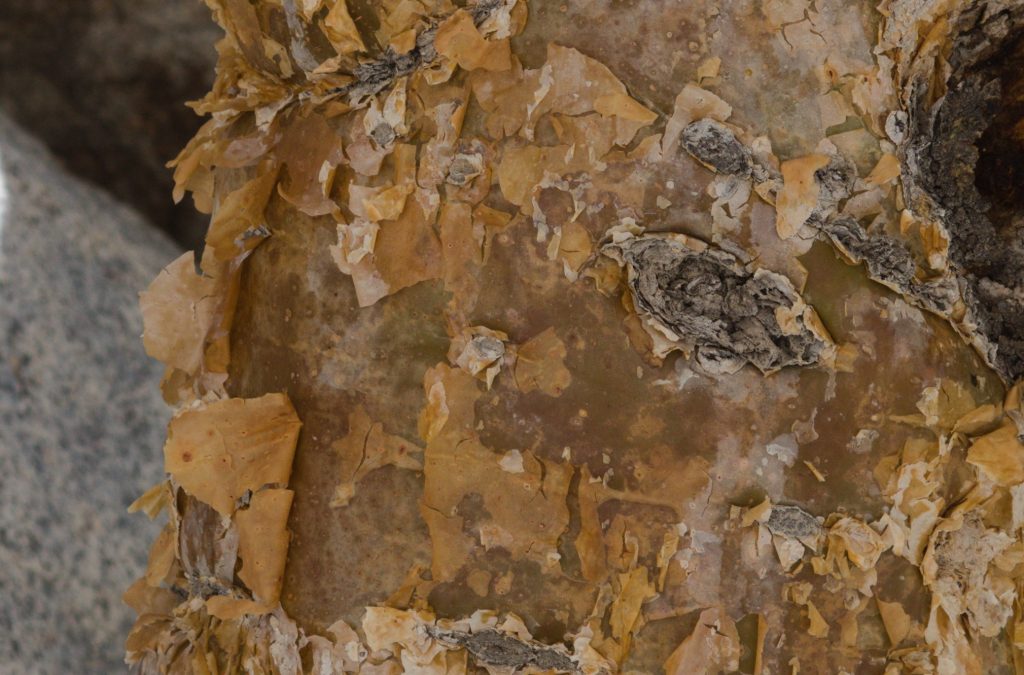
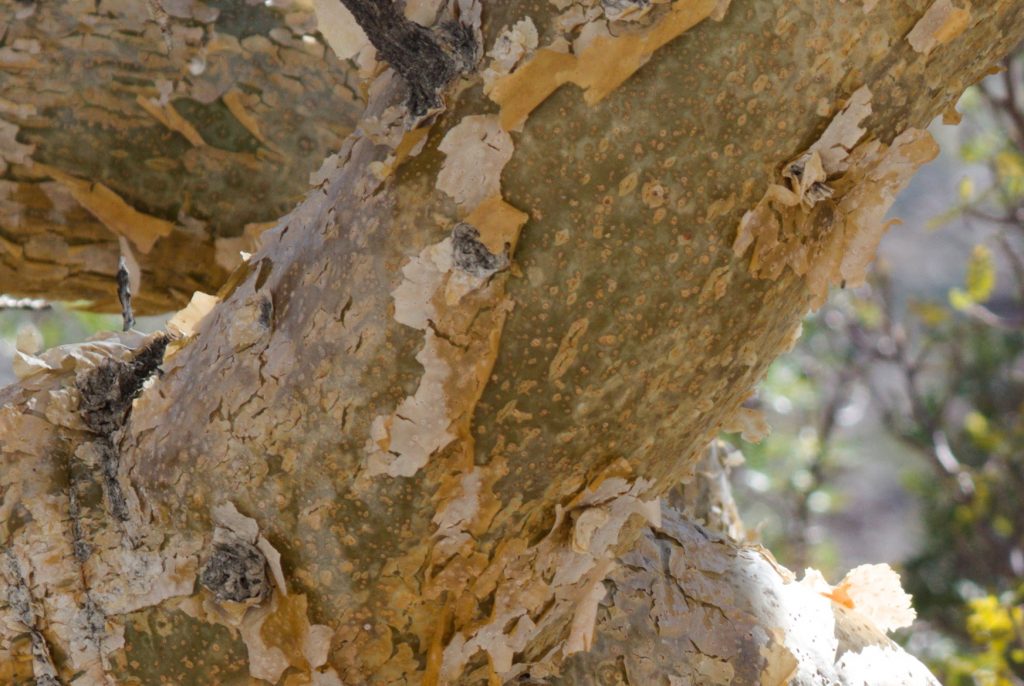
So what’s so special about an elephant tree? Elephant trees are not tall — usually no more than 6 feet — but they have massive trunks for their size. The trunks are often very gnarled. Supposedly, if a boulder rolls over a young tree, it will often just keep growing, now with a new twist in its trunk. But a lot of the trees have gnarled trunks, so I doubt that rolling boulders can account for all of it. It would be interesting to know what other sorts of things cause the trunks to grow like that.

The branches and twigs tend to be of a more normal size for the height of the tree, so they kind of look like they’re too small for the trunk (or maybe it’s just that the trunk looks too large for the tree). But this just adds to the tree’s exotic look. Younger branches have a reddish color. The bark is very papery and peels away from the trunk. Some people have suggested that the rustle of this peeling bark in the wind attracts pollinating insects.

The elephant tree is a semi-succulent. It stores water in its thick trunk and lower limbs. The leaves are pinnate (compound with the leaflets arranged in a feather-like pattern) and rather small. They resemble the leaves of mesquite and cat-claw, which initially made me think they were in the pea family, but, as we’ll see in a minute, that turns out not to be the case.

The flowers are white or cream colored. They’re small, star-shaped, and not very showy, which is just as well, since the trees usually flower in June or July — not the best time to be hiking in Anza Borrego.

So how do frankincense and myrrh come into the picture? Frankincense and myrrh are aromatic resins extracted from trees in the Boswellia and Commiphora genera, respectively, which are both in the family Burseraceae. The elephant tree is also in this family. So perhaps it’s not too surprising that the sap of the elephant tree has a very pleasant aroma. In fact, the whole tree has a nice fragrance.

Frankincense and myrrh have been used for centuries in perfumes and incense. They’ve played an important role in religious ceremonies in the Middle East and Europe and they’ve been used for various medicinal purposes, as well.

Native Americans used the red sap of the elephant tree in much the same way as frankincense and myrrh were used in the Old World. The Cahuilla treated the sap as something of a panacea, using it to treat a wide variety of illnesses. In fact, it was believed to be so powerful that it was too dangerous for ordinary people to handle. It was kept hidden away and only used by the shamans.

*From his website: http://tchester.org/bd/species/burseraceae/bursera_microphylla.html

**I’ve been told that there are other places in Anza Borrego you can go to see elephant trees that are a lot easier to get to, but by far the largest collection is in this area.

The Bug That Blows Bubbles Out of Its Butt

Froghoppers are insects in the order Hemiptera — the true bugs. The main characteristic of a true bug is having piercing and sucking mouth-parts. Most hemipterans, including the froghoppers, use these mouth-parts to suck sap from plants.

Froghoppers are so named because of their jumping abilities. The adults of some species can jump up to 70 cm vertically — an amazing feat for a such a small insect. Relative to their body mass, they are better jumpers than fleas!

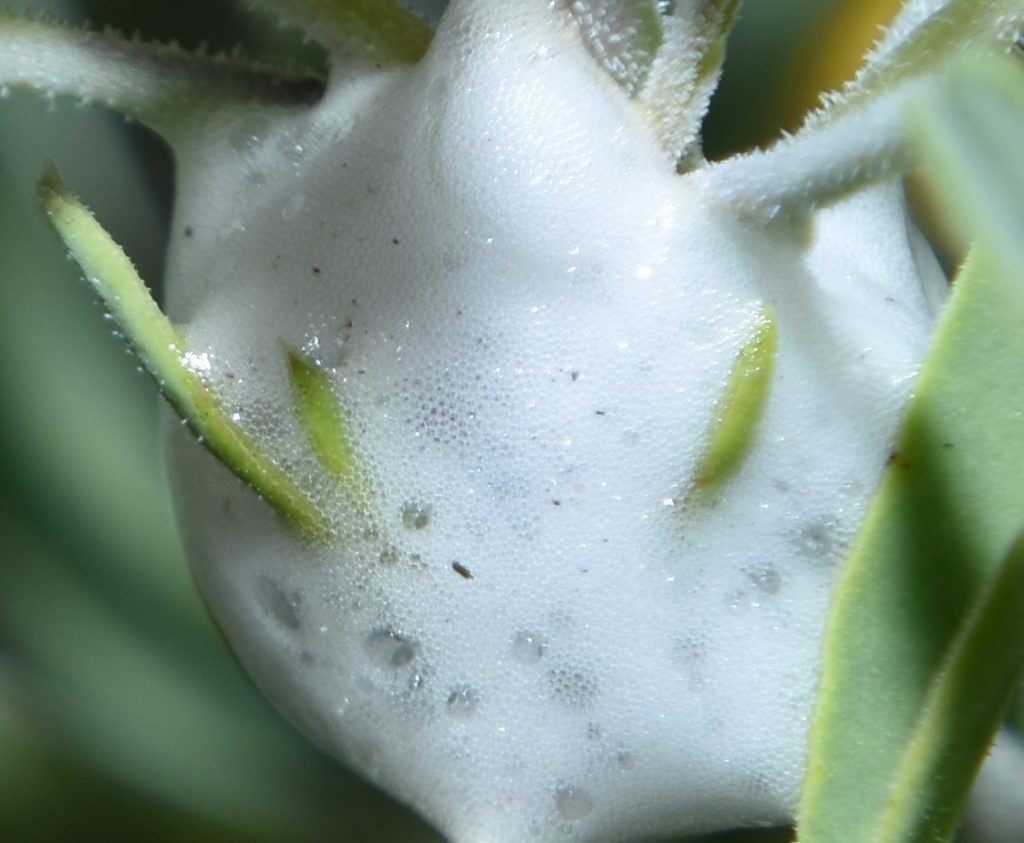
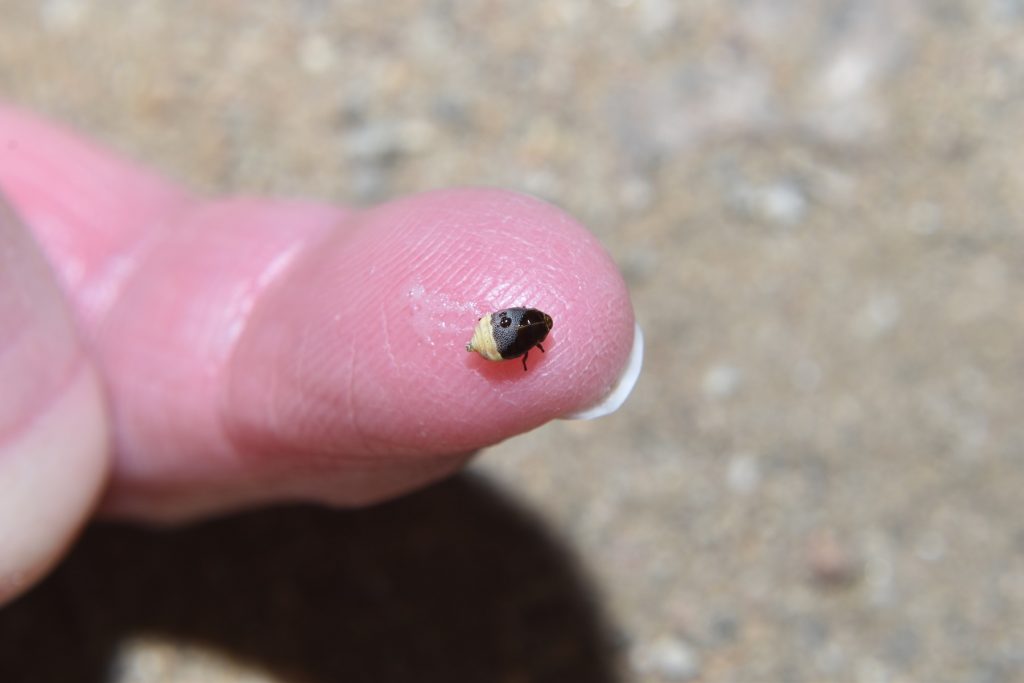
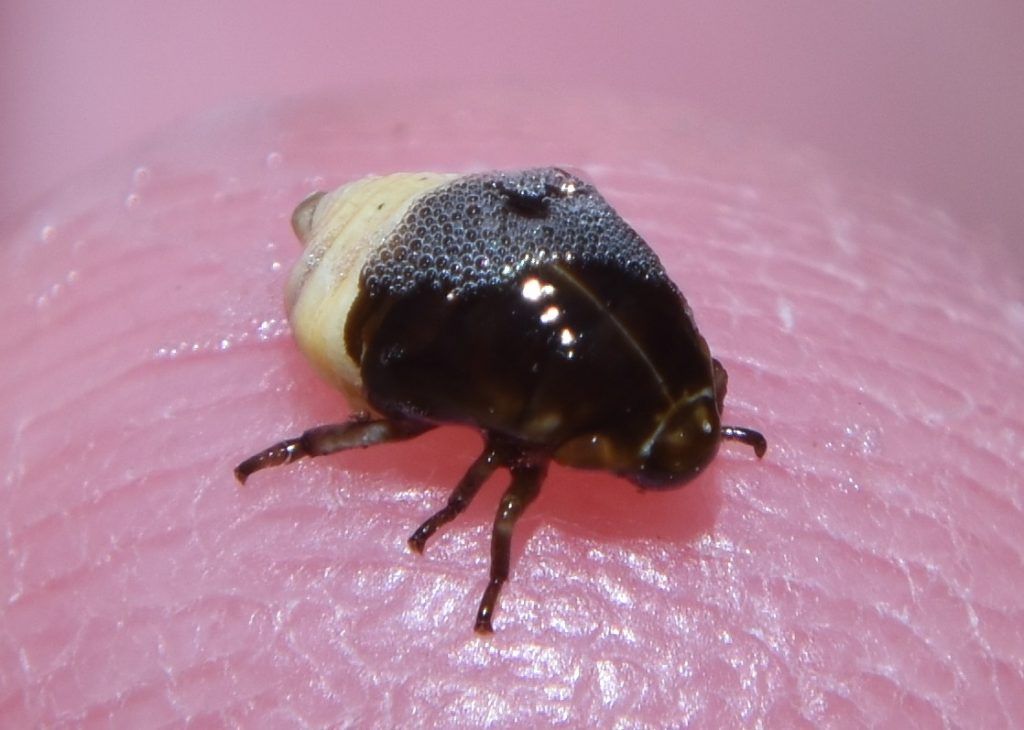
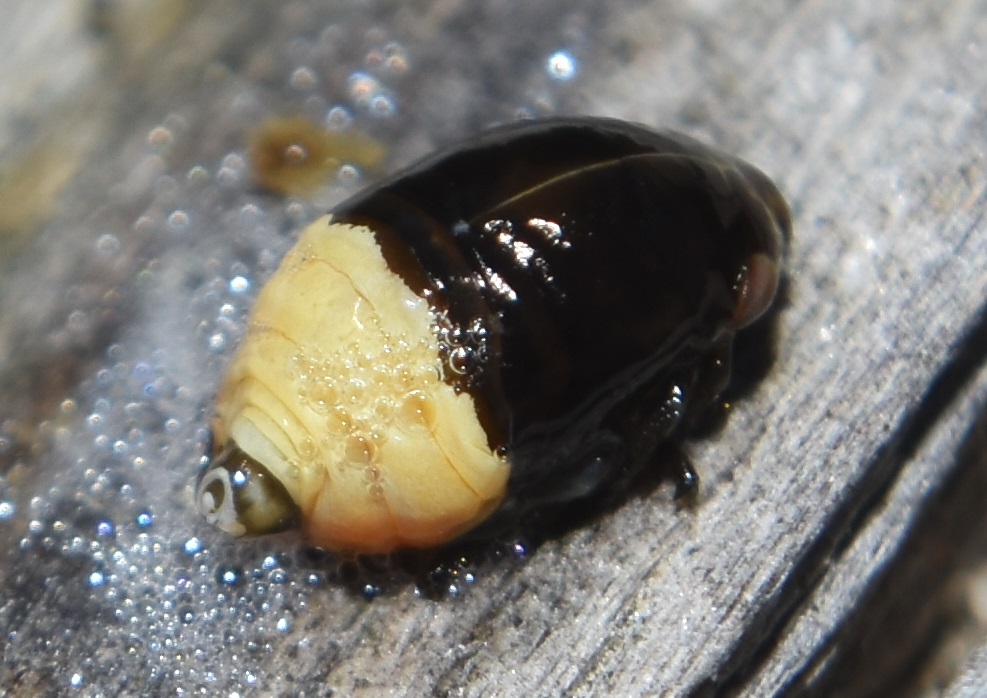
The most interesting thing about froghoppers, though, is that their larvae blow bubbles out of their butts! Like the adults, the larvae suck juices from plants. Unlike the adults, they excrete the excess sap from their rear ends as bubbles. The bubbles form a foam around them which looks like a gob of spit. This gives the larvae their common name of ‘spittlebugs’. The foam has a number of purposes. It hides the insect from potential predators. It has an acrid taste, which also helps to discourage predators. It insulates the larvae from heat and cold and it keeps them from drying out. Who knew that blowing bubbles out of your butt was such a useful skill?

I should mention that there’s one family of froghoppers, Machaerotidae, that doesn’t produce foam. They live in calcareous tubes, instead. The Machaerotidae are Old World insects, though, so you won’t find them in here in North America.

Spittlebugs are very common insects here in Southern California. In the warmer months, I see their gobs of foam on various bushes, usually several gobs per bush. You can brush the foam away to uncover the larva. It’s very small, so you’ll need a magnifying glass or similar device to get a good look. (Or you can just look at the photos and videos attached to this post.)

Many thanks to my friend, Meridith, for holding one of the larva while I photographed it. It’s her finger that’s prominently featured in a number of the photos.

Clastoptera juniperina blowing bubbles
Another Clastoptera juniperina blowing bubbles

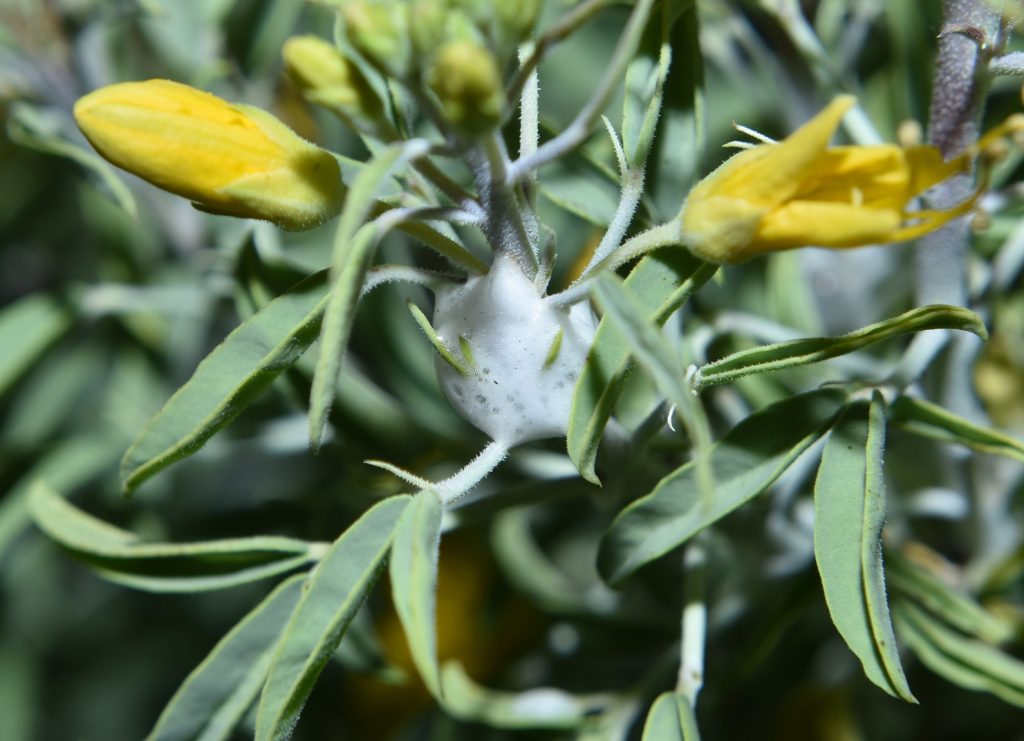
A gob of spittlebug foam on a bladderpod plant
A closer look

Some more photos of Clastoptera juniperina, the most common spittlebug in my area…